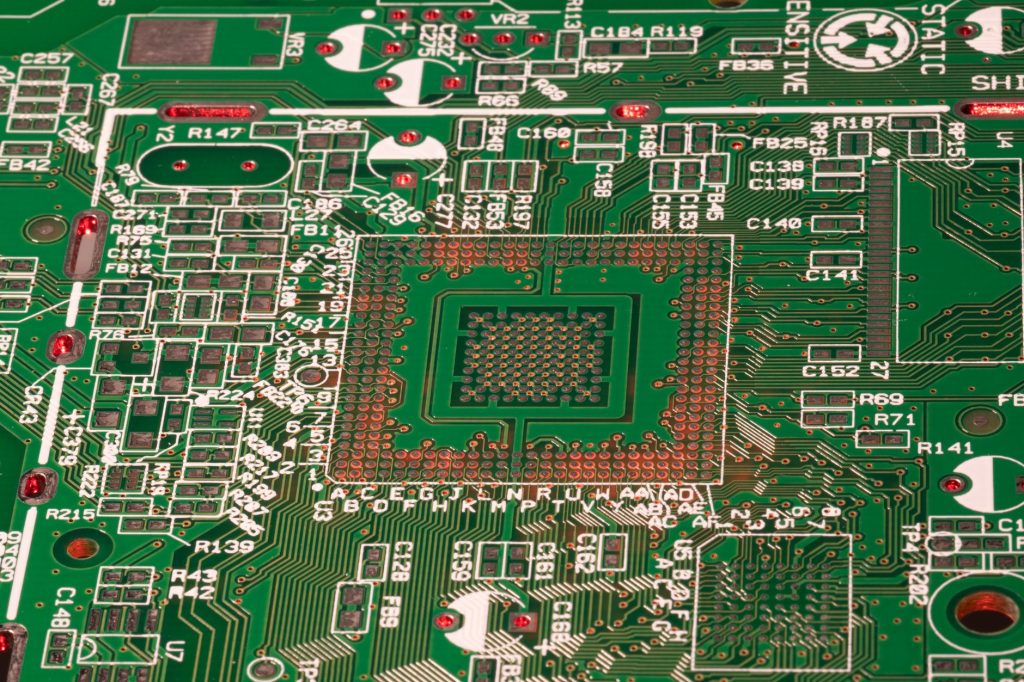
The relentless pursuit of AI supremacy is no longer confined to algorithmic breakthroughs or model scaling. It has unequivocally shifted to the very bedrock of artificial intelligence: silicon. In a strategic move that underscores the escalating compute arms race, Anthropic, a leading AI research and safety company, has entered into discussions with Samsung regarding the development of custom AI chips. This development, surfacing just weeks after OpenAI announced its own bespoke chip collaboration with Broadcom, signals a profound reorientation in how frontier AI labs are approaching their hardware dependencies, moving beyond an almost singular reliance on Nvidia’s dominant GPU architecture.
The implications are far-reaching, hinting at a future where each major AI developer designs specialized silicon optimized for their unique models and computational paradigms. This isn’t merely about cost savings; it’s about strategic autonomy, performance optimization at an unprecedented scale, and the fundamental ability to innovate at the bleeding edge of AI. The conversations between Anthropic and Samsung represent a pivotal moment, highlighting a broader industry trend where hardware engineering is becoming as critical as the deep learning research itself.
The Unsustainable Appetite for Compute
For years, the narrative around large language models (LLMs) and generative AI has been one of exponential scaling. Bigger models, trained on more data, with more parameters, consistently deliver superior performance. This scaling imperative, however, comes with an astronomical price tag, predominantly driven by the insatiable demand for high-performance computing. Nvidia’s GPUs, particularly the H100 and its predecessors, have become the de facto standard for AI training, creating a supply bottleneck and driving up costs to unprecedented levels. Anecdotally, securing tens of thousands of these advanced accelerators can run into billions of dollars, a figure that only the most well-capitalized tech giants can comfortably entertain.
This environment has forced AI labs to confront a stark reality: continued innovation requires not just access to compute, but control over its design and supply. The sheer volume of processing power needed to train and deploy foundation models like Anthropic’s Claude series or OpenAI’s GPT family necessitates a paradigm shift. Off-the-shelf solutions, while powerful, often come with compromises in efficiency, power consumption, and architectural fit for highly specialized AI workloads.
Consider the lifecycle of an LLM: from pre-training on colossal datasets to fine-tuning for specific tasks, and then the continuous inference demands from millions of users. Each stage has distinct computational requirements. Training demands massive parallelism and high-bandwidth memory, while inference often prioritizes low latency and cost-effectiveness at scale. A general-purpose GPU, designed to excel across a broad spectrum of computational tasks, may not be the most efficient solution for every single phase of an LLM’s operational life. This is where custom silicon enters the picture: purpose-built hardware designed from the ground up to accelerate specific AI operations, reducing both cost and energy consumption.
Anthropic’s Strategic Pursuit of Specialized Silicon
Anthropic’s discussions with Samsung are a clear signal of its intent to carve out its own hardware path. While the specifics of these talks remain under wraps, the broader context suggests a focus on developing application-specific integrated circuits (ASICs) or highly customized chip designs. These are not merely incremental improvements over existing GPUs; they are fundamental re-architectures tailored to the unique demands of transformer models and Anthropic’s particular research agenda, which places a strong emphasis on interpretability and safety.
The company has, until now, relied on a diversified hardware stack, leveraging compute resources from cloud providers like Amazon and Google, alongside direct purchases of Nvidia GPUs. This multi-vendor approach provides flexibility and mitigates single-source risk, but it does not offer the same level of optimization or cost control that vertically integrated hardware development can provide. By partnering with a global foundry like Samsung, Anthropic aims to gain greater control over its compute destiny, potentially designing chips that are uniquely efficient for its Claude models, perhaps even for specific safety alignment techniques or constitutional AI principles that are central to its ethos.
The exact nature of the chip – whether it is primarily for training, inference, or a hybrid approach – will be critical. Given the immense cost and time associated with chip development, it is likely Anthropic is exploring solutions that can offer significant long-term advantages, particularly in the inference phase, where models are deployed at scale to millions of users. Optimized inference chips can drastically reduce operational expenses, making advanced AI more economically viable for broad deployment.
The Deepening AI Chip Arms Race
Anthropic’s move with Samsung is not an isolated incident; it is part of a larger, accelerating trend among the world’s leading AI developers. The past few years have seen a concerted effort by tech giants to reduce their reliance on external chip vendors and build proprietary AI accelerators.
Consider the competitive landscape:
- OpenAI and Broadcom: Just a few weeks prior to the Anthropic news, OpenAI revealed its own partnership with Broadcom to develop custom AI chips. This alliance highlights CEO Sam Altman’s long-standing vision for greater compute independence and the need for a global, decentralized chip supply chain to meet the burgeoning demands of advanced AI. It’s a bold statement from the company that ignited the current generative AI boom, demonstrating that even with significant backing, the compute challenge remains paramount.
- Google DeepMind and TPUs: Google has been a pioneer in this space, developing its Tensor Processing Units (TPUs) for nearly a decade. These custom ASICs are specifically designed for neural network workloads, giving Google a distinct advantage in training and running its own massive models like Gemini. The TPU ecosystem, deeply integrated with Google Cloud, showcases the benefits of a tightly coupled hardware and software stack.
- Amazon and Inferentia/Trainium: Amazon Web Services (AWS) has invested heavily in its own custom silicon with Inferentia for inference and Trainium for training. These chips offer AWS customers alternatives to Nvidia GPUs, providing optimized performance and cost efficiency for various machine learning workloads within the AWS cloud environment. This strategy not only serves AWS clients but also powers Amazon’s own internal AI initiatives.
- Meta AI and MTIA: Meta has also been developing its own custom chip, the Meta Training and Inference Accelerator (MTIA), aimed at improving the efficiency of its AI models across its vast suite of applications, from recommendation systems to generative AI. This in-house development is critical for a company that operates at Meta’s scale, where even marginal improvements in efficiency can translate into billions in savings and performance gains.
- Microsoft and Maia/Athena: Microsoft, a key partner to OpenAI, has also unveiled its own custom AI chips, Maia for training and Athena for inference. These chips are designed to power Microsoft’s extensive AI infrastructure, supporting everything from Azure AI services to its partnership with OpenAI. This diversification reduces reliance on third-party hardware and allows Microsoft to optimize its cloud services for AI workloads.
This collective movement towards custom silicon is not merely about competitive advantage; it’s about survival and the ability to continue pushing the boundaries of what AI can achieve. Each company’s approach reflects its unique priorities, whether it’s Google’s deep integration with its cloud, Amazon’s focus on customer choice, or Meta’s emphasis on internal efficiency for its massive user base. Anthropic’s entry into this fray, especially through a partnership with Samsung, further validates this strategic shift.
Samsung’s Foundry Prowess: A Natural Partner
Samsung, with its vast expertise in semiconductor manufacturing, memory technologies, and advanced packaging, represents a formidable partner for Anthropic. Samsung Foundry is one of the world’s leading contract chip manufacturers, capable of producing chips on cutting-edge process nodes. This includes advanced gate-all-around (GAA) technologies, which are crucial for achieving the density, performance, and power efficiency required by next-generation AI accelerators.
Beyond raw manufacturing capability, Samsung’s integrated ecosystem, encompassing memory (HBM, LPDDR), packaging solutions (like 2.5D and 3D stacking), and design services, makes it an attractive collaborator. For an AI company like Anthropic, which may not have decades of in-house chip design and manufacturing experience, leveraging Samsung’s end-to-end capabilities can significantly de-risk the development process and accelerate time to market. The discussions likely involve not just the fabrication of the silicon but potentially co-design elements to optimize the chip’s architecture for Anthropic’s specific AI models.
The collaboration also highlights the increasing importance of geopolitics in the chip supply chain. Diversifying manufacturing partners and securing access to advanced foundry services is a critical strategic imperative for any technology company operating at the frontier.
Challenges and Future Implications
While the allure of custom AI chips is undeniable, the path is fraught with challenges. Chip development is incredibly capital-intensive, requiring billions of dollars in R&D and manufacturing setup. It is also a notoriously long cycle, often taking several years from conception to mass production. For a company like Anthropic, which is still scaling its operations and competing in a rapidly evolving AI landscape, this represents a substantial investment and a significant strategic gamble.
There are also fundamental design choices to be made:
- Architecture: Will the chip be a highly specialized ASIC, or will it incorporate more programmable elements to allow for future algorithmic flexibility?
- Power Efficiency: How will the design balance raw compute power with energy consumption, especially critical for sustainable, large-scale deployments?
- Software Stack: Developing a custom chip also necessitates a robust software stack, including compilers, libraries, and frameworks, to efficiently program and utilize the hardware. This is an area where Nvidia’s CUDA ecosystem has a long-standing, formidable advantage.
- Competitive Advantage: Will the custom chip truly deliver a disproportionate performance-per-watt or performance-per-dollar advantage over commercially available solutions, justifying the massive investment?
Despite these hurdles, the trend towards custom AI silicon is irreversible. It signifies a maturation of the AI industry, where the foundational infrastructure is being re-imagined and re-engineered to meet the unprecedented demands of advanced models. For Anthropic, a successful partnership with Samsung could unlock new levels of efficiency, accelerate its research agenda, and provide a critical strategic advantage in the intensely competitive landscape of frontier AI. It’s a move that transcends mere hardware; it’s about shaping the very future of AI development and deployment.
The days of simply buying more GPUs are numbered for those at the cutting edge. The future of AI is being forged in foundries, with each major player seeking to craft the perfect silicon to power their intelligent machines. Anthropic’s discussions with Samsung are not just a news item; they are a clear indicator of this profound, strategic pivot in the global AI arms race.