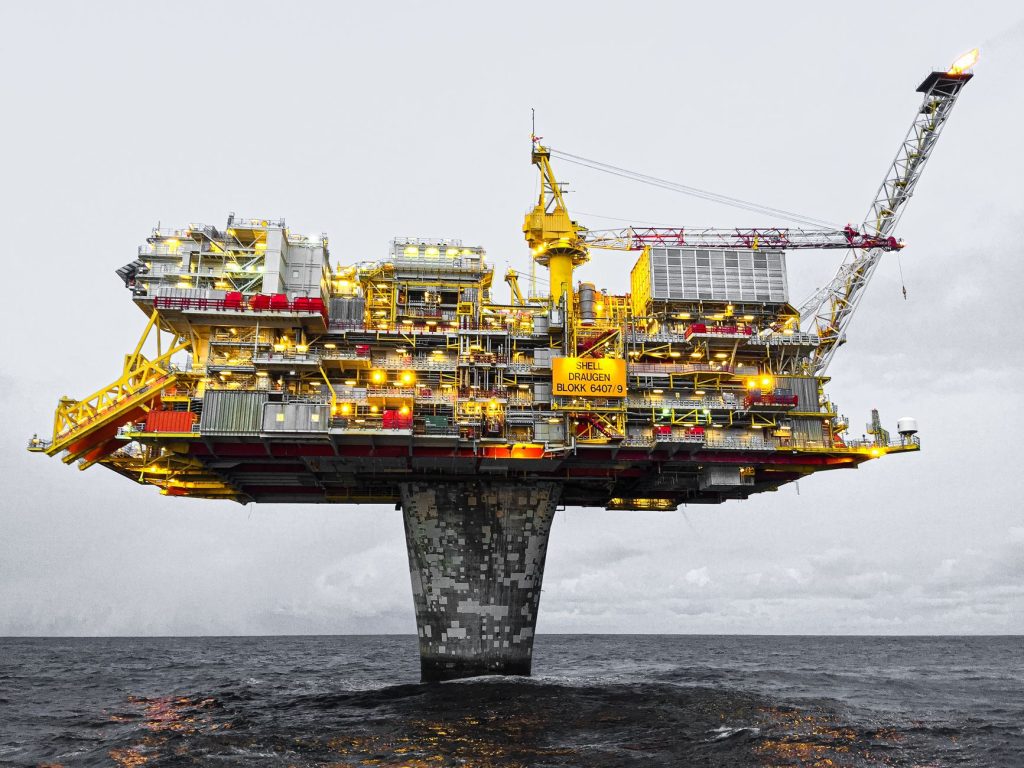
The digital transformation of heavy industry has been a long, arduous journey, often hindered by a unique blend of legacy infrastructure, complex physics, and an overwhelming deluge of disconnected operational data. For decades, sectors like oil, gas, and petrochemicals have grappled with an information paradox: vast amounts of data generated by thousands of sensors, yet a startlingly low percentage of that data actually informs real-time decision-making. Now, a London-based startup, Applied Computing, is stepping into this breach, aiming to resolve this systemic inefficiency with a specialized foundational AI model. The company recently secured a substantial $20 million in Series A funding, a significant vote of confidence in its ambitious vision to provide an intelligent operating system for an entire industrial plant.
Bridging the Data Chasm in Heavy Industry
Imagine an oil refinery or a petrochemical facility. It is a sprawling, intricate network of pipes, valves, reactors, and turbines, each embedded with an array of sensors constantly monitoring parameters like temperature, pressure, flow rates, and viscosity. These facilities are data goldmines, generating petabytes of information daily. Yet, despite this data richness, operational decisions frequently rely on a mere fraction, often less than 8 percent, of the available intelligence. This isn’t due to a lack of data collection, but rather a profound challenge in aggregation, contextualization, and real-time analysis.
The core problem lies in the fragmentation. Sensor readings, while abundant, exist in silos. They need to be correlated with complex engineering documentation—schematics, P&IDs (piping and instrumentation diagrams), and operational manuals—which often reside in disparate systems and varying formats. Furthermore, these raw data points must be interpreted through the lens of fundamental physics and chemistry principles that govern the industrial processes themselves. Combining these three distinct data modalities—sensor telemetry, engineering blueprints, and scientific models—at scale and with the necessary speed for operational insights has historically been a Herculean task, often requiring highly specialized human experts and time-consuming manual analysis.
Applied Computing was founded in 2023 with the explicit goal of overcoming this chasm. Their proposed solution is not a general-purpose large language model adapted for industrial jargon, nor is it a simple dashboarding tool. Instead, they are developing a true foundation AI model tailored specifically for the unique demands of the oil, gas, and petrochemical industries. This model is engineered to ingest, understand, and synthesize these three critical streams of information, effectively creating a holistic digital twin that can predict, optimize, and inform operational strategy across an entire plant.
Strategic Backing for a Vertical AI Pioneer
The $20 million Series A round, a considerable sum for a company founded just last year, was led by KBR, a global engineering, procurement, and construction (EPC) giant with deep roots in the energy and chemicals sectors. The participation of Databricks Ventures also signals a robust endorsement from a key player in the data and AI infrastructure space. This isn’t merely a financial investment; it is a strategic alignment. KBR’s leadership in the round brings not only capital but also unparalleled industry expertise, a vast network, and a direct channel to potential customers. For Applied Computing, having an engineering behemoth like KBR as an investor and strategic partner offers immediate credibility and an invaluable understanding of the complex operational realities they aim to transform.
The involvement of Databricks Ventures further underscores the technical ambition of Applied Computing. Building a foundational AI model for an industrial vertical requires sophisticated data engineering capabilities, robust machine learning operations (MLOps), and the ability to handle massive, heterogeneous datasets. Databricks, known for its Lakehouse platform that unifies data warehousing and data lakes, understands these requirements intimately. Their investment suggests confidence in Applied Computing’s architectural approach and its ability to leverage modern data stacks to build complex, domain-specific AI.
This funding will be crucial for Applied Computing to accelerate its research and development efforts, expand its team of AI researchers and domain experts, and scale its platform to meet the exacting standards of industrial deployment. The capital infusion is not just about growth; it is about solidifying a highly specialized technological foundation in a capital-intensive sector.
The Promise of a Foundational Industrial AI Model
The concept of a “foundation model” has largely been associated with general-purpose AI, particularly large language models like those from OpenAI, Google DeepMind, or Anthropic, which are trained on vast swaths of internet text and images. Applied Computing is applying this paradigm to a highly specialized vertical, recognizing that the inherent complexities of industrial processes demand a fundamentally different approach to model architecture and training data.
Their model isn’t just learning linguistic patterns; it’s learning the physics, the chemistry, and the operational logic of industrial plants. It’s designed to understand how a change in temperature in one part of a system will affect pressure downstream, or how a specific type of catalyst interacts with raw materials under varying conditions. This deep, mechanistic understanding, derived from integrating sensor data with engineering drawings and scientific models, is what truly differentiates it.
The implications for the oil, gas, and petrochemical industry are profound. By synthesizing previously disparate data points, Applied Computing’s AI can enable:
- Predictive Maintenance: Anticipating equipment failures before they occur, reducing costly downtime and improving safety.
- Process Optimization: Identifying inefficiencies in production, optimizing energy consumption, and improving yield.
- Enhanced Safety: Detecting anomalous conditions that could lead to hazards and providing early warnings to operators.
- Improved Environmental Compliance: Optimizing processes to reduce emissions and waste, aligning with growing regulatory pressures and sustainability goals.
- Faster Decision-Making: Empowering operators with real-time, data-driven insights, moving away from reactive problem-solving to proactive management.
The ability to make operating decisions using significantly more than 8 percent of available data is not just an incremental improvement; it represents a fundamental shift in how these facilities can be managed. It moves the industry towards a truly intelligent, autonomous, and optimized operational paradigm. This is an era where AI doesn’t just assist humans but fundamentally augments their understanding and control over complex physical systems.
Navigating the Industrial AI Landscape
The industrial AI landscape is certainly not devoid of players. Many companies offer solutions for specific aspects of plant operations, such as vision systems for quality control, specialized sensors, or analytics platforms for energy management. However, the unique challenge that Applied Computing is tackling is the creation of a
unified, foundational model
that spans the entire plant, integrating diverse data types and providing a holistic view. This is a much more ambitious undertaking than point solutions.
The competition, then, isn’t just other AI startups, but also the entrenched legacy systems and the inherent inertia of an industry accustomed to established, albeit often inefficient, operational practices. Convincing operators to adopt a new, AI-driven paradigm requires not just technological superiority but also robust security, reliability, and demonstrable return on investment. The fact that an engineering giant like KBR is leading the investment suggests a recognition that the industry is ready for this kind of transformative technology, and that Applied Computing has a credible path to delivering it.
The broader trend in AI is clear: while general-purpose models capture headlines, the most impactful applications often arise from highly specialized, vertical-specific AI. These models, trained on domain-specific data and imbued with a deep understanding of industry physics and operational constraints, are poised to unlock immense value in sectors that have historically been challenging to digitize. Applied Computing’s success will be a bellwether for how deeply and effectively AI can penetrate the core operational fabric of heavy industry.
A New Era of Intelligent Operations
The investment in Applied Computing marks a significant milestone in the evolution of industrial AI. It underscores a growing recognition that generic AI solutions often fall short in complex, safety-critical environments like oil and gas. What’s needed are intelligent systems that speak the language of engineering, understand the laws of physics, and can synthesize a vast array of operational data into actionable intelligence. Applied Computing’s pursuit of a foundational AI model for this sector is a bold move, promising to transform how these vital facilities operate, making them safer, more efficient, and more sustainable. As the world continues its drive towards energy security and environmental responsibility, the ability to maximize the efficiency and safety of existing industrial infrastructure becomes paramount. Applied Computing is positioning itself to be a critical enabler in that urgent journey, turning raw data into the bedrock of intelligent operations.