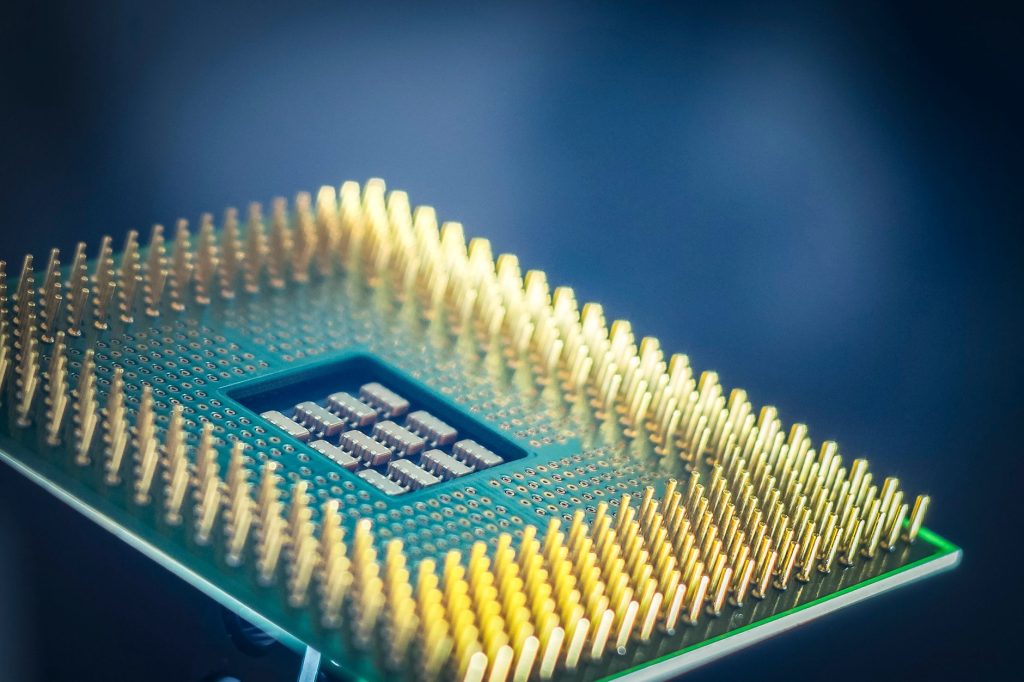
Apple’s ambitious, albeit ultimately shelved, automotive project inadvertently forged the path for its industry-leading on-device AI capabilities, setting a new benchmark in the competitive hardware landscape.
The story of Apple’s self-driving car program, often whispered about in hushed tones as “Project Titan,” is a fascinating chronicle of immense ambition meeting even greater technical hurdles. While the vision of an Apple-branded autonomous vehicle never materialized on public roads, its legacy, perhaps unexpectedly, profoundly shaped a different, far more successful venture: the company’s dominance in AI-optimized silicon. It turns out that the intense demands of real-time, on-device AI processing for a self-driving car pushed Apple’s chip design teams to innovate at a pace and scale that few others could match. This relentless pursuit of localized intelligence, initially for a car that never saw the light of day, became the very crucible in which the Neural Engine, the heart of Apple’s AI processing across its product lines, was forged.
What began as a necessity for computer vision tasks like FaceID and augmented reality on early iPhones, has, by mid-2026, evolved into a fundamental differentiator. The M-series chips, culminating in rumored powerhouses like the M7 Ultra, are not merely fast general-purpose processors. They are meticulously engineered AI accelerators, capable of handling vast datasets and complex neural network computations directly on the device, often supporting staggering amounts of unified memory, now approaching 1.5TB in advanced configurations. This architectural foresight, born from a seemingly failed project, positioned Apple as an early and enduring leader in the crucial race for efficient, powerful edge AI.
The AI Hardware Renaissance: Beyond the GPU Bottleneck
The story of Apple’s silicon evolution is not an isolated one. It mirrors a broader, intensified arms race in custom AI hardware across the tech industry. While Nvidia’s GPUs continue to dominate the training landscape for foundation models, the push for inference efficiency, especially at the edge, has spurred a wave of specialized chip development. Google’s TPUs, AWS’s Trainium and Inferentia, and Microsoft’s Maia AI accelerators are all testament to this strategic imperative. Companies are realizing that offloading AI tasks from general-purpose CPUs or even traditional GPUs to purpose-built silicon can dramatically reduce latency, power consumption, and operational costs. This shift is critical as AI models become ubiquitous, embedded in everything from smartphones and smart home devices to industrial IoT sensors and, yes, even advanced vehicles. The M7 Ultra, with its rumored capabilities, exemplifies a trend where the performance envelope for on-device AI is being stretched to unprecedented limits, enabling capabilities that were once confined to data centers.
The Model Frontier: Scaling Intelligence and Specialization
While hardware lays the foundation, the true magic of AI unfolds at the model layer. Mid-2026 finds the industry in a fascinating dual pursuit: the relentless scaling of generalist foundation models and the emergence of highly specialized, efficient alternatives.
Next-Generation LLMs and Multimodal Prowess
The competitive landscape for large language models (LLMs) remains fierce, with OpenAI, Google DeepMind, Anthropic, and Meta AI continually pushing the boundaries. We’re now seeing models like OpenAI’s rumored “GPT-5” or Google’s “Gemini 2.0” demonstrate truly multimodal reasoning far beyond simple image captioning or text-to-image generation. These models can seamlessly integrate and interpret information from video streams, audio recordings, 3D data, and even haptic feedback, performing complex analytical tasks or generating coherent narratives across these modalities. Context windows have expanded dramatically, some reaching into the millions of tokens, allowing for the processing of entire books, extensive codebases, or hours of video. Benchmarks are evolving to reflect this complexity, moving beyond simple question-answering to evaluate nuanced reasoning, long-term coherence, and ethical alignment in multimodal contexts.
Specialized Intelligence and Efficiency
Yet, the pursuit of ever-larger generalist models isn’t the only game in town. Companies like Mistral AI continue to champion the power of smaller, highly optimized models that offer competitive performance for specific tasks with significantly reduced computational overhead. This philosophy is particularly resonant with startups and enterprises facing budget constraints or specific privacy requirements. We are seeing a proliferation of “SLMs” (Small Language Models) and “SMMs” (Small Multimodal Models) fine-tuned for niche domains, from legal tech to healthcare diagnostics, offering exceptional accuracy and speed without the astronomical inference costs of their larger brethren. This specialization often involves sophisticated distillation techniques, sparse activation patterns, and novel quantization methods that squeeze maximum performance from minimal parameters.
Deployment Realities: RAG, Fine-Tuning, and the Hybrid Imperative
The perennial debate between Retrieval Augmented Generation (RAG) and fine-tuning for custom enterprise AI applications has matured considerably. It’s no longer a question of “which one wins,” but rather “how do we strategically combine them, or augment them with new techniques, for optimal outcomes?”
RAG, with its ability to ground LLMs in proprietary, up-to-date information without altering the base model, remains a cornerstone for factual accuracy and reducing hallucinations. Advancements in retrieval mechanisms, including hybrid search (combining keyword, semantic, and knowledge graph retrieval), sophisticated re-ranking algorithms, and multi-hop reasoning over retrieved documents, have made RAG far more robust. Enterprises are deploying RAG systems that can dynamically synthesize information from vast internal knowledge bases, regulatory documents, and real-time data feeds, providing employees and customers with precise, contextually relevant answers.
Fine-tuning, on the other hand, continues to be indispensable for adapting a model’s style, tone, and specific domain terminology. While it requires more upfront data and computational resources, the result is a model that truly “speaks the language” of a particular industry or brand. The latest fine-tuning techniques go beyond simple instruction tuning; they involve parameter-efficient methods like LoRA (Low-Rank Adaptation) and QLoRA, making it feasible to adapt large models with significantly less computational power and data.
The most effective enterprise deployments now often embrace a hybrid approach. This might involve fine-tuning a base model for domain-specific style and internal jargon, then layering a RAG system on top to provide dynamic, up-to-date factual grounding from an external knowledge base. Furthermore, new paradigms are emerging, such as “retrieval-augmented fine-tuning,” where retrieval is integrated into the fine-tuning process itself, or “agentic workflows” that dynamically choose between RAG, fine-tuning, or even calling specialized external tools based on the query. The choice hinges on the specific problem: RAG for dynamic, evolving knowledge; fine-tuning for deep stylistic and factual embedding; and hybrid models for the best of both worlds.
The Indian AI Ecosystem: A Hotbed of Innovation
India’s AI landscape continues its rapid ascent, driven by a burgeoning talent pool, supportive government initiatives, and a clear focus on solving unique local challenges. Indian AI startups are not merely adopting global trends; they are actively shaping them, particularly in areas like vernacular language processing, AI for social impact, and cost-effective enterprise solutions.
We’ve seen significant traction in models tailored for India’s linguistic diversity, with startups developing LLMs capable of understanding and generating content in Hindi, Tamil, Bengali, and other regional languages with increasing fluency and cultural nuance. Furthermore, the focus on practical enterprise adoption is strong, with companies building AI-powered tools for customer service, supply chain optimization, healthcare diagnostics, and agricultural intelligence. The recent rounds of funding in the Indian AI sector underscore investor confidence in this growth trajectory, recognizing the potential for disruptive innovation tailored for both the domestic market and global export. The emphasis often lies on deployable, scalable solutions that address real-world bottlenecks, rather than chasing purely academic benchmarks.
Navigating the Ethical Minefield: Safety, Alignment, and Regulation
As AI capabilities expand, so too do the complexities surrounding safety, alignment, and regulation. Mid-2026 finds global discussions intensifying on several fronts. The debate around “frontier models” and their potential risks continues to shape policy proposals, with leading AI labs committing to stricter safety protocols and red-teaming exercises before release. The concept of “AI self-governance” is being tested against calls for more robust governmental oversight, particularly concerning issues like deepfake generation, bias amplification, and the weaponization of AI.
Regulatory frameworks, while still nascent in many jurisdictions, are beginning to take more concrete shape. The European Union’s AI Act is serving as a blueprint for risk-based regulation, influencing discussions in other major economies. India, too, is exploring its own regulatory stance, balancing innovation with necessary safeguards. The challenge remains to craft regulations that foster responsible development without stifling the rapid pace of innovation. The industry is also grappling with the increasing energy consumption of large AI models, spurring research into more energy-efficient architectures and sustainable computing practices.
The Convergence of Hardware and Software Intelligence
The trajectory of AI, as we witness it in mid-2026, is one of increasing convergence. The hardware innovations, exemplified by Apple’s Neural Engine legacy, are not merely supporting software advancements; they are actively enabling new paradigms in AI. The ability to run sophisticated multimodal models directly on a device, with low latency and high privacy, fundamentally changes what is possible. For startups, this means the barrier to entry for deploying powerful AI solutions is simultaneously lowering (due to efficient models) and rising (due to the need for specialized hardware knowledge). Enterprises are grappling with the strategic decisions of where to process AI workloads: entirely in the cloud, at the edge, or in a hybrid fashion, each with its own cost, security, and performance implications. The competitive advantage is shifting towards those who can master this intricate dance between cutting-edge silicon and intelligent software. The AI arms race is no longer just about who has the biggest model, but who can deploy the smartest intelligence, most efficiently, at scale.