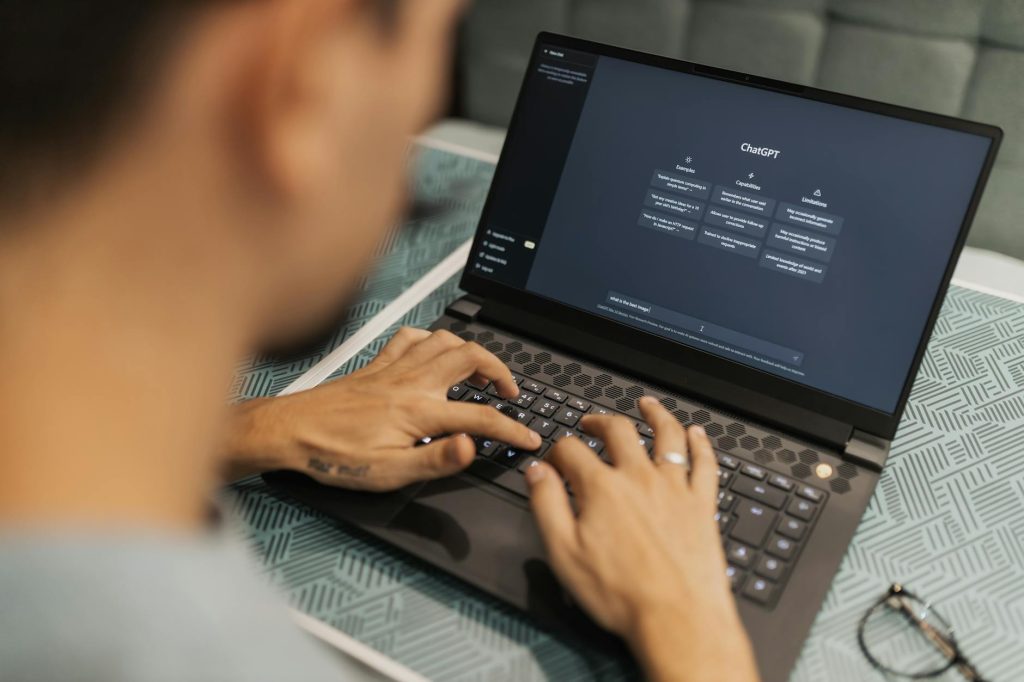
The relentless drumbeat of innovation in artificial intelligence continues to echo through every corner of the technology landscape, from vast enterprise data centers to the very devices we hold in our hands. This developer conference season has painted a vivid picture of an industry utterly convinced that AI is not just another feature, but the foundational layer for a completely reimagined digital experience. Yet, amidst the fervent pronouncements and ambitious roadmaps, a critical question lingers: how much of this vision genuinely addresses an unmet need, and how much is simply a dazzling display of technological prowess searching for widespread utility? We are witnessing a dual acceleration—enterprise software giants are embedding sophisticated AI into their core offerings, while hardware manufacturers and operating system developers are pushing the concept of the “AI PC,” a device fundamentally redesigned around local AI capabilities. The true test will be how these two powerful currents converge to deliver tangible value beyond the hype.
SAP’s Strategic Push: Infusing Business AI Across the Enterprise
On the enterprise front, software stalwarts are not merely dabbling in AI; they are making it integral to their future. SAP, a cornerstone of global business operations, has been particularly aggressive in its integration of what it terms “Business AI” across its extensive portfolio. The Q4 2025 release highlights underscore this commitment, showcasing a strategic move to embed AI directly into critical workflows, rather than offering it as a separate, optional add-on.
One of the most significant advancements is the further enhancement of generative AI capabilities within SAP’s core ERP and CRM suites. For instance, the company has introduced AI-powered assistants designed to streamline complex procurement processes. These tools can now automatically generate initial contract drafts based on historical data and user input, identify potential compliance issues, and even suggest optimal vendor selections by analyzing performance metrics and market trends. This isn’t just about faster document creation; it is about augmenting human decision-making with data-driven insights, reducing manual errors, and accelerating the entire procure-to-pay cycle.
In the realm of human resources, SAP has rolled out new AI features aimed at improving talent management and employee experience. Imagine an AI agent assisting HR professionals with personalized learning recommendations for employees, identifying skill gaps across the organization, and even predicting potential attrition risks based on engagement data. The Q4 2025 updates include such capabilities, leveraging large language models (LLMs) to analyze employee feedback, performance reviews, and career aspirations, thereby enabling more proactive and personalized HR interventions. This moves HR from a reactive administrative function to a strategic partner in talent development.
Furthermore, SAP’s financial planning and analysis (FP&A) solutions are seeing a substantial boost from AI. New predictive analytics models, now deeply integrated, can forecast revenue and expenditure with greater accuracy, taking into account a broader range of variables including macroeconomic indicators and supply chain fluctuations. These models empower finance teams to conduct more robust scenario planning, quickly assess the impact of different business decisions, and identify financial risks or opportunities that might otherwise remain hidden. For large enterprises operating across complex global markets, this level of predictive insight can translate directly into millions saved or earned.
The underlying philosophy behind SAP’s Business AI initiative is clear: to make intelligent automation and data-driven insights accessible at the point of need within existing enterprise applications. This isn’t about replacing human judgment but about elevating it, freeing up employees from repetitive tasks, and providing them with actionable intelligence. The company’s strategy also emphasizes responsible AI development, focusing on explainability, fairness, and privacy, which are paramount concerns for enterprise customers handling sensitive business data. By embedding AI directly into its established and trusted platforms, SAP aims to accelerate adoption by demonstrating clear return on investment and minimizing integration complexities for its vast customer base.
The Dawn of the AI PC: A New Computing Paradigm?
While enterprise software vendors meticulously weave AI into their existing solutions, a parallel and arguably more radical transformation is brewing on the client side: the advent of the “AI PC.” This concept, championed by industry titans like Nvidia and enthusiastically embraced by Microsoft and Google, posits a fundamental shift in how personal computing devices are designed and utilized. Nvidia’s CEO, Jensen Huang, has been particularly vocal, describing a future where our laptops are not merely tools for executing commands, but intelligent companions capable of proactive assistance and deeply personalized experiences.
At the heart of the AI PC vision lies a significant hardware evolution. Traditional CPUs and GPUs are now being augmented, and in some cases overshadowed, by dedicated Neural Processing Units (NPUs). These specialized processors are designed for highly efficient execution of AI workloads, particularly inferencing for large language models and other neural networks. The idea is to offload AI tasks from the CPU and GPU, thereby improving performance, reducing power consumption, and enabling AI capabilities to run locally on the device, rather than relying solely on cloud-based services.
This local AI capability unlocks a new class of applications: AI agents. These are not merely chatbots but intelligent software entities designed to perform complex, multi-step tasks on behalf of the user, often across different applications. Microsoft’s “Scout” project, for example, envisions an agent that can learn user habits, anticipate needs, and proactively manage tasks like scheduling meetings, summarizing documents, or even generating creative content. Google’s “Gemini Spark” and Nvidia’s “RTX Spark” point to similar ambitions, leveraging their respective AI models and hardware platforms to create personal AI assistants that are deeply integrated into the operating system and user applications. The “Solara” project further illustrates this trend, focusing on bringing advanced multimodal AI capabilities directly to the device.
The promise of the AI PC is compelling: enhanced privacy (as data processing occurs locally), reduced latency, and the ability to function effectively even when offline. Imagine a laptop that can summarize a lengthy PDF document instantly, generate complex code snippets based on natural language prompts, or even provide real-time creative suggestions for video editing, all without sending your data to a remote server. For professionals in creative fields, software development, or data analysis, these capabilities could represent a significant leap in productivity.
The Critical Question: Do Users Truly Want This?
However, as with any paradigm-shifting technology, the question of genuine user demand looms large. The industry’s conviction that “AI will change everything” is palpable, but the path from technical capability to widespread, indispensable utility is often winding. For the average user, the immediate benefits of an NPU-equipped AI PC might not be immediately obvious compared to, say, a faster CPU or more storage. While the underlying technology is impressive, the crucial challenge for hardware and software vendors alike is to translate these capabilities into compelling, intuitive, and genuinely useful user experiences that go beyond mere novelty.
Consider the current state of voice assistants or integrated search. While powerful, many users still find them cumbersome for complex tasks or prefer traditional methods. The success of AI agents on a personal device will hinge on their reliability, their ability to understand nuanced instructions, and perhaps most importantly, their trustworthiness. Will users be comfortable granting an AI agent extensive permissions to manage their files, communications, and workflows? This necessitates not only robust security and privacy safeguards but also a clear and transparent understanding of the agent’s capabilities and limitations.
Moreover, the “AI PC” concept requires a strong software ecosystem. Hardware without compelling applications is merely potential. Developers need to embrace these new platforms and create applications that leverage local AI effectively. The industry is still in the early stages of this transition, and it will take time for the full potential of on-device AI to be realized through innovative software.
Convergence and the Future of Work
The true impact of this dual revolution—enterprise AI integration and the AI PC—will likely be found at their intersection. Imagine a future where your AI PC, powered by local LLMs and agents, seamlessly interacts with your enterprise SAP system. An on-device agent could, for example, proactively pull relevant sales figures from SAP S/4HANA, cross-reference them with market data, and generate a draft quarterly report, all before you even open your office applications. Or, a procurement professional could use their AI PC to optimize a purchase order, with the local agent intelligently validating against SAP’s compliance rules and suggesting vendors based on real-time performance data from the enterprise system.
This convergence promises a more fluid, intelligent, and personalized work environment. The division between personal productivity tools and enterprise applications could blur, with AI acting as the connective tissue. However, this future also presents significant challenges around data governance, security, and interoperability. Ensuring that personal AI agents can securely and ethically access and process sensitive enterprise data will be a monumental task.
Ultimately, the excitement surrounding both enterprise AI and the AI PC is justified by the sheer technological progress. The ability to embed intelligence deeply into business processes and personal devices represents a fundamental shift. Yet, the enduring success of these initiatives will not be measured by the sophistication of their algorithms or the speed of their NPUs alone. It will be measured by their ability to deliver demonstrable, consistent, and genuinely desired value to users, transforming how we work and interact with technology in ways that are intuitive, efficient, and above all, human-centric. The industry is laying the groundwork; now it must build a future that users truly want to inhabit.