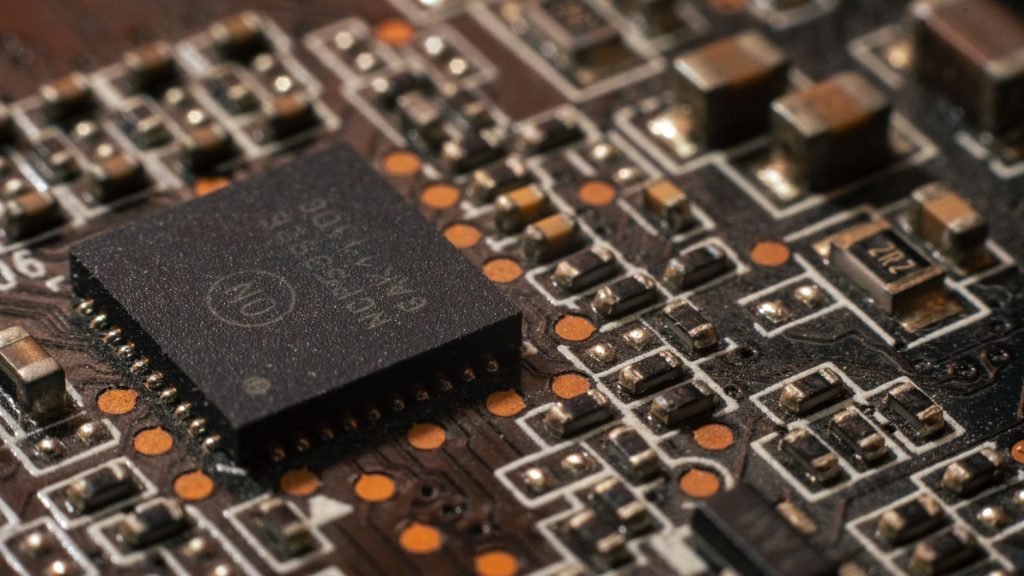
The relentless pursuit of artificial intelligence has always been a story woven with threads of algorithmic ingenuity and raw computational power. For years, the leading AI labs have relied on a relatively narrow ecosystem of hardware, primarily general-purpose GPUs, to fuel their ambitious models. Today, that paradigm began to shift decisively, as
, the creator of ChatGPT, unveiled its first custom AI inference chip, dubbed “Jalapeño,” developed in close collaboration with silicon giant
. This isn’t just a new piece of hardware; it’s a strategic declaration, signaling OpenAI’s deep commitment to controlling the entire AI stack, from foundational research to the very transistors that power its groundbreaking models.
This move underscores an escalating compute arms race, where proprietary silicon is becoming as critical a differentiator as model architecture itself. As large language models (LLMs) grow in complexity and their deployment scales to billions of users worldwide, the economics and performance of inference, the process of running a trained model to generate output, have become a monumental challenge. Jalapeño represents OpenAI’s direct answer to this challenge, a bespoke solution crafted to optimize the performance and efficiency of its LLMs, and a foundational piece of a larger, multi-generational compute platform.
The Strategic Imperative: Why OpenAI is Building its Own Silicon
For years, OpenAI’s ambitions have been constrained, in part, by the availability and cost of high-end GPUs. While companies like Nvidia have reaped immense profits from this demand, the underlying economics of powering frontier AI models have become a significant bottleneck for labs. Sam Altman, OpenAI’s CEO, has been vocal about the need for vastly more compute, even going so far as to explore multi-trillion dollar initiatives to secure global chip supply. Developing custom silicon is a natural, albeit extremely capital-intensive, extension of this vision.
The decision to design a chip from scratch is not taken lightly. It requires immense financial investment, deep engineering expertise in both software and hardware, and a high tolerance for risk. However, the potential payoffs are equally immense: greater control over performance characteristics, enhanced energy efficiency, reduced operational costs at scale, and a strategic advantage that can’t be easily replicated by competitors reliant on off-the-shelf solutions. OpenAI’s leadership, including Altman and President Greg Brockman, made it clear that this initiative is central to their long-term strategy to make advanced AI faster, more reliable, and more accessible. By understanding the intricate demands of their own models, from transformer kernels to serving systems and product needs, OpenAI believes it can architect hardware that extracts maximum performance from its software.
Jalapeño: Architected for LLM Inference
The Jalapeño chip is explicitly designed as an “Intelligence Processor” optimized for LLM inference. This distinction is crucial. Training large language models, the process of teaching them from vast datasets, is a compute-intensive endeavor requiring immense parallel processing capabilities and high-bandwidth memory, often dominated by floating-point arithmetic. Inference, on the other hand, involves running the already trained model to generate text, images, or code. While still demanding, inference workloads prioritize different characteristics: high throughput, low latency, and efficient handling of sparse activations and varied batch sizes.
A custom inference chip can be tailored to these specific needs. It can incorporate specialized memory architectures to quickly fetch model parameters, optimize compute units for the matrix multiplications and activation functions prevalent in transformer models, and implement power-efficient designs for continuous operation. General-purpose GPUs, while versatile, carry overhead from their ability to handle a wide array of workloads, from graphics rendering to scientific simulation. A bespoke chip like Jalapeño can shed this generality, focusing solely on the operations that matter most for LLM inference, leading to significant gains in both speed and energy efficiency.
Broadcom’s role in this partnership is critical. As a semiconductor industry veteran, Broadcom brings the industrialization expertise necessary to translate OpenAI’s architectural vision into a tangible product. This includes chip implementation, board design, rack system integration, high-performance networking, and scalable production systems. The collaboration with Celestica further ensures robust system integration, highlighting the complexity of bringing such a sophisticated piece of hardware to market. This isn’t just about designing a chip; it’s about building an entire compute ecosystem.
The Broader Implications: A Shifting AI Compute Landscape
OpenAI’s foray into custom silicon is part of a larger trend among hyperscalers and leading AI labs. Google has long invested in its Tensor Processing Units (TPUs) for both training and inference, giving it a distinct advantage in optimizing its internal AI workloads. Amazon Web Services offers its Inferentia and Trainium chips for cloud customers. Meta has also been exploring its own custom AI accelerators as part of its ambitious “superintelligence” agenda. The message is clear: reliance on a single vendor for critical compute infrastructure is seen as a strategic vulnerability.
This development poses a direct, albeit long-term, challenge to traditional GPU manufacturers like Nvidia. While Nvidia’s CUDA ecosystem and market dominance remain formidable, custom silicon efforts by its largest customers represent a gradual erosion of that stronghold. As AI models become increasingly specialized, the demand for highly optimized, domain-specific accelerators will only grow. Jalapeño is not just about competing with Nvidia on price or performance; it’s about defining a new class of hardware optimized for the unique demands of OpenAI’s rapidly evolving AI models.
The “multi-generation compute platform” aspect mentioned by OpenAI and Broadcom suggests that Jalapeño is merely the first iteration in a long-term roadmap. This implies continuous innovation, with future chips likely integrating advancements in model architectures (such as sparse attention mechanisms or new data types) and evolving deployment strategies. The ability to co-design hardware and software allows for tighter integration and potentially unlocks performance ceilings that off-the-shelf components simply cannot reach. This tight coupling is what enables breakthroughs in efficiency and capability, as seen with Apple’s M-series chips and their tight integration with macOS and iOS.
Challenges on the Road Ahead
The path of custom silicon is fraught with challenges. The non-recurring engineering (NRE) costs for designing a new chip can run into hundreds of millions of dollars, with multi-year development cycles. Fabrication complexities, supply chain dependencies, and the need for sophisticated software compilers and runtime environments all add layers of difficulty. Furthermore, the rapid pace of AI research means that hardware designs can become obsolete quickly if they are not sufficiently flexible or forward-looking. OpenAI and Broadcom will need to navigate these hurdles effectively to ensure Jalapeño and its successors deliver on their immense promise.
The shift towards custom hardware also highlights the increasing sophistication required from AI engineers. The best engineers are moving beyond simple prompt engineering, embracing “loop engineering” and multi-agent pipelines where the architecture around the model becomes paramount. This hardware push is a natural extension of that trend, demanding a deeper understanding of the entire system, from algorithm to silicon.
A New Chapter in AI Compute
The introduction of OpenAI and Broadcom’s Jalapeño chip marks a significant inflection point in the AI compute landscape. It signals a future where leading AI developers will increasingly forge their own paths in hardware, seeking to optimize performance, control costs, and secure their competitive advantage. While general-purpose GPUs will undoubtedly remain crucial, the era of specialized, co-designed AI accelerators is firmly here. Jalapeño is more than just a chip; it is a testament to the relentless innovation required to push the boundaries of artificial intelligence, setting the stage for the next generation of LLMs and the transformative applications they will enable. The future of AI is not just about smarter algorithms, but about the fundamental hardware that brings them to life.