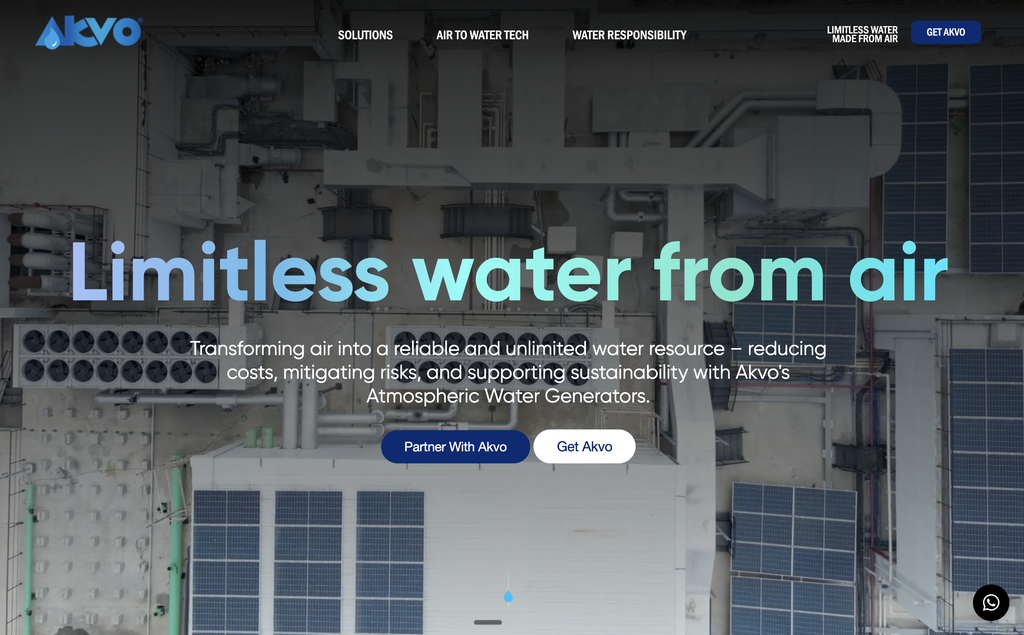
More than 2,000 Akvo machines now run in at least 15 countries. Together they produce roughly 300,000 litres of drinking water a day, and none of it comes from groundwater, a municipal line or a tanker.
Akvo Atmospheric Water Systems, sold under the Akvosphere brand, builds each atmospheric water generator in Chennai. The machines pull humidity out of the surrounding air, purify it, add minerals and deliver it at the point of use. Founder Navkaran Singh Bagga calls the goal Water Independence.
Why drinking water needs another source
The WHO and UNICEF reported in 2025 that 2.1 billion people still lack safely managed drinking water, one in four worldwide. India’s cities lean hard on groundwater, and the strain shows. NITI Aayog’s 2018 water index projected that national demand would reach twice the available supply by 2030 and counted 600 million Indians under high to extreme water stress.
Tankers and bottled water fill the gap. Each adds logistics, and bottles add plastic. An atmospheric water generator takes a different route and makes the water where it is drunk.
How the Akvo atmospheric water generator works
Incoming air is filtered, cooled to its dew point and condensed, the same effect that beads water on a cold glass. The water then moves through a three-stage filter and UV treatment, and minerals go back in for taste.
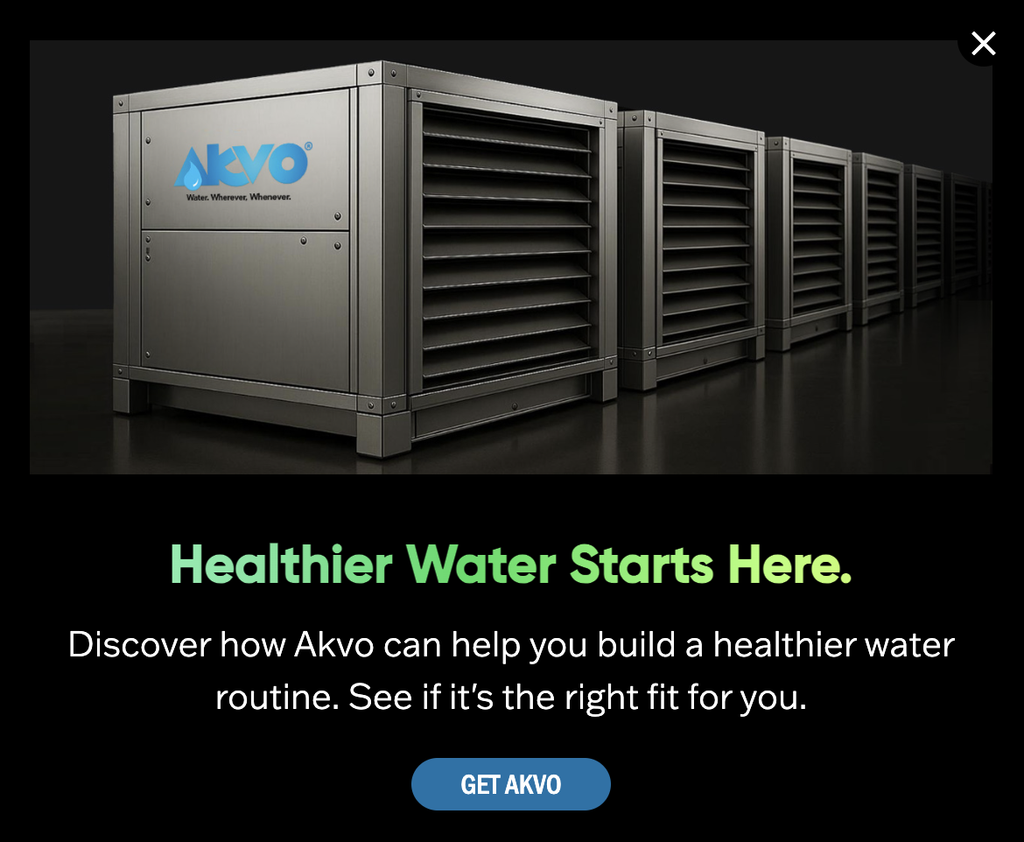
The workhorse is the Water Block. One unit makes up to 500 litres a day and draws 5.5 kW at 30°C and 80% relative humidity. Units stack, so a site can scale toward 100,000 litres a day. In ideal conditions, Akvo’s systems produce up to four litres of water per unit of electricity, according to NITI’s Frontier Tech Hub.
Akvo’s published lab report lists 47 mg/l of total dissolved solids and a pH of 7.6, both inside the limits printed beside them. A remote dashboard called Nimbus OS tracks output and performance.
Where an atmospheric water generator works best
Condensation needs humidity. Akvo lists its ideal range as 25 to 32°C and 70 to 75% relative humidity, and says its machines are not made or marketed for dry or cold climates. Bagga has also said publicly that the technology should not be pitched as a universal answer. NITI’s profile adds that atmospheric water generation is unlikely to replace municipal supply entirely.
That candour shapes how Akvo sells. Every project begins with a feasibility study of demand, operating hours and climate range before a system is sized.
Traction: 2,000 systems and 15-plus countries
Akvo made its first commercial deployment in 2018. Its buyers now include factories, hospitals, renewable energy sites and campuses, along with government bodies and institutions. NITI’s Frontier Tech Hub credits the installed base with more than 100 million litres of drinking water produced without drawing groundwater.
Akvo built that atmospheric water generator base bootstrapped.
Water on Want: a utility contract for water
Under Water on Want (WOW), Akvo installs, owns, operates and maintains the atmospheric water generator plant at the customer’s site. The customer pays per litre consumed and puts up no equipment capital. Contracts carry a minimum offtake tied to rated capacity, a security deposit and end-of-term options. In India, WOW is the company’s main route to market.
The reporting suits sustainability teams. Dashboards track litres generated on site, estimated plastic avoided and estimated tanker transport avoided, numbers that drop straight into an ESG report.
The founder behind it
Bagga grew up in Kolkata, where summers meant shortages and long tanker queues, as he told The Better India. He started Akvo in 2017 after studying India’s climate, the market and competing technologies, Entrepreneur India reported. He came from a business family and was a director at an export company when he began. He still leads Akvo as founder and CEO.
Why investors should watch Akvo
The timing favours on-site supply. Groundwater stress is pushing buyers to look for water that does not depend on a borewell, and sustainability teams want litres and avoided plastic on a dashboard. NITI’s Frontier Tech Hub featured Akvo in May 2026 under its urban development theme.
The advantage is field data. Akvo manufactures its atmospheric water generator range in-house in Chennai and has run more than 2,000 systems across varied climates. That record is the base for sizing each new site.
The model compounds it. WOW turns a one-time equipment sale into a per-litre service with a minimum offtake, so each customer relationship carries recurring revenue.
Two proof points are next. A renewal at the end of a first WOW term would show buyers want the service after their first contract. Third-party data on energy use per litre across seasons would settle the cost question for procurement teams. The solar-powered Helios line is the product to watch beyond that.
The bigger opportunity
Akvo’s bet is that drinking water can be made where it is used. Updates are on its LinkedIn page and at akvosphere.com. With 2,000 machines running in humid regions, the idea has left the pitch deck. If atmospheric water generators keep proving themselves at that scale, supply stops depending on geography and becomes a service a buyer can order.
Frequently asked questions
What is an atmospheric water generator?
An atmospheric water generator is a machine that condenses humidity from the air into drinking water, then filters and treats it. Akvo builds its range in Chennai.
How much water does the Akvo Water Block produce?
One Water Block makes up to 500 litres a day, depending on temperature and humidity. Units stack to meet larger demand.
What is Water on Want?
Water on Want is Akvo’s service contract. Akvo installs and runs the plant on the customer’s site, and the customer pays per litre used.
Related : https://launch91.com/funding/digitalpaani-rs-22-cr-navam-capital/