In a significant boost for India’s burgeoning direct-to-consumer (D2C) food sector, Anveshan, a brand celebrated for its commitment to traditional, minimally processed foods and rural empowerment, has successfully closed a Series B funding round totaling Rs 121 crore. This capital infusion arrives at a pivotal moment, as Indian consumers increasingly prioritize health, authenticity, and transparency in their food choices, creating a fertile ground for brands that can deliver on these promises while also weaving in a strong social impact narrative.
The latest funding round underscores investor confidence in Anveshan’s unique model, which not only brings high-quality, traditionally prepared food products to urban doorsteps but also fosters economic upliftment in rural communities. This fresh capital is poised to accelerate Anveshan’s mission, enabling it to scale its operations, expand its product portfolio, and deepen its impact across India’s vast agricultural landscape. It’s a testament to the idea that commerce and social good can indeed coalesce to create a compelling, scalable venture.
About Anveshan: Bridging Tradition with Modern Consumption
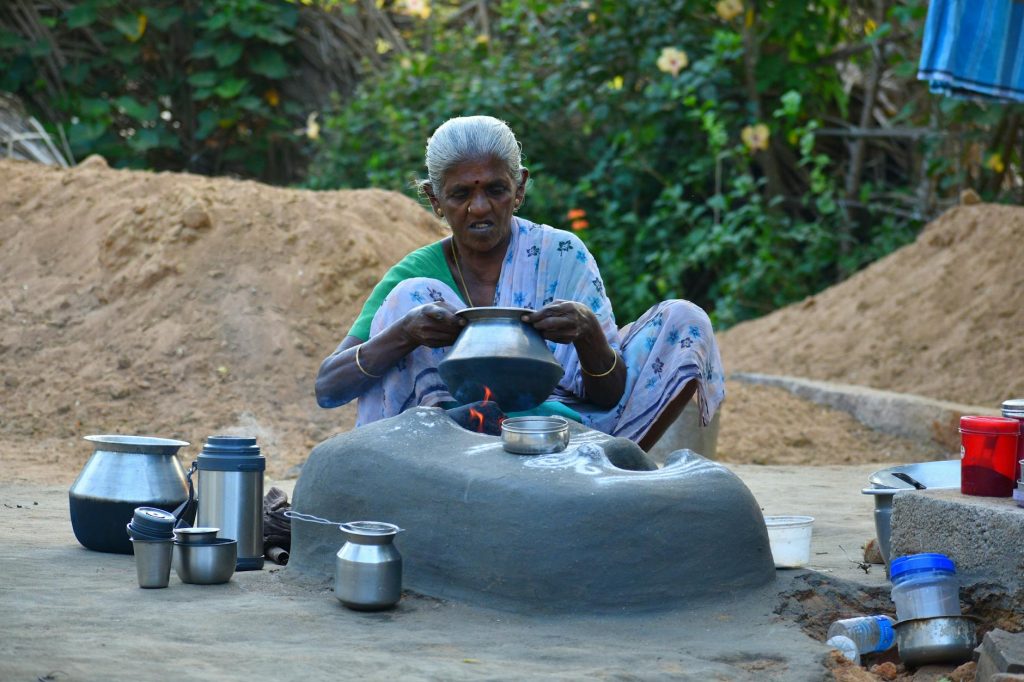
Founded in 2020 by Aayushi Khandelwal, Akhil Kansal, and Kuldeep Parewa, Anveshan set out with a clear vision: to revive India’s rich culinary traditions by making authentic, minimally processed food products accessible to a wider audience. The company’s core philosophy revolves around sourcing ingredients directly from farms and partnering with rural micro-entrepreneurs who prepare these products using age-old, traditional practices.
Anveshan is more than just a food brand; it is a movement to preserve culinary heritage and create sustainable livelihoods. Its product range is a vibrant tapestry of Indian flavors and health essentials, including premium A2 cow ghee, wood-pressed edible oils, raw honey, traditional healthy sweets, various beverage mixes, and a diverse array of other natural food products. Each product tells a story of origin, purity, and craftsmanship.
The company’s journey has been marked by impressive growth. Following a Series A round of Rs 48 crore just a year ago, Anveshan has demonstrated robust financial performance. Its revenue surged significantly, climbing to Rs 77.08 crore in the fiscal year 2025 from Rs 46.84 crore in FY24. While losses also increased to Rs 11.88 crore from Rs 5.74 crore during the same period, this trend is often characteristic of high-growth D2C companies heavily investing in market expansion, supply chain development, and brand building. The founders’ steadfast commitment to quality and their distinctive supply chain model have resonated deeply with a growing base of conscious consumers.
The Deal: A Strong Vote of Confidence from Diverse Investors
The Series B round, amounting to Rs 121 crore (approximately $12.7 million), saw strong participation from a mix of leading venture capital firms, impact investors, and prominent angel investors, signaling broad market confidence in Anveshan’s trajectory and potential. Vertex Ventures, a well-regarded global venture capital firm with a strong footprint in Southeast Asia and India, led this significant round, contributing Rs 75 crore.
The round also saw substantial participation from the International Finance Corporation (IFC), the private sector arm of the World Bank Group, which infused Rs 31 crore. IFC’s involvement is particularly noteworthy, highlighting Anveshan’s alignment with sustainable development goals and its potential for creating widespread social and economic impact. Existing investors, including Titan Capital, the early-stage investment firm founded by Kunal Bahl and Rohit Bansal, and Wipro Enterprises, through its consumer care ventures arm, also recommitted with investments of Rs 6 crore and Rs 5.9 crore, respectively. This continued backing from previous investors speaks volumes about their satisfaction with Anveshan’s progress and future prospects.
Further bolstering the round were investments from notable angel investors, including boAt co-founders Aman Gupta and Sameer Mehta, who each contributed Rs 38 lakh, and Swiggy co-founder Sri Harsha Majety. Their participation underscores a belief in Anveshan’s D2C model and its ability to scale effectively within the competitive Indian consumer landscape. Additional capital came from ALTrust and Force Ventures, rounding out a diverse and strategic investor syndicate.
This latest funding round has propelled Anveshan’s valuation to approximately Rs 846 crore (around $89 million), nearly doubling its previous valuation of Rs 430 crore (approximately $51 million) from its Series A round. Vertex Ventures now holds an 8.87% stake, while IFC commands 3.66%. Existing investors Wipro Enterprises and Titan Capital Winners Fund have increased their stakes to 3.69% and 3.25% respectively. Despite these significant external investments, the co-founders collectively maintain a substantial 47.63% stake, reflecting their deep commitment and continued leadership in the company’s growth.
Investor Thesis: Beyond Financial Returns
The investor interest in Anveshan goes beyond mere financial metrics. Vertex Ventures, known for backing innovative and scalable businesses, likely sees Anveshan as a frontrunner in the premium D2C food segment, poised to capture a significant share of the health-conscious consumer market. Their investment signals a strong belief in the brand’s ability to build a robust supply chain, maintain product quality, and execute a compelling go-to-market strategy. The D2C model, with its direct feedback loop and efficient distribution, is particularly attractive to VCs looking for high-margin, scalable consumer brands.
IFC’s participation is a clear endorsement of Anveshan’s broader impact. The organization typically invests in companies that demonstrate strong development impact potential alongside financial viability. Anveshan’s model of empowering rural micro-entrepreneurs and preserving traditional agricultural practices perfectly aligns with IFC’s mandate to foster inclusive growth and sustainable development in emerging markets. Their investment is a powerful signal to the market about the brand’s positive societal contributions.
Meanwhile, the continued support from strategic investors like Wipro Enterprises highlights a long-term vision for Anveshan within the broader consumer goods ecosystem. For angel investors like Aman Gupta and Sri Harsha Majety, their involvement likely stems from a recognition of Anveshan’s strong brand narrative, its authentic product offerings, and the operational excellence required to build a successful D2C business in India. Their expertise in scaling consumer brands and technology platforms will undoubtedly be invaluable as Anveshan navigates its next phase of growth.
Use of Funds: Fueling Strategic Expansion and Impact
According to regulatory filings, the primary objective for this fresh capital is to “augment the company’s long-term financial resources.” While a broad statement, in the context of a rapidly scaling D2C brand like Anveshan, this typically translates into several strategic areas of deployment:
- Supply Chain Strengthening: Investing in robust infrastructure for sourcing, processing, and logistics to ensure consistent quality and efficient delivery as the company scales. This will involve expanding the network of rural micro-entrepreneurs and enhancing quality control measures at every stage.
- Product Portfolio Expansion: Research and development into new traditional food products, allowing Anveshan to tap into additional consumer needs and preferences, further diversifying its offerings.
- Market Penetration and Geographic Expansion: Deepening its presence in existing urban markets and exploring new cities, potentially through a mix of online and offline channels. This might include investments in digital marketing campaigns and strategic partnerships.
- Technology and Platform Enhancement: Improving the D2C e-commerce platform for a seamless customer experience, leveraging data analytics for better personalization, and optimizing backend operations.
- Talent Acquisition: Building out key teams across product development, marketing, operations, and technology to support the ambitious growth plans.
The overarching goal is to build a sustainable and scalable business that can continue to deliver authentic products while maximizing its social impact, ensuring that the benefits of its growth are shared with the rural communities it partners with.
Market Opportunity: Tapping into India’s Conscious Consumer
The Indian food market is undergoing a profound transformation, driven by increasing health awareness, disposable incomes, and a yearning for natural and traditionally prepared foods. The D2C segment, in particular, has witnessed explosive growth, fueled by digital adoption and a preference for brands that offer transparency and a direct relationship with consumers.
The addressable market for Anveshan is vast. It operates at the intersection of several high-growth segments: the broader D2C food and beverage market, the burgeoning organic and natural foods segment, and the niche but rapidly expanding market for traditional and regional Indian delicacies. Consumers are increasingly wary of highly processed foods and are actively seeking out products that are pure, free from artificial additives, and boast clear provenance. Anveshan’s emphasis on “minimally processed” and “traditional practices” directly addresses this demand.
While the competitive landscape includes various organic food brands, specialized regional food companies, and a multitude of general D2C players, Anveshan distinguishes itself through its unique sourcing model. By empowering local artisans and ensuring stringent quality checks on traditional preparation methods, it creates a powerful differentiation that resonates deeply with consumers looking for authenticity and ethical sourcing. This unique positioning, coupled with a strong brand narrative, provides Anveshan with a distinct edge in a crowded market.
What’s Next: Scaling Impact and Expanding Reach
With this fresh injection of capital, Anveshan is poised for an accelerated growth phase. The company’s strategic direction points towards not just expanding its product catalog, but also deepening its engagement with rural communities. The founders envision a future where Anveshan becomes synonymous with authentic Indian food, reaching millions of households while simultaneously uplifting thousands of micro-entrepreneurs. Expect to see significant investments in scaling the network of rural partners, ensuring robust training, and providing the necessary infrastructure to meet growing demand.
Geographic expansion will likely be a key focus, moving beyond its current strongholds to penetrate new tier-1 and tier-2 cities, leveraging data to identify high-potential markets. Furthermore, Anveshan could explore strategic partnerships or even consider an omni-channel approach, cautiously integrating with select modern trade outlets to broaden its reach while maintaining its D2C ethos. Product development will undoubtedly continue, with an eye towards innovative offerings that blend traditional wisdom with contemporary preferences, perhaps venturing into ready-to-eat traditional snacks or specialized dietary products.
The company will also be keen to enhance its technological backbone, using data analytics to understand consumer preferences better, optimize supply chain efficiency, and personalize the customer journey. As the D2C ecosystem matures, building a strong community around the brand will be crucial, and Anveshan’s story of purity and empowerment offers fertile ground for such initiatives.
Anveshan’s Series B round is more than just a financial milestone; it is a validation of a business model that successfully intertwines commercial ambition with profound social impact. As India continues its journey of economic growth, brands like Anveshan are demonstrating that the path to success can also be a path to a more sustainable and equitable future.