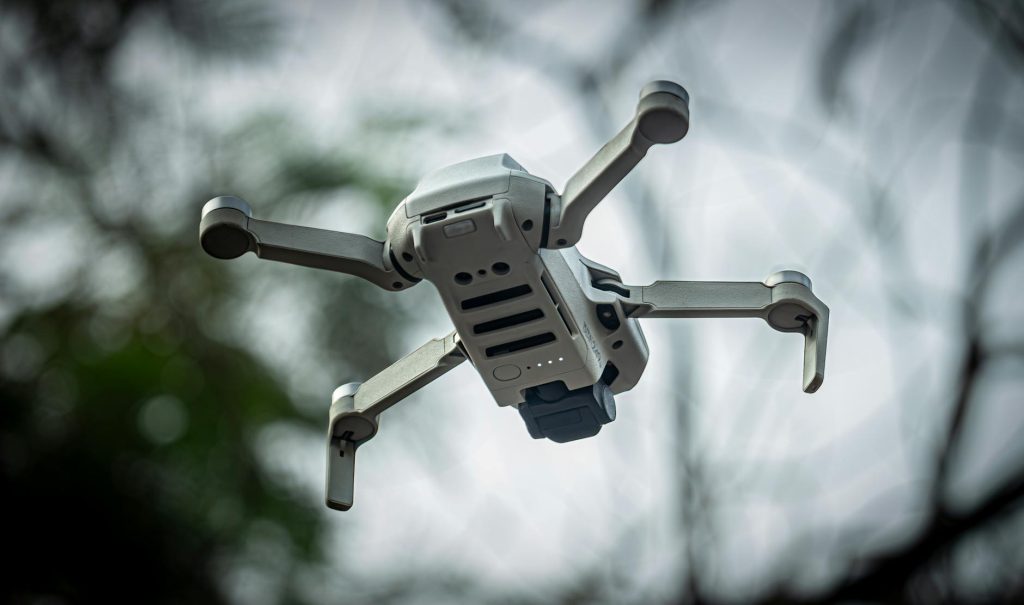
In a significant endorsement of homegrown deep-tech, IIT Kanpur-incubated EndureAir Systems has secured a ₹30 crore grant. This capital infusion, provided under the central government’s ambitious Research and Development Initiative (RDI) scheme, is earmarked to fast-track the development of its heavy-payload drone platform, a critical piece of technology for India’s defence and logistics sectors.
This is not a conventional venture capital round. The selection of EndureAir as one of the first five startups to receive support from the government’s ₹1 Lakh Crore RDI fund represents a strategic national investment. It signals a clear intent to build sovereign capabilities in critical technologies, moving beyond software and services into the complex domain of advanced hardware. For EndureAir, this grant validates its technology not just as a commercially viable product but as a potential cornerstone of strategic infrastructure, particularly for logistics in India’s most challenging terrains.
The funding arrives at a moment when the Indian government is aggressively pushing for self-reliance in defence and aerospace. By backing a company like EndureAir, the Department of Science & Technology is placing a calculated bet on domestic innovation to solve uniquely Indian problems, such as supplying remote military outposts and enabling disaster relief in inaccessible regions.
From the Lab to the Sky: The EndureAir Story
EndureAir Systems designs and manufactures high-performance Vertical Take-Off and Landing (VTOL) unmanned aerial systems (UAS). Born from the rigorous academic environment of IIT Kanpur, the company was founded in 2018 by Professor Abhishek from the Department of Aerospace Engineering, along with his former students, Rama Krishna and Chirag Jain. This origin story is central to its identity. EndureAir is not a startup chasing market trends but a deep-tech firm built on a foundation of fundamental research and engineering excellence.
The company’s focus has always been on building drone platforms from the ground up, tailored specifically for India’s demanding operational conditions, which often involve high altitudes, extreme weather, and complex topography. This has allowed them to create robust and reliable systems that can outperform off-the-shelf international alternatives.
Before this grant, EndureAir had already proven its capabilities in the field. Its existing drone platforms, including the SABAL-20 and SABAL-40, have been successfully deployed across various defence and civilian missions. These systems have demonstrated their value in surveillance and logistics, particularly in the unforgiving environments of India’s northern borders. This track record of real-world performance was undoubtedly a key factor in its selection for the RDI scheme.
The company’s journey has been supported by astute early-stage investors who recognized its potential. In 2025, EndureAir raised ₹25 crore in a round led by the IAN Alpha Fund and the IAN Angel Fund. That infusion of private capital allowed the company to scale its initial operations and refine its core technology. Including this new grant, EndureAir has raised approximately $7 million to date, a testament to its hybrid funding strategy that effectively leverages both private venture capital and strategic government support.
The Deal: A Strategic Government Mandate
The ₹30 crore (approximately $3.1 million) in funding is structured as a grant, meaning it does not involve equity dilution. It is being disbursed by the Department of Science & Technology (DST) as part of the maiden cohort of the RDI scheme, a landmark initiative launched in July 2025 to catalyze innovation in sectors like deep-tech, artificial intelligence, robotics, and space technology.
Being selected as one of the first beneficiaries of this massive national fund is a mark of immense prestige. It places EndureAir in an elite group of companies identified by the government as having the potential to create a disproportionate impact on the country’s technological and economic future. The government’s investment thesis here is straightforward: to nurture and scale companies that can reduce India’s import dependency and build a resilient domestic supply chain for critical hardware.
This grant is specifically targeted at one of EndureAir’s most ambitious projects: the SABAL-200 kg drone. This platform is a significant leap forward in aerial logistics technology and is designed to address a pressing need for reliable, heavy-lift transport in remote areas.
Use of Funds: Building a Heavy-Lift Workhorse
EndureAir has a clear and focused plan for the deployment of this capital. The funds will be channeled directly into accelerating the journey of the SABAL-200 kg platform from advanced development to commercial readiness and scaled manufacturing. The allocation strategy is multi-pronged:
- Research and Development: A significant portion will be dedicated to the final stages of R&D for the SABAL-200 kg platform, refining its avionics, control systems, and structural integrity to meet stringent military and civilian certification standards.
- Manufacturing Expansion: The company plans to scale its manufacturing facilities to move from prototype and small-batch production to a full-scale assembly line. This is crucial for meeting the anticipated demand from defence and commercial clients.
- Technology Upgrades: Capital will be used to upgrade existing technologies across their product portfolio, ensuring their entire suite of drones remains at the cutting edge.
- Field-Testing Infrastructure: For hardware of this nature, rigorous testing is non-negotiable. The grant will help EndureAir build out its field-testing infrastructure to simulate diverse and extreme operational conditions, ensuring the platform’s reliability and safety.
The SABAL-200 kg is a VTOL unmanned aerial system engineered to carry payloads of up to 200 kilograms. With an impressive endurance of 2.5 hours and an operational range of 200 kilometers, it is designed to be a true workhorse for last-mile logistics in environments where ground transport is impossible or impractical.
Market Opportunity: Conquering the Tyranny of Distance
The market for heavy-payload drones in India is nascent but poised for explosive growth. The primary driver is the immense logistical challenge faced by the Indian Armed Forces in maintaining supply lines to high-altitude posts in the Himalayas. Transporting essential supplies like food, ammunition, and medical equipment currently relies on helicopters, which are expensive to operate and often grounded by bad weather, or on treacherous road networks. A fleet of SABAL-200 kg drones could provide a more cost-effective, all-weather, and on-demand logistics solution.
Beyond defence, the commercial applications are vast. Disaster management agencies can use these platforms to deliver aid to communities cut off by floods or landslides. In sectors like healthcare, they can transport medical supplies to remote primary health centers. For infrastructure projects in hilly regions, they can ferry equipment and materials, significantly reducing project timelines and costs.
While the Indian drone ecosystem includes notable players like IdeaForge Technology and Garuda Aerospace, EndureAir has carved out a distinct niche with its focus on high-endurance, heavy-payload VTOL systems developed from first principles. Its deep R&D roots at IIT Kanpur provide a level of technical credibility that is difficult for competitors to replicate. This government grant further solidifies its position as a leader in this specific, high-value segment.
What’s Next: From Potential to Production
For EndureAir, the next 18 to 24 months will be critical. The primary objective is to transition the SABAL-200 kg drone from a developmental project to a fully certified, production-ready platform. This involves completing rigorous trials, securing necessary regulatory approvals, and setting up a robust manufacturing process.
The backing from the RDI scheme is more than just financial fuel; it is a powerful catalyst that will likely open doors to significant government and defence contracts. It serves as a seal of approval that de-risks the technology in the eyes of large institutional customers.
The founders’ vision extends beyond just building advanced hardware. They aim to contribute to the “Make in India” mission by creating a domestic ecosystem for drone manufacturing, which includes generating skilled jobs in Tier II and Tier III cities as they expand their production footprint. With this strategic infusion of capital and a clear mandate from the government, EndureAir Systems is no longer just a promising startup. It is now a key player in India’s quest for technological self-reliance and a company poised to redefine the future of aerial logistics.