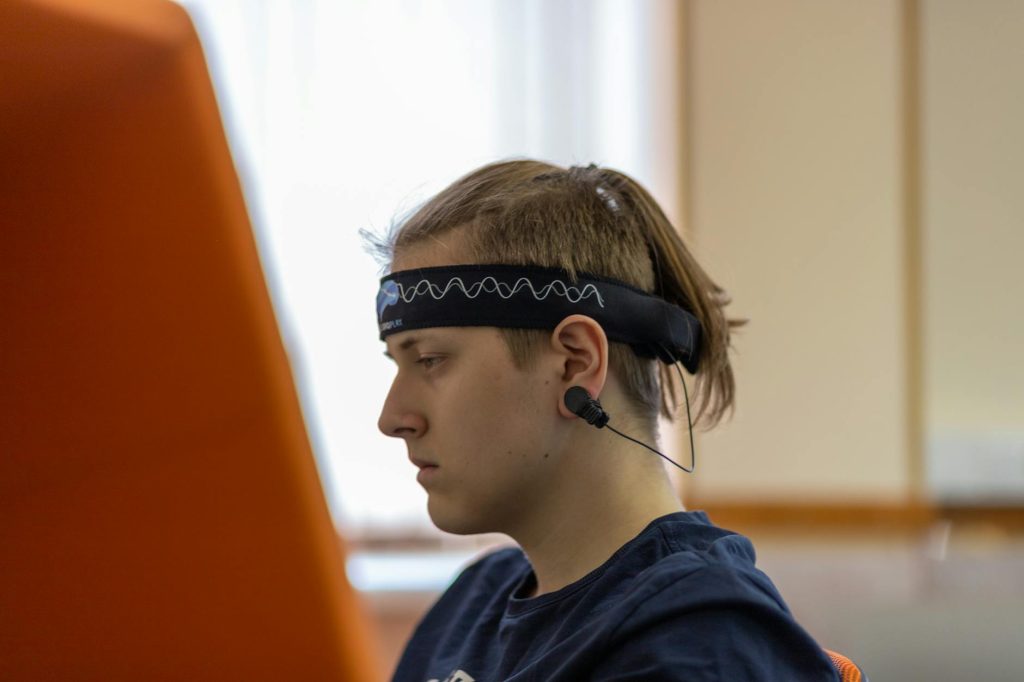
In a significant validation for India’s burgeoning deep-tech and hardware ecosystem, neurotechnology startup Sychedelic has raised $3.5 million (approximately Rs 31.5 crore) in a heavily subscribed seed funding round. The investment signals a growing investor appetite for ambitious, science-led solutions tackling the global mental wellness crisis. This capital infusion is not merely about scaling another software application, but about financing the complex journey of a regulated hardware product from a refined prototype to a global consumer brand.
Sychedelic is stepping into a market saturated with passive wellness solutions like meditation apps and generic trackers. The company’s core proposition is a radical departure, offering an active, personalized intervention. By building what it calls the world’s first closed-loop neuromodulation wearable in a familiar headphone format, Sychedelic aims to move beyond simple monitoring and into the realm of real-time, adaptive brain state management. For a startup navigating the treacherous worlds of hardware manufacturing, international patents, and medical device regulation, this seed funding is the critical fuel required to bridge the gap between a validated concept and a market-ready product.
A New Paradigm for Mental Wellness
Founded by the visionary duo of Ria Rustagi and Bhavya, Sychedelic operates from dual bases in Gurugram and New York, a structure that reflects its global ambitions from day one. The company is on a mission to make proactive mental healthcare an accessible and integrated part of daily life. Their flagship product is a wearable device, cleverly disguised as a pair of premium headphones, that directly interacts with the user’s neural activity.
The technology is what truly sets it apart. The device functions as a “closed-loop” system, a term that describes its ability to sense, analyze, and respond. It combines several cutting-edge technologies:
- Biometric Tracking: The wearable continuously monitors key physiological markers, such as heart rate variability (HRV), to gauge the user’s current mental and physiological state, including stress and focus levels.
- Neurostimulation: Based on the real-time data, the device employs non-invasive neurostimulation techniques, including transcranial Direct Current Stimulation (tDCS), to gently influence brainwave patterns.
- Adaptive AI: An intelligent algorithm processes the biometric feedback and adjusts the stimulation protocols in real time, creating a personalized experience that adapts to the user’s needs moment by moment. It also incorporates established audio-based techniques like binaural beats to enhance its effects.
The goal is to create personalized neuroadaptive experiences that can actively help with stress reduction, enhance focus, improve sleep quality, and contribute to overall mental well-being. This is a significant leap from passive wearables that simply report data, leaving the user to interpret and act on it. Sychedelic’s device is designed to be an active partner in managing one’s mental state.
The company’s approach has already been validated by a community of over 100 early adopters who have been using the product for the past six months. This crucial feedback loop has allowed the team to meticulously refine the hardware, optimize the stimulation systems, and sharpen the adaptive algorithms based on real-world usage. More critically, Sychedelic has achieved a milestone that many hardware startups only dream of at this stage: it has secured approval from the Central Drugs Standard Control Organisation (CDSCO), granting the product official medical device status in India. This regulatory green light is a powerful differentiator and a massive moat against future competition.
The Deal: A Syndicate of Believers
The $3.5 million seed round was a strategically constructed syndicate of investors who understand the complexities of deep-tech and hardware ventures. The round was led by a consortium including TurboStart, Ideabaaz, and Praveek Ventures. Their participation is a strong endorsement from firms willing to write checks for ventures that require patience and substantial capital for research, development, and manufacturing, a departure from the software-as-a-service models that have dominated venture funding in recent years.
The round also saw enthusiastic participation from a geographically diverse group of angel investors hailing from India, the United Arab Emirates, and the global Non-Resident Indian (NRI) community. This broad base of support underscores the universal appeal of Sychedelic’s mission and the confidence in the founding team’s ability to execute on a highly ambitious roadmap. While the company’s valuation was not disclosed, securing such a substantial seed round for a hardware product with a medical device classification points to significant investor confidence in the technology and the market opportunity.
Deploying Capital for a Global Debut
Sychedelic has outlined a clear and disciplined strategy for the deployment of this new capital, focusing on the critical pillars required to launch a global hardware product.
A primary allocation will be directed towards marketing and a global Kickstarter launch scheduled for May 2026. For a consumer hardware company, a Kickstarter campaign is more than a fundraising tool. It is a powerful engine for market validation, community building, and securing the first wave of paying customers. A successful campaign will provide invaluable data and de-risk future production runs.
A significant portion of the funds will be used for manufacturing scale-up. Moving from a few hundred beta units to mass production is one of the most challenging phases for any hardware startup, often referred to as the “valley of death”. This capital ensures Sychedelic can establish robust supply chains, finalize tooling, and implement stringent quality control processes to deliver a reliable, high-quality product to its first customers.
Finally, the company will continue to invest heavily in research expansion. The team is committed to deepening the scientific foundations of its product, refining its AI algorithms, and exploring new applications for its technology. This commitment to R&D, supported by its patent-pending status on its core innovations, is crucial for building a long-term, defensible business in the competitive neurotech landscape.
A Multi-Billion Dollar Opportunity in Mind
Sychedelic is entering the global mental wellness market, an industry valued in the hundreds of billions of dollars and growing rapidly as awareness and destigmatization of mental health continue to rise. While the competitive landscape includes established players in the wellness wearable space like Muse (EEG headbands for meditation) and companies exploring tDCS for depression like Flow Neuroscience, Sychedelic’s unique combination of features gives it a distinct edge.
The decision to embed advanced neurotechnology into a familiar headphone format is key to their strategy, aiming to remove the stigma associated with mental health devices and encourage consistent, everyday use.
Its primary differentiator is the “closed-loop” system. Unlike devices that offer a one-size-fits-all stimulation program or simply track brainwaves, Sychedelic’s product promises a dynamic, responsive experience. Furthermore, its consumer-friendly form factor is a strategic masterstroke. By building its technology into a device people already wear daily for music and calls, Sychedelic lowers the barrier to adoption and makes neural wellness a seamless part of a user’s routine. The CDSCO medical device approval in India provides a formidable regulatory advantage, lending it a level of credibility that most consumer wellness gadgets lack.
What’s Next: From Seed to Scale
With fresh capital in the bank and a clear path forward, Sychedelic is laser-focused on its next set of milestones. All eyes are on the upcoming Kickstarter campaign, which will serve as the company’s official introduction to the global market. A successful launch will not only generate revenue and pre-orders but also build a passionate community of early adopters who can champion the product.
The company will continue to pursue its dual-market strategy, leveraging its base in India for manufacturing and regulatory advantages while tapping into the massive consumer market in the United States and beyond. Protecting its intellectual property through its pending global patents will remain a top priority.
This $3.5 million seed round is more than just a financial transaction. It is a declaration of intent from Sychedelic and its investors. It is a bet that the future of mental wellness lies not in passive observation, but in active, intelligent, and personalized intervention. As Sychedelic prepares to take its product to the world, it carries the potential to not only build a category-defining company but also to fundamentally change how we understand and manage our own minds.