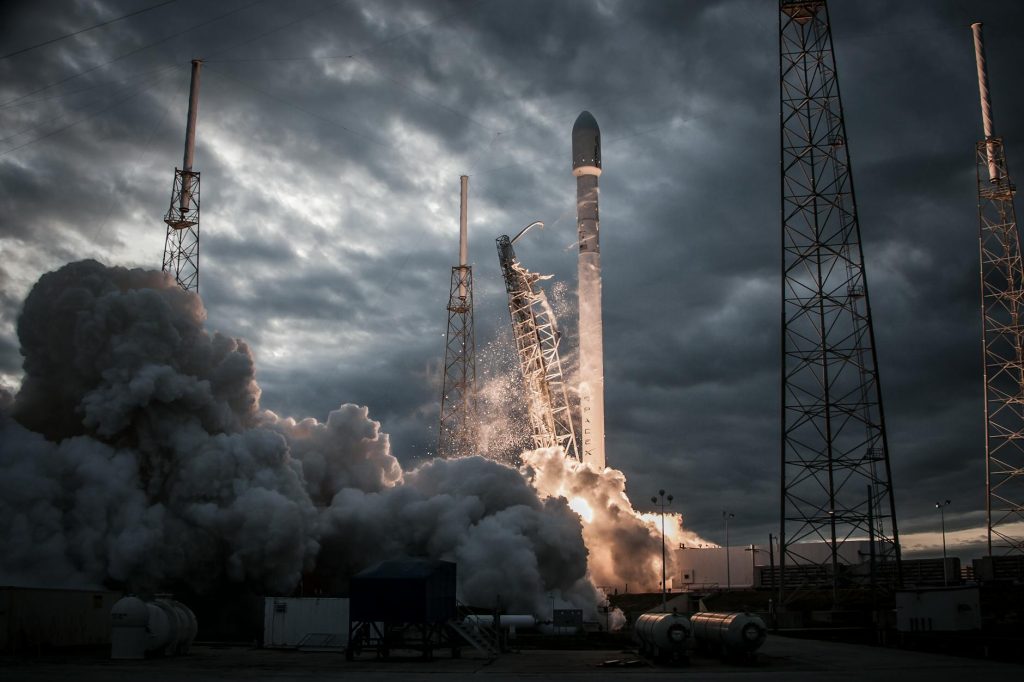
In what is poised to become the largest and most consequential public market debut in history, Elon Musk’s Space Exploration Technologies Corp., known universally as SpaceX, has officially filed for an initial public offering. The move, long anticipated by private and public market investors alike, pulls back the curtain on one of the world’s most secretive and ambitious companies. The filing reveals a business of immense scale, staggering capital expenditure, and a strategic pivot towards artificial intelligence that repositions the company for the next decade. This is not just an IPO. It is a landmark event for the technology ecosystem, one that could unlock a frozen public market and set a new benchmark for what a high-growth, capital-intensive venture can achieve.
For years, SpaceX has operated as Musk’s private fiefdom, rewriting the rules of the aerospace industry away from the quarterly scrutiny of Wall Street. With this filing, the company is inviting the public to co-fund its audacious mission, which has now expanded from colonizing Mars to building the foundational infrastructure for artificial general intelligence. The capital raised, potentially reaching $75 billion, is destined to fuel a vision that is as much about computation and data as it is about rockets and satellites.
About The Company: From Reusable Rockets to an AI Powerhouse
Founded by Elon Musk in 2002 with the singular goal of reducing space transportation costs to enable the colonization of Mars, SpaceX has systematically dismantled the legacy aerospace industry. Its core innovation, the reusable orbital-class rocket, has fundamentally altered the economics of space access. The workhorse Falcon 9 rocket has become the dominant launch vehicle globally, giving the United States an unprecedented advantage in space. The company’s Starship program, a fully reusable super heavy-lift launch vehicle, represents the next order of magnitude in this vision.
However, the financial engine of the company has become its Starlink division. Launched commercially in 2021, Starlink is a sprawling constellation of low-Earth-orbit satellites providing high-speed internet to underserved regions across the globe. The S-1 filing reveals that Starlink is now the primary revenue driver, accounting for the majority of the company’s $18.7 billion in revenue for the 2025 fiscal year, a 33% increase from the previous year.
The filing also provides the first official look at the company’s financial health. While revenues are growing at a formidable clip, so are expenditures and losses. SpaceX reported a net loss of $4.9 billion in 2025, a sharp reversal from a $791 million profit in 2024. This loss is a direct result of a conscious strategy to reinvest every available dollar, and more, into future growth. The most telling data point is the company’s capital expenditure, which nearly doubled to $20.7 billion in 2025.
A critical, recent development that re-contextualizes the entire business is the February 2026 merger with xAI, Musk’s artificial intelligence venture. This move integrated the team behind the Grok AI chatbot and the social media platform X (formerly Twitter) directly into SpaceX. The company is no longer just an aerospace manufacturer. It is a vertically integrated technology conglomerate spanning launch, global communications, and now, large-scale AI.
The Deal: A Generational Public Offering
SpaceX is seeking to raise between $50 billion and $75 billion in its initial public offering, an amount that would dwarf all previous listings. The offering is expected to value the company at approximately $1.25 trillion, making it the first American company to debut on the public markets with a valuation in the trillion-dollar club. Some familiar with the planning suggest the final valuation could even exceed $2 trillion, depending on market appetite.
The company plans to list its Class A common stock on the Nasdaq under the ticker symbol SPCX. In a nod to its operational headquarters, it will also seek a listing on the newly established Nasdaq Texas exchange. The IPO represents a coming-of-age moment, transitioning SpaceX from a venture-backed behemoth into a publicly traded institution. While private investors like Founders Fund, Sequoia Capital, and Google have enjoyed astronomical returns on their early belief, this offering opens the door for institutional and retail investors to participate in the company’s next chapter.
Unlike a traditional venture round led by a specific fund, an IPO is an offering to the entire market. The “lead investors” are the bulge-bracket investment banks underwriting the deal, tasked with building a book of demand from the world’s largest asset managers, sovereign wealth funds, and hedge funds. The success of their efforts will determine where in the $50 to $75 billion range the final capital raise lands.
Use of Funds: Fueling the AI Arms Race
The prospectus makes one thing abundantly clear: SpaceX is all-in on artificial intelligence. While the company will continue to invest in its core space infrastructure, the overwhelming majority of its capital is being directed towards building a world-class AI platform. The breakdown of its 2025 capital expenditure is illuminating:
- Artificial Intelligence Infrastructure: $12.7 billion
- Starlink Operations: $4.2 billion
- Rockets and Space Ventures: $3.8 billion
This trend is not just continuing but accelerating dramatically. In the first quarter of 2026 alone, the company has already deployed $10.1 billion in capital, with a staggering $7.7 billion of that allocated to AI. The proceeds from this historic IPO will be poured directly into this strategy. The funds will be used to acquire massive amounts of computational hardware, secure energy resources for data centers, and attract top-tier AI research and engineering talent. SpaceX is not just competing with other AI startups; it is building infrastructure to compete at the scale of Amazon Web Services, Google Cloud, and Microsoft Azure.
Market Opportunity: Space, Connectivity, and Intelligence
SpaceX is attacking what it defines as a $28.5 trillion total addressable market, a figure that combines the future of space exploration, global connectivity, and artificial intelligence. The company’s competitive moat is its vertical integration. It builds the rockets (Falcon 9, Starship) that launch the satellites (Starlink) that provide the global data connectivity to train and run the AI models (Grok) that will power future services.
In the launch market, SpaceX’s dominance is near-absolute. Its reusable rockets give it a pricing and cadence advantage that competitors like ULA, a joint venture of Boeing and Lockheed Martin, Jeff Bezos’s Blue Origin, and Europe’s Arianespace have been unable to match. SpaceX currently launches five times more mass to orbit than all other competitors combined.
In satellite communications, Starlink has created a new market for high-performance, low-latency internet anywhere on the planet. While it faces potential competition from Amazon’s Project Kuiper, Starlink has a multi-year head start with thousands of satellites already in orbit and millions of active subscribers.
The true, exponential opportunity, however, lies in AI. By merging with xAI and leveraging X’s real-time data firehose, SpaceX aims to build next-generation AI models. Its ownership of the Starlink network provides a unique, proprietary global distribution channel for AI services, potentially bypassing traditional terrestrial infrastructure. This strategy pits SpaceX against the most valuable companies in the world, but it is a battle Musk believes he can win by controlling the entire stack from the physical layer of satellites to the application layer of AI services.
What’s Next: Execution Under Public Scrutiny
The immediate milestone is the IPO itself, which is expected to price and begin trading as early as June 2026. A successful debut would not only provide SpaceX with a massive war chest but could also serve as an icebreaker for other “decacorns” like Anthropic and OpenAI, which have been waiting for a favorable market window to go public.
Post-IPO, the company will face the relentless pressure of public market expectations. Investors will be laser-focused on the path to profitability, watching closely to see if the colossal investments in AI begin to generate commensurate returns. Key operational milestones will include the continued expansion of the Starlink constellation, achieving the first crewed flight of Starship, and demonstrating meaningful progress with its Grok AI models.
The S-1 filing is more than a financial document. It is a manifesto for a new type of technology company, one that operates on a planetary scale with a timeline measured in decades, not quarters. For Elon Musk, taking SpaceX public is a calculated risk, trading some measure of control for the vast resources needed to fund his ultimate ambitions. For the public market, it is a rare opportunity to invest in a company that is actively, and aggressively, building the future.