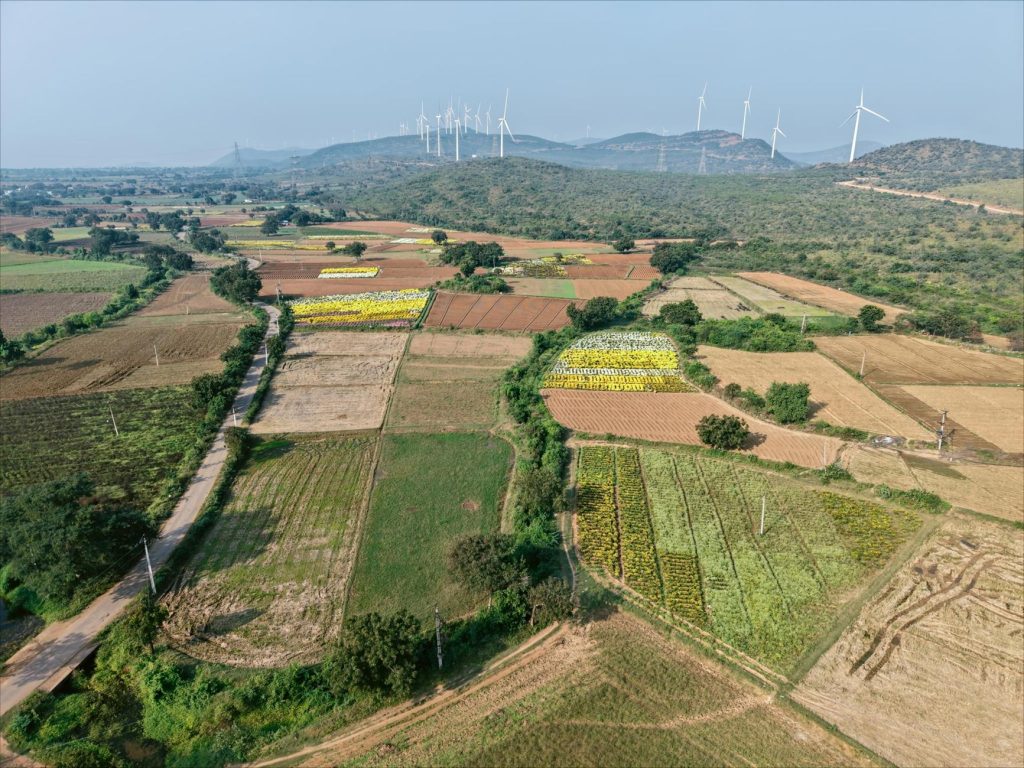
India’s energy landscape is a high-stakes arena, consistently vulnerable to the tremors of global geopolitics. With nearly 85% of its crude oil requirements met through imports, and a staggering 90% of its LPG supplies traversing the volatile Strait of Hormuz, the nation’s economic stability frequently finds itself at the mercy of distant conflicts and international pricing whims. Recent tensions in West Asia, notably the ongoing ramifications of the Israel-U.S.-Iran dynamic, have served as yet another stark reminder of this precarious dependence, sending ripples of uncertainty through global energy markets and directly impacting India’s supply chains and fiscal health. In this context, the push for indigenous, sustainable energy sources is no longer merely an environmental aspiration; it is an economic imperative and a cornerstone of national security.
Among the various alternatives, compressed biogas (CBG) emerges as a surprisingly potent, yet largely under-leveraged, solution. It promises not just a cleaner future, but a pathway to reduce India’s crippling import bill, foster a circular economy, and create significant opportunities for innovation and entrepreneurship within the startup ecosystem. However, despite several well-intentioned government initiatives over the years, the progress in scaling India’s biogas sector has been conspicuously slow. The gap between policy intent and ground-level impact signals a need for a recalibrated approach, one that directly addresses the unique challenges and unlocks the immense potential for India’s burgeoning tech and startup community.
The Geopolitical Shadow: India’s Energy Vulnerability
The narrative of India’s energy challenge is fundamentally tied to its growth story. A rapidly expanding economy and a burgeoning population demand ever-increasing energy supplies. While diversification efforts have seen India explore new crude oil suppliers beyond its traditional West Asian partners, the fundamental dependency remains. The sheer volume of oil and gas needed to fuel its industries, power its transportation, and light its homes means that global price fluctuations and supply disruptions have immediate, tangible effects on inflation, industrial output, and consumer costs.
Consider the recent geopolitical landscape. The complex interplay of power and conflict in West Asia directly translates into higher crude oil prices, impacting everything from fuel at the pump to the cost of raw materials for manufacturing. Furthermore, the critical choke point of the Strait of Hormuz, through which a vast majority of India’s LPG imports pass, represents a single point of failure that could cripple domestic supplies in the event of severe regional instability. This scenario underscores a strategic vulnerability that no responsible government can ignore. Reducing this reliance on imported fossil fuels is not just about reducing carbon footprints; it is about building a more resilient, self-sufficient India.
Biogas: A Multilayered Solution for a Modern India
Compressed biogas, essentially purified and compressed biomethane, is a renewable fuel derived from organic waste materials such as agricultural residue, cattle dung, municipal solid waste, and industrial effluents. Its production involves anaerobic digestion, a natural process where microorganisms break down organic matter in the absence of oxygen, producing biogas. This raw biogas is then upgraded by removing impurities like carbon dioxide, hydrogen sulfide, and moisture, yielding a fuel with properties similar to natural gas (CNG).
The benefits of scaling CBG production are manifold and directly address several pressing national challenges:
- Energy Security: Every unit of CBG produced domestically reduces the need for imported fossil fuels, directly contributing to a lower import bill and bolstering national energy independence.
- Environmental Sustainability: CBG is a clean burning fuel. Its production also helps in managing organic waste, reducing landfill burden, mitigating methane emissions (a potent greenhouse gas) from decomposing organic matter, and providing a sustainable solution for agricultural residue management, thereby curbing stubble burning.
- Circular Economy & Rural Development: The process generates organic fertilizer (digestate) as a valuable byproduct, improving soil health and reducing reliance on chemical fertilizers. Furthermore, setting up biogas plants, particularly in rural areas, can create local employment opportunities, empower farmers, and establish new revenue streams.
- Decentralized Energy Production: Biogas plants can be scaled from small village-level units to large industrial facilities, allowing for decentralized energy production that can cater to local needs and reduce transmission losses.
Government Intent vs. Ground Reality: The Policy Conundrum
The Indian government has, over the past decade, shown a clear intent to promote biogas. Initiatives like the Sustainable Alternative Towards Affordable Transportation (SATAT) scheme, launched in 2018, aimed to establish an ecosystem for the production of CBG from various waste sources and its use as an automotive fuel. The GOBAR-Dhan scheme, part of the Swachh Bharat Mission Grameen (SBM-G), focuses on converting cattle dung and solid waste into CBG and organic manure, specifically targeting rural sanitation and wealth creation. These programs envisioned a network of thousands of CBG plants across the country, significantly boosting domestic production.
Despite these laudable policy frameworks, the on-ground implementation and scaling have been slower than anticipated. The ambitious targets for CBG production and plant establishment have not yet been fully realized. The reasons are complex and multifaceted:
- Capital Intensity and Investment Hurdles: Setting up CBG plants requires substantial initial capital investment. While government schemes offer some support, attracting private investment, especially for new ventures, remains a challenge.
- Feedstock Availability and Supply Chain: Consistent and reliable supply of feedstock (agricultural waste, municipal solid waste) is critical. This often involves complex logistics, aggregation, and pre-processing, which are not always streamlined or cost-effective.
- Offtake Guarantees and Market Linkages: Assured offtake of CBG by oil and gas marketing companies is crucial for project viability. While agreements exist, ensuring smooth procurement and competitive pricing for producers is vital.
- Regulatory and Permitting Complexities: Navigating various environmental clearances, land acquisition issues, and local body permits can be cumbersome and time-consuming for developers.
- Technological Gaps: While mature technologies exist, optimizing them for diverse Indian feedstock, improving efficiency, and reducing operational costs still present opportunities for innovation.
- Inadequate Incentives: Current incentives, while present, may not be robust enough to de-risk projects sufficiently for investors, particularly when compared to the established fossil fuel industry. A dedicated Production Linked Incentive (PLI) scheme for bio-energy, similar to those for manufacturing, could provide a significant boost.
The Startup Opportunity: Catalyzing India’s Biogas Revolution
This is precisely where India’s dynamic startup ecosystem can step in, transforming challenges into opportunities. The biogas sector, with its blend of engineering, biology, logistics, and data, presents fertile ground for innovation and disruption. Startups are uniquely positioned to address the bottlenecks that have hindered large-scale adoption, provided the policy environment becomes more conducive.
Here are key areas where startups can make a profound impact:
Technology and Innovation for Efficiency and Scale
- Advanced Digester Designs: Startups can develop modular, scalable, and more efficient anaerobic digester technologies tailored for specific Indian feedstocks, reducing footprint and capital costs. Innovations in dry fermentation, high-solids digestion, and co-digestion techniques are particularly promising.
- Gas Upgradation and Purification: Developing cost-effective and energy-efficient technologies for removing impurities from raw biogas to produce high-purity CBG. This includes advancements in membrane separation, pressure swing adsorption (PSA), and water scrubbing technologies.
- IoT and AI for Plant Management: Integrating Internet of Things (IoT) sensors and Artificial Intelligence (AI) algorithms for real-time monitoring of plant parameters (temperature, pH, gas composition), predictive maintenance, and optimizing feedstock mix and gas production. This can significantly improve operational efficiency and reduce downtime.
- Bio-fertilizer Enhancement: Innovating in the processing and valorization of digestate into high-value organic fertilizers, fortifying them with beneficial microbes, and developing efficient packaging and distribution models.
Building Robust Supply Chains and Market Linkages
- Feedstock Aggregation Platforms: Startups can leverage technology to build digital platforms that connect farmers and waste generators with CBG plant operators, ensuring a consistent and cost-effective supply of biomass. This could involve logistics optimization using AI and GPS tracking.
- Decentralized Collection and Pre-processing Units: Developing smaller, distributed units for collecting, sorting, and pre-processing organic waste closer to the source, reducing transportation costs and improving feedstock quality.
- CBG Distribution Networks: Innovations in last-mile delivery of CBG, perhaps through micro-pipelines for industrial clusters or efficient bottling and cylinder exchange networks for commercial and domestic use.
Leveraging Policy and Unlocking Capital
For startups to thrive in this sector, government policy must evolve from general schemes to targeted, actionable support. The Department for Promotion of Industry and Internal Trade (DPIIT) can play a crucial role in fast-tracking recognition for bio-energy startups, granting them access to Startup India benefits. The Ministry of Electronics and Information Technology (MeitY) can champion digital solutions for supply chain management and plant automation, encouraging data-driven efficiency.
From a financial perspective, the Reserve Bank of India (RBI) could explore classifying CBG projects under priority sector lending, making it easier for startups to secure debt financing. The Securities and Exchange Board of India (SEBI) could facilitate the issuance of green bonds specifically for renewable energy projects, including biogas, attracting impact investors and larger institutional capital. Furthermore, enhancing the Startup India Seed Fund Scheme to include specific grants or equity investments for bio-energy innovations would be a game-changer.
Beyond capital, a critical policy intervention would be a clear, long-term national CBG roadmap with predictable incentives, including:
- Enhanced Financial Incentives: Revisiting capital subsidies, interest subvention schemes, and offering tax holidays for CBG producers. A dedicated PLI scheme for manufacturers of CBG equipment and for CBG production itself would significantly de-risk investments.
- Standardization and Quality Assurance: Establishing clear national standards for CBG quality and plant operations, providing regulatory certainty for producers and consumers.
- Single-Window Clearances: Streamlining the myriad of environmental, land, and operational clearances through a single-window system to reduce bureaucratic hurdles.
- Mandated Offtake: Strengthening the framework for oil and gas marketing companies to procure CBG, perhaps with higher procurement prices during initial years to support nascent projects.
Looking Ahead: India’s Bio-Energy Future
India stands at a pivotal juncture. The imperative to secure its energy future, coupled with its ambitious climate goals and the burgeoning startup ecosystem, creates a unique opportunity for a bio-energy revolution. The scale of the challenge – converting vast amounts of organic waste into clean energy – is immense, but so is the potential reward.
For founders and investors, the biogas sector represents a frontier where technology, sustainability, and national interest converge. It’s an area ripe for innovation that promises not just financial returns, but also significant societal and environmental impact. The success of India’s biogas ambitions will ultimately hinge on the government’s ability to move beyond piecemeal schemes and craft a truly holistic, supportive, and agile policy framework that empowers startups to build, innovate, and scale. Only then can India truly unlock the full potential of biogas, transforming organic waste from a liability into a strategic asset for a more secure and sustainable future.