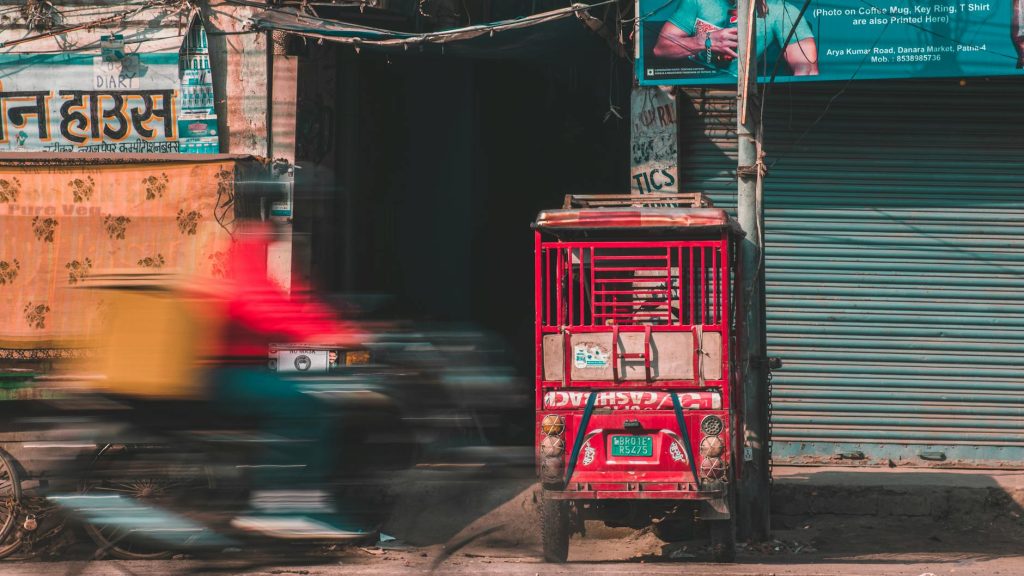
The numbers from Delhivery’s Q4 FY26 earnings dropped last Saturday, revealing a story that, on the surface, might seem a little perplexing. Revenue from operations soared by a robust 30% year-on-year, reaching ₹2,850 crore. This is a significant jump from the ₹2,192 crore reported in Q4 FY25. Yet, despite this impressive top-line growth, the logistics giant’s consolidated net profit for the quarter remained almost flat at ₹72.4 crore. For anyone tracking India’s new-age tech companies, especially those deeply embedded in the consumer internet and D2C landscape, this flat profit figure, juxtaposed against strong revenue, isn’t just a financial footnote. It’s a flashing indicator of the evolving pressures and strategic pivots underway in the battle for last-mile delivery and, by extension, the future of India’s direct-to-consumer ecosystem.
Delhivery, a company that has become synonymous with the backbone of India’s burgeoning e-commerce, primarily generates its income from a comprehensive suite of logistics services. This includes everything from warehousing and last-mile delivery to the intricate design and deployment of logistics management systems. They even pulled in an additional ₹59 crore from non-operating income, pushing their total income for Q4 FY26 to ₹2,909 crore. So, where did the profit flatness come from? The devil, as always, is in the details of expenditure.
The Cost of Growth: Unpacking Delhivery’s Expenses
For a logistics company, freight handling and servicing costs are naturally the biggest beast on the balance sheet. In Q4 FY26, these costs accounted for nearly 70% of Delhivery’s total expenditure, clocking in at a hefty ₹2,006 crore, a 28% increase from the previous year. This rise isn’t entirely unexpected given the 30% revenue growth, suggesting that increased volume directly translates to increased operational costs. However, it also points to the razor-thin margins inherent in the logistics business, particularly as companies scale into more remote and challenging geographies. Beyond freight, employee benefit expenses also saw a significant uptick, rising by 23.7% to ₹417 crore. Add to this finance costs, legal expenses, and various other overheads, and you see total expenditure pushing past revenue growth in a way that compresses the bottom line. This tells us a critical story about the Indian market: growth, while exciting, comes at a substantial cost, especially in infrastructure-heavy sectors.
This situation isn’t unique to Delhivery. Many listed new-age tech companies in India are navigating a complex landscape where the pursuit of market share often demands aggressive investment in infrastructure, technology, and talent. The question then becomes: how sustainable is this growth strategy if profitability doesn’t keep pace? For Delhivery, whose success is inextricably linked to the growth of D2C brands, this question holds even more weight.
The D2C Connection: Beyond the Top 2%
Delhivery’s performance is a direct reflection of the broader trends in India’s e-commerce market, particularly the Direct-to-Consumer (D2C) segment. The Indian e-commerce market has exploded into a $165 billion industry in just over a decade. Yet, a crucial observation, often highlighted in ecosystem discussions, is that its growth remains heavily concentrated. A significant portion of this market’s purchasing power, some estimates suggest as high as 98%, still resides within India’s top 2% of “power shoppers.” This isn’t just a statistic; it’s a strategic challenge for D2C brands and, by extension, their logistics partners like Delhivery.
Consider a D2C beauty brand, born out of an incubator like 91Springboard or perhaps T-Hub, with an innovative product tailored for a specific niche. To truly scale, they cannot afford to cater only to the metropolitan, early-adopter consumer. They need to reach deeper into Tier 2 and Tier 3 cities, where the next wave of internet users, and potential shoppers, are emerging. This expansion, however, is logistically complex and costly. Delivering a product to a customer in Jaipur or Coimbatore presents different challenges and cost structures than delivering one in Bangalore or Mumbai. This is where Delhivery’s expansive network becomes invaluable, but also where its freight handling and servicing costs swell.
The “flat profit” scenario at Delhivery, despite revenue growth, underscores the inherent difficulty in expanding reach to these untapped markets. As D2C brands push beyond the affluent urban demographic, the cost per delivery, the complexity of returns, and the overall operational overheads increase. Logistics providers are at the forefront of absorbing these costs, even as they facilitate the growth of these brands. It’s a delicate balance: enable the ecosystem’s expansion, but ensure that the expansion doesn’t erode your own profitability. This dynamic is a constant topic of conversation among founders I meet, especially those in consumer internet who are keenly aware of their CAC (Customer Acquisition Cost) and LTV (Lifetime Value) in these new territories.
Incubators, Accelerators, and the D2C Playbook
The Indian startup ecosystem is buzzing with activity around D2C. Programs like Inc42’s D2CX and D2CX Foundations are explicitly designed to equip budding entrepreneurs with the strategies to launch and scale D2C brands successfully. These programs focus on actionable insights, proven tactics, and the expertise of top D2C founders. They cover everything from product-market fit (PMF) in a diverse Indian market to go-to-market (GTM) strategies that account for regional nuances.
When I speak with founders emerging from IIT Bombay’s SINE or IIM Bangalore’s NSRCEL, a recurring theme is the crucial role of logistics in their D2C playbook. A brilliant product and a compelling brand story can only go so far if the delivery experience is subpar or prohibitively expensive. This is why partnerships with players like Delhivery are not just transactional; they are strategic. Founders are constantly evaluating burn rates, runway, and how to optimize their logistics chain to keep CAC low and LTV high, especially as they target consumers outside the traditional e-commerce strongholds.
The government’s Startup India initiatives and DPIIT recognition also play a role, fostering an environment where D2C brands can flourish. But the infrastructure challenge remains. How do you efficiently deliver a niche healthtech product to a customer in Bhubaneswar or a unique agritech solution to a farmer in rural Maharashtra? These are the India-specific pain points that founders are tackling, and logistics companies are their indispensable partners.
Looking Ahead: The Road to Sustainable Profitability
Delhivery’s Q4 FY26 results offer a snapshot of a company in a critical growth phase, navigating the complexities of a rapidly expanding, yet cost-intensive, market. The flat profit, despite significant revenue growth, is a clear signal that the road to sustainable profitability for Indian logistics giants will involve more than just increasing delivery volumes. It will require continuous innovation in operational efficiency, perhaps leveraging AI and automation to reduce freight handling costs, optimizing last-mile delivery routes, and exploring new revenue streams.
For the D2C ecosystem, this means a continued focus on smart growth. Brands will need to be even more strategic about their expansion, understanding the true cost of reaching new customer segments. They will rely on their logistics partners not just for delivery, but for data-driven insights to optimize their supply chains. The synergy between D2C brands and their logistics enablers will be key to unlocking the full potential of India’s e-commerce market, extending its reach far beyond the current “power shoppers.” The story of Delhivery’s Q4 isn’t just about one company’s financials; it’s a window into the nuanced, high-stakes game of building and scaling in India’s vibrant, demanding, and endlessly fascinating startup landscape.