
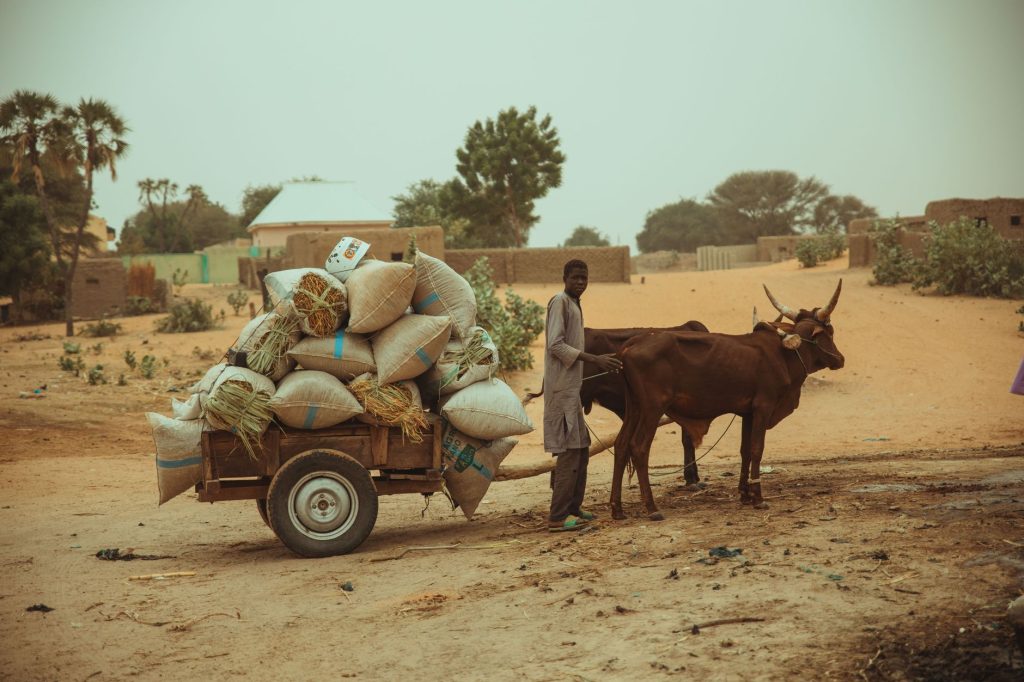
The monsoon clouds had just broken over the fields of Ahmednagar, a familiar relief for farmers like Ganpatrao Patil. Yet, as he watched his tomatoes ripen under the burgeoning sun, a different kind of dread began to set in. The market price for tomatoes had plummeted, a recurring nightmare. With no immediate buyers and no way to store his perishable harvest, Ganpatrao knew much of his hard work would spoil, destined for the dump rather than dinner tables. This story, tragically common across India’s vast agricultural landscape, is the very challenge that ignited the spark for KisanSetu Innovations.
The Unseen Crisis: India’s Post-Harvest Challenge
India, the world’s second-largest producer of fruits and vegetables, faces an ironic and devastating problem: immense post-harvest losses. Estimates vary, but many agricultural economists suggest that between 15% to 25% of fresh produce, and sometimes even more, perishes before it reaches consumers. This isn’t just food waste; it’s a direct blow to the livelihoods of millions of small and marginal farmers. They toil, they invest, they pray for good weather, only to be betrayed by a fragmented supply chain and a glaring lack of cold storage infrastructure, particularly at the crucial farm-gate level.
This systemic bottleneck often forces farmers into distress sales, accepting whatever price local traders offer, simply to avoid total loss. The cold chain that exists largely caters to large-scale producers or is concentrated near urban centers, leaving remote villages and their abundant harvests in a precarious limbo. It’s a problem rooted in infrastructure, but its tendrils reach deep into economic equity, food security, and environmental sustainability.
KisanSetu’s Vision: Bridging the Cold Chain Gap
This deeply personal understanding of the farmer’s plight is what drove Akash Singh, a software engineer from IIT Delhi, and his co-founder, Dr. Priya Sharma, an agronomist with decades of experience working with Farmer Producer Organizations (FPOs), to launch
in late 2023. Their idea was simple yet audacious: decentralize cold storage, making it accessible and affordable for every village cluster.
“I grew up watching my grandfather, a small farmer in Uttar Pradesh, struggle with potato storage. He’d often have to sell entire harvests at throwaway prices because he couldn’t hold them for even a few extra days,” Akash recounted during a recent conversation. “Years later, the technology had advanced, but the ground reality for farmers hadn’t changed much. That’s when I realized the solution wasn’t just about building bigger cold storage units, but about building smarter, smaller ones that fit into the existing village ecosystem.”
KisanSetu’s core innovation is a network of modular, solar-powered micro-cold storage units. These units, roughly the size of a shipping container, can be deployed rapidly at the village or FPO level. Each unit is equipped with an advanced IoT (Internet of Things) platform that continuously monitors temperature, humidity, and energy consumption. Farmers can book space in these units through a user-friendly mobile application, designed with a simple, intuitive interface that even those with limited digital literacy can navigate. For feature phone users, a dedicated helpline and local FPO coordinators facilitate bookings.
Dr. Priya Sharma emphasizes the importance of local integration. “Technology alone isn’t enough. We needed to build trust. Our model isn’t just about providing storage; it’s about empowering communities. We work closely with existing FPOs, training local youth to manage the units and act as liaisons. This collaborative approach ensures that the technology truly serves the people it’s meant for.”
The data collected from these units feeds into a central AI-powered analytics engine. This engine helps predict demand fluctuations, optimize transport routes for aggregated produce to larger markets, and even provides real-time market price alerts to farmers, giving them crucial leverage in negotiations. By extending the shelf life of produce by 10-15 days on average, KisanSetu gives farmers the critical window they need to wait for better market prices, transforming distress sales into strategic selling.
From Idea to Impact: The Ecosystem’s Nurturing Hand
The journey for KisanSetu wasn’t without its early struggles. Building hardware, especially for rural deployment, is capital-intensive and fraught with logistical challenges. Their initial prototype, a clunky affair built in Akash’s small garage, was far from market-ready. It was their entry into the
Foundation for Innovation and Technology Transfer (FITT) at IIT Delhi
that provided the critical early support.
“FITT was instrumental,” Akash shared. “They gave us lab space, access to mentors who understood both deep tech and agricultural supply chains, and crucially, a structured environment to refine our business model. It was there we met Dr. Sharma, whose insights into farmer psychology and FPO dynamics were invaluable.” The incubation program helped them iterate on their hardware design, making it more robust, energy-efficient, and scalable for rural deployment.
Following their incubation, KisanSetu received early-stage funding through the Startup India Seed Fund Scheme, a vital lifeline that allowed them to build their first batch of commercial units. This government initiative, under the Department for Promotion of Industry and Internal Trade (DPIIT), has been a game-changer for many deep-tech startups addressing India-specific challenges, offering non-dilutive capital at the riskiest stage. The recognition as a DPIIT-registered startup also opened doors to various government-backed schemes and potential partnerships.
Further mentorship came from the NASSCOM Centre of Excellence for IoT, which helped them optimize their sensor networks and cloud infrastructure for remote monitoring. “The NASSCOM CoE provided us with a sandbox environment to test our IoT stack at scale, connecting us with industry experts who helped us harden our security protocols and ensure data integrity,” Dr. Sharma explained.
Beyond Technology: Building Trust in the Fields
The true test for KisanSetu, however, wasn’t just in engineering a functional cold storage unit, but in winning the trust of farmers. The agrarian community, often burned by grand promises and failed pilot projects, is understandably cautious. KisanSetu’s approach focused on grassroots engagement.
Their initial pilots, launched in early 2025 across select villages in Maharashtra and Karnataka, involved extensive community meetings, demonstrations, and patiently addressing every query. “We didn’t just drop off a box and expect them to use it,” Akash noted. “We spent weeks in each village, explaining the benefits, showing them how the app worked, and, most importantly, listening to their feedback. The first few units were essentially co-developed with the farmers.”
This iterative approach helped KisanSetu achieve genuine product-market fit. For instance, initial designs focused heavily on smartphone apps, but feedback from farmers quickly highlighted the need for a simpler, voice-based interface or reliance on local coordinators due to varying smartphone penetration and digital literacy. KisanSetu adapted, integrating these insights into their deployment strategy.
Today, KisanSetu has successfully deployed over 65 micro-cold storage units across 12 districts, impacting more than 5,500 farmers. Their internal data suggests a significant reduction in post-harvest losses, averaging around 18%, and an estimated increase in farmer income by 10-12% by enabling better price realization. These numbers, while still early, paint a promising picture for scaling their operations.
The Road Ahead: Scaling for a Greener Harvest
The success of their pilot programs and the tangible impact on farmer incomes recently culminated in a significant milestone: a seed funding round of $2.5 million, closed in early June 2026. This round saw participation from a clutch of prominent angel investors known for backing agritech and impact startups, alongside a micro-VC fund focused on rural innovation.
“This funding is a massive validation of our model and our team,” Dr. Sharma stated with quiet determination. “It allows us to accelerate our expansion, targeting at least 200 units by the end of 2027, reaching tens of thousands more farmers. We’re also investing heavily in our data analytics capabilities to provide even more granular market insights and explore direct-to-consumer linkages for our farmer partners.”
The path to truly transforming India’s agricultural cold chain is long and complex, but KisanSetu Innovations represents a beacon of hope. Their blend of cutting-edge technology, deep understanding of local pain points, and a human-centric approach is precisely what India needs to unlock the full potential of its agrarian economy. As the sun sets over Ganpatrao Patil’s village, perhaps now, with a KisanSetu unit humming quietly nearby, the dread of spoilage will slowly give way to the promise of a more prosperous tomorrow.


