The past week has cast a stark light on a disturbing trend across India: a pervasive and systemic failure in public and private institutions to uphold accountability. From examination bodies to corporate internal committees, and even government relief mechanisms, the incidents emerging from various corners of the country paint a troubling picture of oversight lapses and a deepening erosion of public trust. For India’s burgeoning startup and tech ecosystem, this isn’t just a matter of public sentiment, it’s a direct threat to the very foundations of transparent governance and operational reliability that businesses depend on.
The NEET-UG Scandal: A Recurring Nightmare for National Testing Agency
The National Testing Agency (NTA), the body entrusted with conducting critical entrance examinations like the National Eligibility-cum-Entrance Test (NEET-UG), finds itself embroiled in yet another controversy. On Saturday, May 16, 2026, the United Doctors Front approached the Supreme Court of India, demanding a fundamental restructuring of the NTA. Their petition seeks to transform the NTA from its current status as a registered society into a statutory body established by an Act of Parliament. The rationale is clear: to ensure constitutional and parliamentary accountability.
This isn’t an isolated incident. The doctors’ body explicitly stated that the 2026 paper leak is part of a “recurring, systemic, and catastrophic failure” of the NTA. This is a damning indictment, suggesting that the problem isn’t a one-off error but a deeply entrenched issue within the agency’s operational framework. The implications for students are devastating, but for the broader economy, it signals a deeper malaise. If an agency responsible for evaluating the nation’s future talent cannot secure the integrity of its processes, what does that say about the reliability of other government-backed digital initiatives or certification processes?
Startups often rely on a pool of talent that has navigated these very examination systems. A perception of compromised integrity in these foundational processes can lead to a crisis of confidence in the skill sets and qualifications of fresh graduates. Beyond this, many ed-tech startups, particularly those in the test preparation space, find their business models directly impacted by such leaks. When the examination itself is perceived as flawed, the value proposition of preparation services diminishes, creating market instability. Furthermore, the demand for greater governmental oversight and accountability often translates into more stringent regulatory frameworks, which while necessary, can introduce additional compliance burdens for tech companies interacting with public data or services.
TCS and the POSH Committee: A Breach of Trust in Corporate Governance
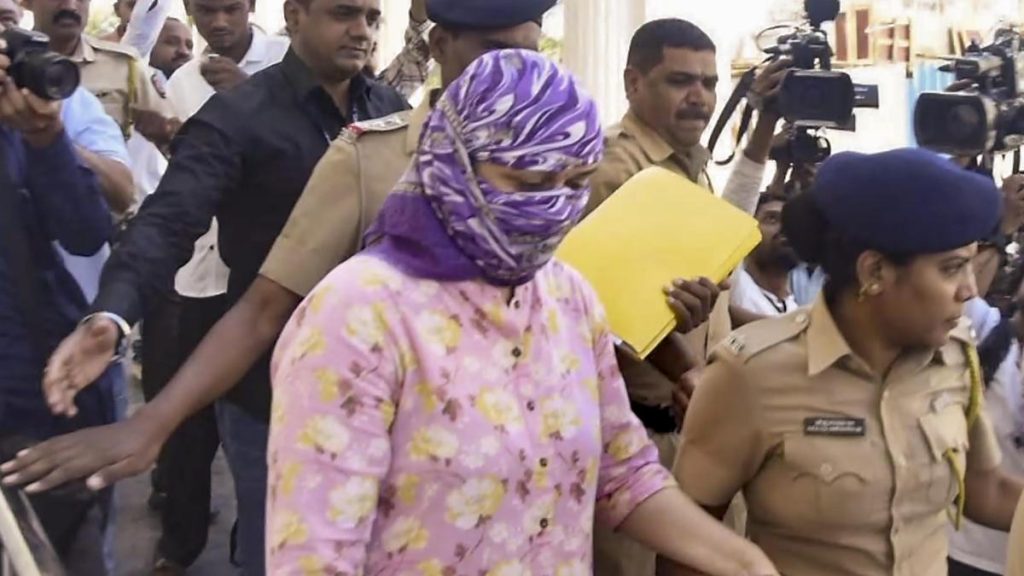
While the NTA incident highlights public sector vulnerabilities, the private sector is not immune. A recent ruling from a court in Nashik, Maharashtra, delivered on Friday, May 15, 2026, has sent ripples through India’s corporate landscape. The court denied bail to Ashwini Chainani, a site head and member of the Internal Complaints Committee (ICC) – commonly known as the POSH (Prevention of Sexual Harassment) committee – at Tata Consultancy Services (TCS). The court explicitly noted that Chainani “ignored” a victim’s complaint in an alleged sexual harassment-conversion case, thereby “abetted” the crime. Bail was also refused for other accused individuals including Tausif Attar, Raza Memon, and Shahrukh Qureshi.
This case is particularly alarming because it involves a member of the very committee designed to protect employees from sexual harassment. The POSH Act of 2013 was a landmark legislation intended to create safe workplaces. When a designated guardian of this Act is found to be complicit in ignoring or abetting harassment, it represents a profound breach of trust and a systemic failure of corporate governance. For startups, which often operate with lean legal teams and may not have the robust HR infrastructure of a conglomerate like TCS, this incident serves as a stark warning.
The message is clear: merely having a POSH committee on paper is insufficient. The effectiveness and integrity of its members are paramount. Founders and HR leaders in startups must ensure that their ICCs are not just legally compliant but are also truly independent, well-trained, and empowered to act without fear or favor. Failure to do so can lead to severe legal repercussions, reputational damage, and a toxic work environment that stifles innovation and talent retention. Beyond the legal aspect, such incidents contribute to a broader narrative of an unsafe work environment for women, potentially impacting India’s ability to attract and retain female talent in the tech sector.
Marathwada Floods: A Failure in Government Relief and Citizen Support
Adding another layer to this narrative of systemic failure is the plight of farmers in Maharashtra’s Marathwada region. Nearly a year after devastating floods in 2025, many affected farmers are still awaiting promised government compensation. Snehal Mutha’s report, updated on May 17, 2026, highlights how some farmers, like Nagubai Chaudhary, 52, and her husband Malinath, 60, have taken additional loans to plant the next crop, while others have simply given up farming for the year. The unseasonal rains and flash floods of 2025 decimated the kharif crop, leaving families in dire straits.
This issue, while seemingly distinct from tech and corporate governance, is deeply interconnected with the broader ecosystem. A government’s inability to efficiently deliver promised relief undermines public confidence in its administrative capabilities. For startups, particularly those in agritech, insurtech, or financial services targeting rural populations, such delays represent significant operational hurdles and trust deficits. If the government cannot reliably disburse funds, how can private players build financial models or offer services that depend on predictable state support or robust public infrastructure?
Furthermore, widespread economic distress in rural areas can impact consumer spending patterns and labor migration, indirectly affecting urban-centric tech businesses. It underscores the fragility of the social contract when promises of aid remain unfulfilled, creating a ripple effect across various economic strata.
Uttarakhand SSC Cheating Racket: The Pervasive Threat to Meritocracy
Further compounding the concerns around examination integrity, the Uttarakhand Special Task Force (STF) announced on May 17, 2026, the arrest of another accused in a high-tech cheating racket. This racket, busted on February 13, 2026, during an online Staff Selection Commission (SSC) recruitment exam for Multi-Tasking (Non-Technical) Staff and Havaldar posts, facilitated cheating at an online examination center in Dehradun. The use of “high-tech methods” points to a sophisticated operation, not just isolated instances of malpractice.
This incident, along with the NEET-UG leak, highlights a severe threat to meritocracy. When recruitment processes for government jobs, even at entry levels, are compromised, it sends a chilling message to honest candidates and undermines the very principle of fair competition. For startups, particularly those hiring from Tier 2 and Tier 3 cities, the integrity of these public examinations is often a benchmark for assessing foundational skills. A compromised system means that the talent pool itself might be tainted by those who have gamed the system rather than earned their qualifications.
This also fuels cynicism among young people, a sentiment that MLA Rohit Pawar of NCP (SP) recently highlighted. He criticized the Chief Justice of India, Surya Kant, for remarks comparing unemployed youth to “parasites and cockroaches,” calling them “unacceptable” and a reflection of intolerance towards criticism. While the CJI’s comments were in a different context (criticizing lawyers pursuing senior designation), the underlying frustration among youth due to systemic issues like exam leaks and unemployment is palpable. Such comments, regardless of intent, can exacerbate public disillusionment, creating a climate of mistrust that impacts everything from civic engagement to entrepreneurial spirit.
The Broader Implications for India’s Startup Ecosystem
These seemingly disparate incidents – a failing examination body, a compromised corporate internal committee, delayed disaster relief, and a sophisticated cheating racket – coalesce into a singular narrative: a systemic crisis of accountability across India. For startups and tech companies, this isn’t just news; it’s a critical environmental factor that demands attention.
Firstly, the integrity of institutions directly impacts the talent pipeline. If national examinations are routinely compromised, the quality and reliability of the workforce entering the tech sector become questionable. Founders need to invest more in robust internal assessment mechanisms, which adds to operational costs and recruitment timelines.
Secondly, regulatory compliance becomes a minefield. The TCS case, for instance, underscores that mere adherence to the letter of the law (having a POSH committee) is not enough; the spirit of the law and its effective implementation are paramount. Startups must move beyond checklist compliance to genuine governance, which requires greater investment in legal, HR, and ethics functions.
Thirdly, public trust, once eroded, is difficult to rebuild. A general climate of cynicism and distrust in public institutions can make it harder for startups to build credibility, particularly those operating in sensitive sectors like fintech, healthtech, or govtech, where data security and regulatory compliance are non-negotiable.
Finally, these incidents highlight the need for greater transparency and robust grievance redressal mechanisms across the board. Startups themselves can become champions of these values, integrating transparent practices and strong ethical frameworks into their core operations. In an environment where systemic failures are becoming increasingly apparent, businesses that prioritize accountability and integrity will not only build stronger foundations but also earn the invaluable trust of their employees, customers, and investors.
The challenges are significant, but so is the opportunity for agile, ethically-driven startups to demonstrate a better way forward. The onus is now on both public and private sectors to address these deep-seated issues and restore faith in the systems that underpin India’s growth story.