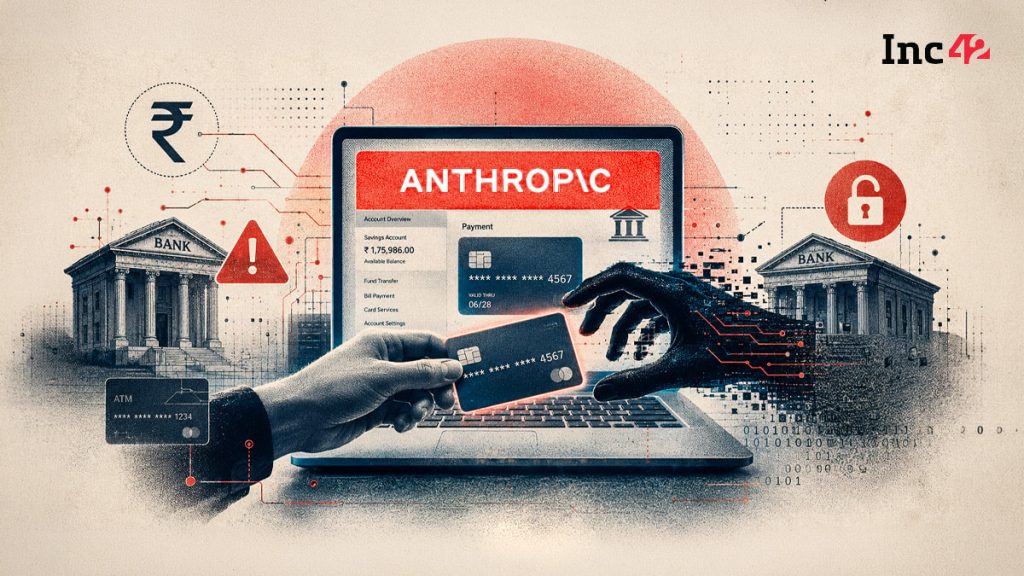
The global cybersecurity landscape is in flux, fundamentally reshaped by advancements in artificial intelligence. As the world grapples with the implications of tools like Anthropic’s Mythos, an AI capable of autonomously exploiting software vulnerabilities, the question for India’s burgeoning digital economy, particularly its fintech sector, isn’t if these threats will arrive, but how prepared it is to confront them. This isn’t merely about patching systems; it’s about a paradigm shift in how we conceive and defend against cyberattacks, a shift that demands a robust, homegrown deep tech response.
India’s startup ecosystem, once largely focused on B2C and SaaS plays, is at an inflection point. The narrative is increasingly shifting towards deep tech innovation, driven by both necessity and opportunity. Yet, this evolution comes with significant challenges, not least of which is securing the capital and expertise needed to build truly foundational technologies. The recent movement within India’s venture capital community, with senior partners from established funds like Peak XV Partners spinning out to launch their own ventures, signals a maturation. This could potentially unlock more agile and specialized funding for the very deep tech companies that will define India’s cyber resilience and technological sovereignty.
The Mythos Stress Test: AI-Native Threats and India’s Vulnerability
The advent of AI models like Mythos represents a quantum leap in offensive cyber capabilities. Traditional security paradigms, built around signature-based detection and human-led threat intelligence, are proving increasingly inadequate against AI-native attacks that can identify, exploit, and even learn from vulnerabilities at machine speed. These autonomous systems can probe networks, craft sophisticated phishing campaigns, and even develop zero-day exploits without direct human intervention, dramatically lowering the barrier to entry for malicious actors.
For India, with its rapidly expanding digital public infrastructure (DPI) and a fintech sector that has embraced digital transformation with gusto, this presents a unique and urgent challenge. The Unified Payments Interface (UPI) processes billions of transactions monthly, making it a prime target. Banks, fintech startups, and even government services built atop this digital backbone are exposed. The sheer volume of data, the interconnectedness of systems, and the relatively nascent state of advanced cyber defense mechanisms in many Indian enterprises create a fertile ground for AI-powered attacks.
The immediate concern is not just the exploitation of known vulnerabilities, but the rapid discovery of unknown ones. An AI like Mythos doesn’t merely scan for existing weaknesses, it can actively experiment and generate new attack vectors, making real-time threat detection and response an existential imperative. India’s cybersecurity startups, often focused on endpoint protection or network monitoring, now need to pivot rapidly towards AI-driven threat intelligence, behavioral analytics, and autonomous response systems. This requires deep expertise in machine learning, cryptography, and secure systems architecture, areas where investment and specialized talent have historically lagged behind more consumer-facing applications.
Deep Tech’s Funding Conundrum: A Maturing VC Landscape
Building deep tech companies, especially in critical areas like cybersecurity, demands patient capital and a high tolerance for risk. The development cycles are longer, the R&D costs are higher, and the path to commercialization is often less direct than for a SaaS product or a D2C brand. For years, Indian venture capital has predominantly favored business models with quicker returns and clearer market validation, often overlooking the foundational innovation that underpins true technological advancement.
However, there are signs of a shift. The departure of seasoned investors like Ashish Agrawal, Ishaan Mittal, and Tejeshwi Sharma from Peak XV Partners to launch their own funds is more than just a personnel change; it signifies a growing appetite for specialized investment strategies. These new funds are likely to be more nimble, potentially focusing on niche areas that require deep domain expertise and a longer investment horizon. This fragmentation of the VC landscape, while seemingly chaotic, could actually be beneficial for deep tech. It allows for the emergence of funds with specific mandates and the technical acumen to evaluate complex technologies, rather than applying a one-size-fits-all approach.
Historically, deep tech startups in India have struggled to attract early-stage funding. Many innovations originating from academic research or government labs have withered due to a lack of commercialization support. The new wave of VC funds, particularly those led by investors with a track record of identifying and scaling technology companies, could bridge this gap. Their ability to understand the technical nuances, assess intellectual property, and connect founders with strategic partners will be crucial. This is not just about writing checks; it’s about providing the strategic guidance necessary to translate cutting-edge research into viable products and services.
Beyond Fintech: Deep Tech’s Broader Impact on India’s Economy
While cybersecurity and fintech are immediate proving grounds for deep tech, the implications extend far wider across India’s strategic sectors. Consider the government’s ambitious Semiconductor Mission. Building a robust domestic semiconductor manufacturing ecosystem requires deep tech across materials science, advanced manufacturing processes, and chip design. These are long-term, capital-intensive endeavors that cannot rely on quick-flip investment models. The success of this mission will hinge on the availability of specialized funding and a talent pool skilled in these esoteric fields.
Similarly, India’s push towards electric vehicles (EVs) and clean energy technologies necessitates deep tech innovation. Developing advanced battery chemistries, efficient power electronics, and smart grid solutions requires fundamental research and engineering. Startups in this space, often emerging from university labs or incubated within larger corporations, need dedicated support to move from prototype to production. The recent evolution of logistics players like Shadowfax, moving beyond last-mile delivery to optimize supply chains with data analytics, hints at how even traditional sectors are being permeated by deep tech principles, albeit often in applied forms rather than foundational research.
The government’s role is also paramount. Policy frameworks that incentivize deep tech research, offer tax breaks for R&D, and create sandboxes for testing innovative solutions are critical. Initiatives like the National Quantum Mission or programs supporting AI research can provide the initial impetus, but private capital is essential for scaling these efforts. A synergistic relationship between government, academia, and venture capital is the only way to build a truly resilient and innovative deep tech ecosystem.
The Road Ahead: Building a Deep Tech Powerhouse
India’s journey to becoming a deep tech powerhouse is not without its hurdles. The talent gap, particularly in highly specialized areas like quantum computing, advanced materials, and explainable AI, remains significant. While India produces a vast number of engineers, the pipeline for deep tech researchers and entrepreneurs needs to be strengthened through specialized educational programs and industry-academia collaborations.
Furthermore, intellectual property protection and a robust regulatory environment are crucial for attracting both domestic and international deep tech investment. Founders need assurance that their innovations will be protected and that the market will reward genuine breakthroughs, not just incremental improvements. The global benchmark for deep tech ecosystems, seen in places like Silicon Valley or Tel Aviv, often involves a dense network of research institutions, corporate R&D centers, and a mature venture capital community willing to take long bets.
The current climate, marked by the rise of AI-native cyber threats and a maturing domestic VC landscape, presents both a challenge and an unprecedented opportunity for India. By strategically channeling capital towards foundational research, fostering a culture of long-term innovation, and developing specialized talent, India can not only defend its digital future but also emerge as a global leader in critical deep technologies. The time for incremental change is past; the future demands a deep tech revolution.