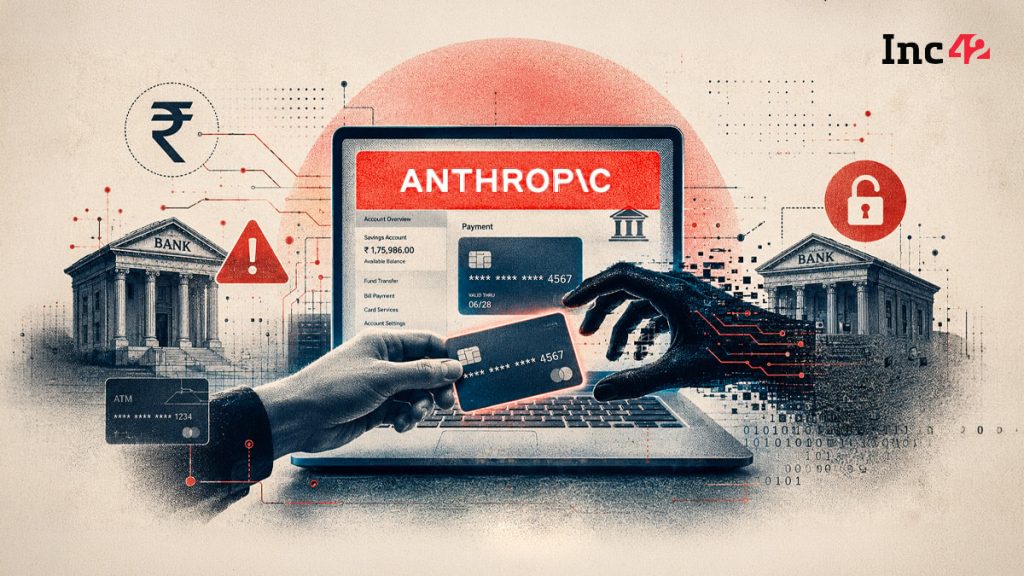
The air in T-Hub, Hyderabad, always carries a certain hum – a blend of buzzing discussions, clacking keyboards, and the quiet thrum of a thousand ideas taking shape. But lately, there’s a new undercurrent, a subtle tension that speaks to the accelerating pace of innovation, and with it, the escalating sophistication of threats. It’s a conversation I’ve heard echoing from the corridors of IIT Madras’s incubation cell to the bustling co-working spaces in Bengaluru: the advent of AI-native cyber threats and what they mean for India’s burgeoning fintech ecosystem.
Just weeks ago, the global security community was rocked by Anthropic’s Mythos, an AI capable of autonomously identifying and exploiting software vulnerabilities. This wasn’t just a proof-of-concept; it was a stark, undeniable demonstration of a new era in cyber warfare. Closer to home, Google’s own advancements in AI for security, while aimed at defense, underscore the dual-edged sword of this technology. For a country like India, where digital payments have become the lifeblood of daily transactions and fintech innovation is rapid, the stakes couldn’t be higher. Can our fintech fortresses, built on years of digital transformation, withstand the onslaught of AI-native adversaries? And more importantly, are our own homegrown cybersecurity startups rising to this unprecedented challenge?
The Mythos Moment: A Wake-Up Call for Indian Fintech
The “Mythos Stress Test,” as some are calling it, has sent ripples across India’s financial sector. It highlights a critical juncture: traditional, rule-based security systems, however robust, are inherently reactive. They learn from past attacks. AI-native threats, on the other hand, are proactive and adaptive, capable of generating novel attack vectors in real-time. This changes the game entirely. The average Indian user, accustomed to the seamlessness of UPI, mobile banking, and digital lending platforms, might not immediately grasp the technical intricacies, but they certainly feel the impact when a data breach occurs or a fraudulent transaction slips through. For founders building the next big thing in payments or lending, this isn’t just a technical problem; it’s a fundamental threat to trust, the very bedrock of financial services.
India’s fintech growth has been explosive. DPIIT data shows hundreds of fintech startups recognized under the Startup India initiative, many of them operating on razor-thin margins and prioritizing rapid user acquisition. While the larger banks and established fintech players have dedicated security teams and budgets, many early-stage startups often deprioritize advanced cybersecurity in the race for product-market fit. This is a dangerous gamble in the age of AI-powered exploits. The question isn’t if an AI-native attack will happen, but when, and how prepared are we?
Homegrown Innovation: India’s AI-Powered Cybersecurity Defenders
The good news is, the Indian startup ecosystem isn’t just reacting; it’s innovating. I’ve seen a surge in cybersecurity startups emerging from incubators like T-Hub and IIT Bombay’s SINE (Society for Innovation and Entrepreneurship), specifically leveraging AI and machine learning to build defensive capabilities. These aren’t just selling off-the-shelf solutions; they’re developing bespoke platforms tailored to the unique challenges of the Indian digital landscape, where transaction volumes are massive, and a significant portion of the user base is relatively new to digital interfaces, making them susceptible to social engineering attacks amplified by AI.
One such startup, still in stealth mode but making waves in the Bangalore deep-tech circles, is building an AI-driven behavioral analytics platform for fraud detection. Their founder, a former ethical hacker with a decade of experience, explained their approach: “Traditional systems look for known patterns of fraud. Our AI models, however, are trained to identify anomalies in user behavior that might indicate account takeover attempts or sophisticated phishing. It’s about predicting the ‘unseen’ threat, not just reacting to the ‘known’ one.” This kind of predictive intelligence, powered by advanced machine learning, is exactly what India’s fintechs need to counter AI-native threats.
Another promising venture, incubated at 91Springboard in Delhi, is focusing on real-time vulnerability management using AI. Their platform continuously scans applications and infrastructure for weaknesses that an AI like Mythos might exploit, providing immediate remediation suggestions. “The speed of exploit generation by AI requires an equally rapid, AI-powered defense,” the CEO, a young engineering graduate from IIT Delhi, shared with me. “We’re building systems that can learn and adapt faster than the attackers.” This proactive stance is crucial.
The Ecosystem’s Role: Nurturing the Next Generation of Cyber Defenders
The role of accelerators and government programs here cannot be overstated. Organizations like NASSCOM and Startup India have been instrumental in creating awareness and providing platforms for these startups. The DPIIT recognition, while often seen as a bureaucratic hurdle, also opens doors to various government schemes and funding opportunities, which are vital for deep-tech startups with longer development cycles and higher R&D costs. Similarly, programs run by the likes of CIIE at IIM Ahmedabad are fostering an entrepreneurial mindset focused on solving complex, real-world problems – and cybersecurity in fintech is arguably one of the most pressing.
However, challenges remain. Access to vast, clean datasets for training AI models is a significant hurdle for many early-stage cybersecurity startups. Unlike consumer internet companies, cybersecurity data is highly sensitive and often proprietary. Collaboration between fintechs and these cybersecurity startups, perhaps facilitated by sandbox environments or anonymized data sharing protocols, will be critical. Furthermore, the talent gap in AI and cybersecurity continues to be a bottleneck. While India produces a massive number of engineers, specialized expertise in AI-driven cybersecurity is still scarce.
“The speed of exploit generation by AI requires an equally rapid, AI-powered defense. We’re building systems that can learn and adapt faster than the attackers.”
The regulatory landscape also needs to evolve to keep pace. As AI-powered attacks become more sophisticated, regulators will need to mandate higher standards of security and encourage the adoption of advanced, AI-driven defense mechanisms, rather than relying solely on compliance with outdated frameworks. This also means understanding the nuances of how these AI systems work, their potential biases, and ensuring accountability.
Beyond the Hype: The Human Element and India-Specific Challenges
It’s easy to get caught up in the technological arms race, but we must not forget the human element. The vast majority of cyberattacks, even AI-powered ones, often begin with exploiting human vulnerabilities – a deceptive email, a compromised password, or a moment of carelessness. For India, with its diverse linguistic landscape and varying levels of digital literacy, this challenge is amplified. AI can make phishing emails indistinguishable from legitimate communications, tailored to individual users, making them incredibly potent.
This is where India-specific innovation truly shines. Some startups are not just building tech, but also focusing on AI-powered user education platforms that adapt to individual learning styles and regional languages, teaching users to identify and avoid sophisticated scams. This dual approach – strengthening the technological defenses while empowering the end-user – is essential for true resilience. It speaks to the deep understanding of India’s unique pain points that our founders bring to the table.
The journey of building secure, AI-powered fintech platforms in India is not just about adopting the latest technology; it’s about building trust in a rapidly evolving digital economy. It’s about empowering millions of first-time digital users to transact safely and confidently. And it’s about showcasing India’s prowess not just as a consumer of technology, but as a formidable innovator in the global cybersecurity landscape.
Looking Ahead: A Resilient Digital Future
The Mythos moment has certainly cast a long shadow, but it has also ignited a renewed sense of urgency and innovation within India’s cybersecurity startup ecosystem. The founders I speak with are not daunted; they are energized. They see the challenge not as an insurmountable obstacle, but as an opportunity to build world-class solutions right here in India, for India, and eventually, for the world. The next few years will be critical in determining how well India’s fintech sector, supported by its burgeoning AI-powered cybersecurity startups, navigates this new era of intelligent threats. If the entrepreneurial spirit and problem-solving acumen I’ve witnessed are any indication, India is not just ready to face this challenge, but to lead the charge.