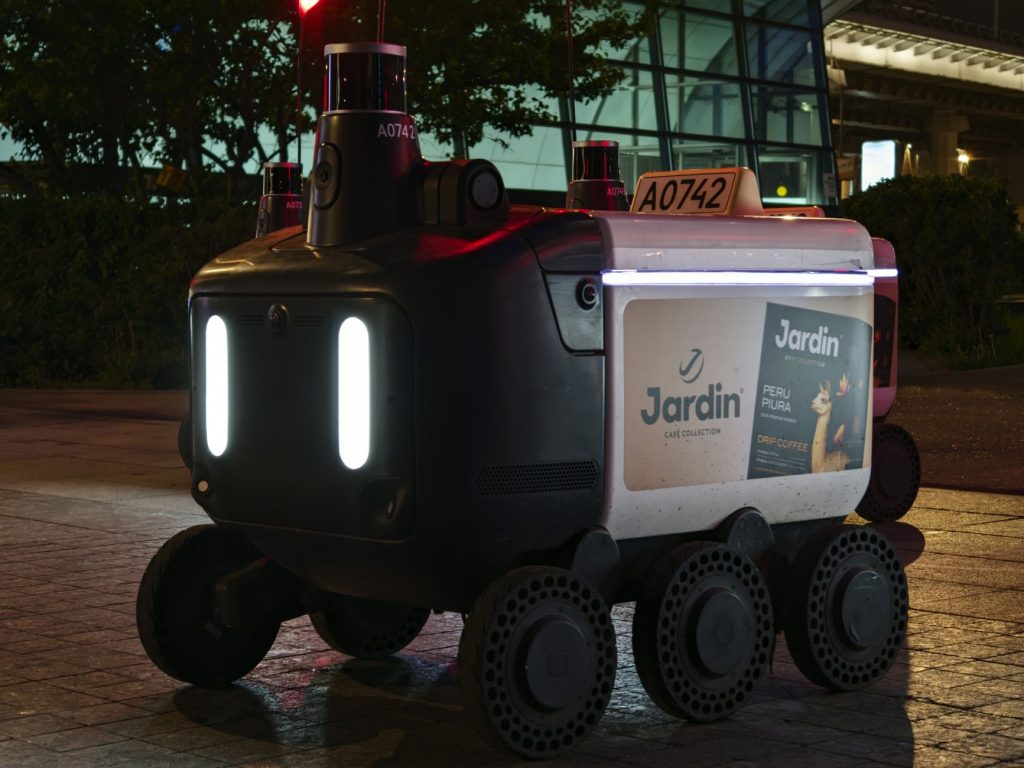
The global narrative around robotaxis often conjures images of sleek, driverless pods gliding through meticulously organized cityscapes in San Francisco or Phoenix. We hear about billions poured into Waymo and Cruise, the race for Level 5 autonomy, and the complex dance of regulations in mature markets. But step onto the bustling, vibrant, and utterly unpredictable roads of India, and that narrative shimmers into a distant mirage. Here, the robotaxi isn’t a near-term reality; it’s a profound, fascinating challenge that demands an entirely different kind of innovation, born from the grit and ingenuity of Indian founders.
For years, I’ve watched our startup ecosystem grapple with problems unique to India. From hyperlocal logistics to vernacular edtech, the solutions that truly scale are those deeply rooted in an understanding of our ground realities. The robotaxi, or more broadly, autonomous vehicles (AVs), is no different. It’s a space where the typical Silicon Valley playbook simply won’t cut it. Instead, a new generation of entrepreneurs, often emerging from our premier engineering institutes and incubation centers, is sketching out a distinctly Indian roadmap for autonomy, one that prioritizes practical applications over speculative moonshots.
The Uncharted Territory: Why India is Different
The fundamental premise of autonomous driving rests on a car’s ability to perceive, predict, and plan. In most Western markets, this is challenging enough. In India, it’s akin to solving a dynamic, multi-dimensional puzzle where the rules change every second.
Navigating the Labyrinth: Traffic and Infrastructure
Imagine an autonomous vehicle trying to navigate through a typical Indian street. It’s not just about detecting cars and pedestrians. It’s about discerning between a cow casually crossing the road, a bicycle weaving through traffic against the flow, an auto-rickshaw suddenly swerving, and a pothole that could swallow a small car. Lane discipline is often an aspiration, not a rule. Road markings are frequently faded or non-existent. Traffic signals are sometimes ignored. Add to this the sheer density of vehicles and people, the constant honking that serves as a language of its own, and the occasional street vendor or stray dog, and you begin to grasp the complexity.
For a startup like
incubated ‘PathSense AI’ (a hypothetical name, but representative of the kind of deep tech coming out of such hubs), developing perception systems isn’t just about object recognition; it’s about semantic understanding of chaos. Their early work, for instance, focuses on “intent prediction” for highly unstructured environments, training AI models on millions of hours of real-world Indian road footage captured from various cities like Bangalore, Pune, and Hyderabad. This data, often manually annotated by hundreds of local workers, becomes the bedrock for algorithms that can account for the uniquely Indian driving psyche.
Beyond Silicon Valley: The Cost Imperative
Another critical factor is cost. The advanced LiDAR sensors, high-resolution cameras, and powerful computing units required for Level 4 or 5 autonomy are prohibitively expensive. In a market where mobility solutions must be hyper-affordable to achieve widespread adoption, a robotaxi priced like a luxury car is a non-starter. This pushes Indian founders to innovate on the hardware and software stack itself.
Startups are exploring alternatives to costly LiDAR, perhaps leveraging advanced radar, multiple cheaper cameras, and innovative sensor fusion techniques to achieve similar perceptual capabilities at a fraction of the price. The focus isn’t just on building autonomous vehicles, but on building
affordable
autonomous vehicles. This cost-conscious engineering mindset, deeply ingrained in India’s tech landscape, is arguably our greatest asset in this challenging domain.
The Human Element: Jobs and Public Perception
Beyond the technical and economic hurdles, there’s the significant societal impact. India has a massive workforce employed in the transportation sector, from taxi drivers and auto-rickshaw operators to truck drivers. The prospect of widespread job displacement due to autonomous vehicles is a politically sensitive issue that the government, through bodies like
and
, is acutely aware of.
This means that any successful AV strategy in India must carefully consider how it integrates with, rather than entirely displaces, the existing human workforce. This could involve focusing on augmenting human drivers with advanced driver-assistance systems (ADAS) rather than full autonomy, or deploying AVs in specific, controlled environments where human labor isn’t as prevalent. Public perception, often shaped by safety concerns and the “black box” nature of AI, also plays a crucial role. A single high-profile accident could set back years of development and public trust.
Where India’s AV Journey Truly Begins: Niche and Practicality
Given these formidable challenges, where exactly does India’s autonomous vehicle journey realistically begin? It’s not with robotaxis ferrying passengers on Delhi’s Ring Road tomorrow. It’s with targeted, problem-solving applications that offer clear value and operate in more controlled or less complex environments.
From Farms to Factories: Controlled Environments First
The most promising immediate applications for AVs in India lie in specific, defined environments. Think about large industrial complexes, mining sites, university campuses, or even agricultural fields. These areas offer predictable routes, lower traffic complexity (or no external traffic at all), and often a strong economic incentive for automation due to efficiency gains or safety improvements.
Consider the agritech sector, a domain ripe for innovation. Startups are exploring autonomous tractors for precision farming, drones for spraying and monitoring, and robotic harvesters. These solutions, while not “robotaxis,” leverage similar underlying AV technology: perception, navigation, and control. Take, for example, a startup like AgroNav (again, a representative name) working out of
in Hyderabad. They are developing low-cost autonomous kits that can be retrofitted onto existing tractors, allowing farmers to execute precise planting or spraying patterns, thereby reducing waste and increasing yield. This isn’t about replacing the farmer, but empowering them with tools that increase productivity in a country where agriculture is the backbone.
Similarly, within logistics, we might see autonomous forklifts in warehouses or self-driving shuttles moving goods within a large factory campus long before they venture onto public roads. This B2B focus allows for iterative development, safety testing, and refinement in a controlled setting, building the expertise and trust necessary for broader deployment.
The ADAS Advantage: Augmenting Drivers, Not Replacing Them
Instead of full autonomy, the immediate future for most vehicles in India likely involves increasingly sophisticated ADAS. Features like adaptive cruise control, lane-keeping assist, automatic emergency braking, and blind-spot monitoring can significantly enhance safety and reduce driver fatigue. These systems don’t remove the human driver but act as intelligent co-pilots, intervening when necessary.
Founders are focusing on building ADAS solutions specifically tailored for Indian driving conditions. This means training algorithms to recognize Indian road signs, understand the unique movements of motorcycles and auto-rickshaws, and react appropriately to sudden, unannounced maneuvers. Some companies are even exploring “driver monitoring systems” that use AI to detect driver distraction or drowsiness, offering a safety net without taking full control. This phased approach allows for gradual technology adoption, regulatory evolution, and public acclimatization.
Building Blocks of Tomorrow: The Ecosystem’s Role
The Indian startup ecosystem is already laying the groundwork for this future, albeit quietly and methodically.
Incubating Innovation: IITs, T-Hub, and DPIIT’s Vision
Our premier engineering colleges and incubation centers are at the forefront of fundamental research in AI, machine learning, computer vision, and robotics. Programs at
and
are churning out talent eager to tackle these complex problems. Incubators like T-Hub,
at IIM Ahmedabad, and even co-working spaces like
are seeing a rise in deep tech startups working on foundational technologies that could one day power AVs.
The government, through initiatives like Startup India and the DPIIT’s push for advanced manufacturing, is also creating a supportive environment. While direct funding for “robotaxi” startups might be scarce, support for AI research, sensor development, and smart mobility solutions is growing. These initiatives are crucial for providing the runway and initial validation that early-stage founders need to tackle such capital-intensive and long-gestation projects.
The Data Dilemma: Training AI for Indian Roads
Perhaps the most valuable asset being built right now is data. Indian startups understand that global AV datasets, often comprising perfectly marked roads and predictable traffic, are insufficient. They are actively collecting, annotating, and curating vast datasets of Indian road scenarios. This involves deploying sensor-equipped vehicles across diverse cities, capturing everything from rural roads to congested urban centers, day and night, in all weather conditions. This “ground truth” data is invaluable for training robust AI models that can generalize and perform reliably in India’s unique environment. This is a critical, often unglamorous, but absolutely essential step in building truly indigenous AV capabilities.
The Road Ahead: A Marathon, Not a Sprint
The robotaxi dream in India is a marathon, not a sprint. It’s a journey paved with unique challenges, demanding a level of ingenuity and adaptability that goes beyond what’s seen in more developed markets. The founders who are truly making headway aren’t chasing the global hype; they are methodically building foundational technologies, focusing on niche applications, and tackling India-specific pain points head-on.
Patience and Persistence: The Founder’s Mantra
The founders in this space possess an extraordinary blend of technical prowess, business acumen, and an almost Gandhian patience. They understand that product-market fit (PMF) here isn’t just about solving a technical problem; it’s about solving it affordably, safely, and in a way that respects India’s social fabric. Their burn rates are managed carefully, their runways are meticulously planned, and their GTM strategies are often B2B or focused on very specific, controlled use cases.
The journey towards autonomous mobility in India will be iterative, perhaps beginning with enhanced ADAS for commercial vehicles, moving to controlled-environment automation, and eventually, over many years, perhaps to limited robotaxi services in dedicated zones. It won’t look like the West. It will be uniquely Indian, a testament to the perseverance and innovative spirit of our startup ecosystem. And that, in itself, is a story worth following.