
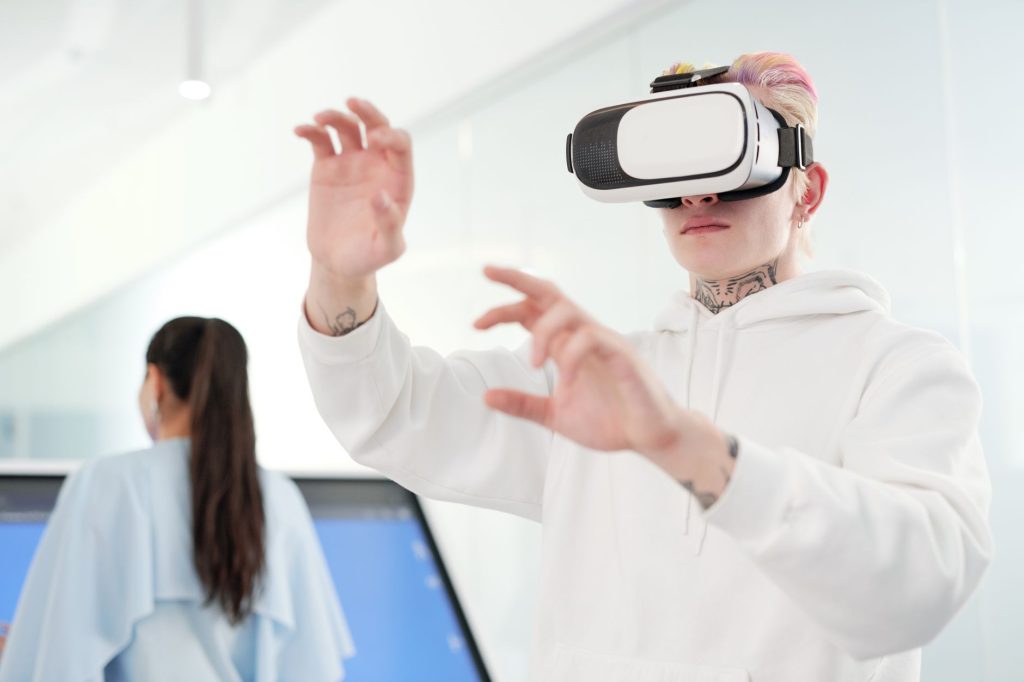
In the relentless march of digital convenience, where every service is an app and every product a subscription, there’s a subtle but powerful counter-current emerging. It’s a quiet yearning for the tangible, for experiences that engage our senses, for products we can hold, feel, and truly connect with. While Silicon Valley grapples with the philosophical implications of “dematerialization,” Indian entrepreneurs, ever attuned to the pulse of their diverse market, are not just observing this trend—they are actively building into it, crafting businesses that reclaim the physical world and enrich human experience.
This isn’t about nostalgia for a bygone era. Instead, it’s a forward-looking movement, leveraging technology not to abstract reality, but to enhance and distribute beautifully designed, thoughtfully made physical products and immersive, hands-on experiences. From sustainable home goods that celebrate local craftsmanship to educational kits that bring science to life outside a screen, a new generation of founders is proving that in India, the future isn’t just digital; it’s also wonderfully, purposefully material.
The Artisan Economy Gets a Digital Backbone
India’s rich heritage of craft and artisanal skill has long been a source of economic livelihood for millions, yet often struggled with market access and fair pricing. Today, early-stage founders are bridging this gap, using technology to empower artisans and bring their tangible creations to a wider, more appreciative audience. They are not just selling products; they are selling stories, ethical sourcing, and a connection to human ingenuity.
Consider the journey of
, a Bangalore-based startup that began its operations in late 2024. Founded by Anya Sharma, a former design consultant, and Rohit Kumar, a supply chain veteran, Terra & Thread set out with a clear vision: to make sustainable, handcrafted home textiles accessible to the urban Indian consumer. Their flagship products, from organic cotton throws dyed with natural pigments to hand-embroidered cushion covers made by women’s collectives in Rajasthan, tell a story of conscious consumption.
Anya recounts the early days: “We saw this incredible disconnect. On one hand, you had master weavers struggling to find consistent work and fair wages. On the other, discerning urbanites were looking for unique, ethically produced home decor, but found it hard to trust the supply chain or discover authentic pieces.” Their breakthrough moment came during a pilot project in Kutch, where they collaborated with a group of block print artists. Instead of dictating designs, Terra & Thread worked alongside them, integrating modern aesthetic preferences with traditional motifs, ensuring cultural relevance and market appeal.
The startup’s model is built on transparency and direct sourcing. They partner directly with artisan clusters across Gujarat, Madhya Pradesh, and Uttar Pradesh, providing design inputs, quality control, and a robust e-commerce platform. This approach not only ensures fair wages but also preserves traditional techniques. Their initial seed funding of INR 75 lakhs (approximately $90,000 USD) from a clutch of angel investors, secured in early 2025, primarily went into building a resilient supply chain and digital marketing infrastructure. Their CAC (Customer Acquisition Cost) remains impressively low, largely due to strong word-of-mouth and a community-focused marketing strategy that highlights the artisans behind the products. This focus on tangible, ethically produced goods has resonated deeply, proving that consumers are willing to invest in items that hold deeper value than mass-produced alternatives.
Beyond Screens: Hands-On Learning and Experiential Play
The edtech boom in India has been phenomenal, but it has also brought with it the challenge of increased screen time for children. Parents, educators, and even children themselves are seeking alternatives that offer engaging, hands-on learning experiences. This pain point has opened a fertile ground for startups focusing on tangible educational products.
Meet
, a Hyderabad-based venture incubated at
in late 2023. Founded by former IIT alumni and passionate educators, Dr. Meena Reddy and Karthik Subramanian, CurioBox Labs designs and delivers monthly subscription boxes filled with STEM (Science, Technology, Engineering, Mathematics) activity kits. Each box focuses on a different scientific principle or engineering challenge, providing all the materials needed for children aged 6-12 to build, experiment, and discover.
“The idea struck us when we observed our own nieces and nephews glued to tablets, consuming content passively,” shares Meena. “We wanted to bring back the joy of tinkering, of getting your hands dirty, of seeing a concept come alive right in front of you.” Their first prototype, a kit to build a miniature hydraulic crane, was tested with 50 children in Hyderabad schools and received overwhelming positive feedback. The kids were not just learning about hydraulics; they were
building
hydraulics, understanding cause and effect in a deeply engaging way.
CurioBox Labs secured pre-seed funding of INR 50 lakhs (approximately $60,000 USD) through T-Hub’s network, which helped them scale their initial production and refine their GTM (Go-to-Market) strategy. Their kits are now shipped to over 20 cities across India, with a growing subscriber base. They’ve consciously kept their price point accessible, understanding the diverse economic landscape of Indian households. Their LTV (Lifetime Value) of customers is high, driven by the recurring nature of their subscription model and the continuous introduction of fresh, innovative kits. This tangible approach to education is a powerful antidote to screen fatigue, offering a balanced and enriching learning journey.
Wellness That You Can Touch: From Personal Care to Community Spaces
The wellness sector, too, is witnessing a shift towards the tangible. While mental health apps and fitness trackers have their place, there’s a growing demand for products and experiences that foster physical well-being and mindfulness in a more grounded way. Indian founders are innovating with locally sourced ingredients, sustainable packaging, and community-focused wellness spaces.
One such innovator is Anjali Verma, founder of
, a Pune-based startup launched in mid-2025 after a stint at
‘s incubation program. Anjali, who spent years researching traditional Indian healing practices, decided to create a line of personal care products that were not only effective but also deeply connected to nature and heritage. Her range includes artisanal soaps made from cold-pressed oils and Ayurvedic herbs, hair oils infused with botanicals, and natural skincare balms, all packaged in eco-friendly materials.
“I felt a disconnect with many mainstream products, which often contain chemicals and feel generic,” Anjali explains. “Our ancestors had incredible knowledge about natural ingredients. Rooted Remedies is about bringing that wisdom into modern life, in a form that feels luxurious yet authentic.” Each product is handcrafted in small batches, emphasizing quality and the human touch. The tactile experience of using a Rooted Remedies product – the earthy scent of a turmeric soap, the smooth texture of a kokum butter balm – is central to its appeal.
Rooted Remedies received initial grant funding from a government-backed Startup India initiative, which enabled Anjali to set up a small-scale manufacturing unit and secure certifications for her organic ingredients. Her burn rate is carefully managed, focusing on sustainable growth rather than aggressive expansion. The brand has cultivated a loyal community through farmers’ markets, online direct-to-consumer sales, and collaborations with boutique wellness studios. They represent a broader movement towards tangible, conscious consumption in the personal care space, offering products that are good for both the individual and the planet.
The Ecosystem’s Role: Nurturing the New Materialism
This resurgence of the tangible isn’t happening in a vacuum. India’s robust startup ecosystem plays a crucial role in nurturing these ventures. Incubators like T-Hub and CIIE.CO provide not just seed capital but also mentorship on everything from sustainable sourcing and supply chain management to marketing physical goods in a crowded digital marketplace. Accelerator programs often include workshops on product design, packaging innovation, and understanding consumer psychology for tangible products.
Government initiatives, such as DPIIT recognition under Startup India, offer tax benefits and access to various schemes, which can be particularly beneficial for hardware-heavy or manufacturing-intensive startups. These programs help ease the initial capital expenditure and regulatory hurdles. Angel investors and early-stage VCs, increasingly recognizing the market potential beyond pure-play software, are also stepping up, showing a willingness to back founders with strong visions for physical products and experiential services. They understand that while the initial runway might look different compared to a SaaS startup, the potential for building strong, community-led brands with high customer loyalty is immense.
The Future is Felt, Not Just Seen
The digital revolution has undeniably transformed our lives, offering unparalleled convenience and connectivity. Yet, as we move forward, there’s an undeniable human need to engage with the world through our hands, our senses, and our immediate surroundings. Indian founders, with their innate understanding of local contexts, rich cultural tapestry, and diverse consumer needs, are uniquely positioned to lead this reclamation of the tangible.
They are demonstrating that innovation isn’t solely about the next groundbreaking app or AI algorithm. Sometimes, it’s about the beautifully woven fabric, the thoughtfully designed learning kit, or the nourishing balm made from nature’s bounty. These are the “small things” that, when thoughtfully crafted and consciously consumed, can indeed lead to a more gratifying, more grounded life. As the ecosystem continues to mature, we can expect to see more such ventures emerge, reminding us that in the pursuit of progress, the most profound experiences are often those we can touch, feel, and truly make our own.


