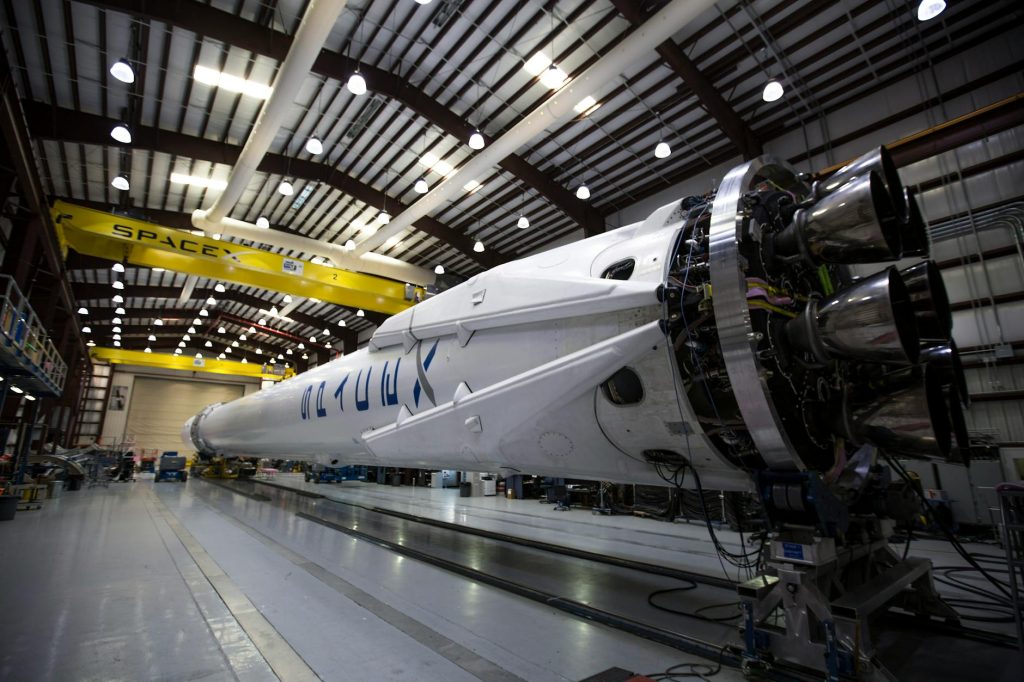
In a move that could redefine the commercial space sector’s trajectory and inject a fresh wave of excitement into public markets, Elon Musk’s audacious rocket and satellite enterprise, SpaceX, is reportedly accelerating its initial public offering (IPO) timeline. Sources familiar with the matter indicate the company is now targeting a blockbuster market debut on Nasdaq as early as June 12, significantly pulling forward a process initially anticipated for later in the month. This expedited schedule signals a bold confidence from the company and its enigmatic founder, positioning SpaceX for one of the most anticipated listings in recent memory.
The Countdown Begins: SpaceX’s Swift Path to Public Markets
The whispers from New York’s financial corridors have solidified into concrete plans, revealing a rapid-fire sequence of events leading up to SpaceX’s public offering. According to Reuters, the company is aiming to price its IPO as early as June 11, with Nasdaq selected as the prestigious listing venue. Under the ticker symbol ‘SPCX’, this listing marks a pivotal moment for a company that has, for years, remained a private behemoth, fueled by venture capital and the seemingly boundless ambition of Elon Musk.
The updated timeline suggests an aggressive push. A public prospectus, the detailed document outlining the company’s financials and future plans, is now expected as early as next Wednesday, May 21. Following this, a crucial roadshow, where executives engage with institutional investors, is slated for June 4. If all proceeds according to this accelerated plan, retail and institutional investors alike could begin trading ‘SPCX’ shares on Nasdaq by June 12.
This acceleration is noteworthy. It suggests a confluence of factors, perhaps including favorable market conditions, a robust internal readiness, or a strategic decision to capitalize on current investor appetite for high-growth, transformative technology companies. For a company that operates at the very edge of technological innovation and logistical complexity, bringing forward such a monumental financial event is no small feat.
Why Now? The Strategic Imperative Behind Going Public
SpaceX’s decision to finally tap public markets, after years of speculation, arrives at a critical juncture in its evolution. While the company has consistently raised substantial private capital, its ambitions have grown exponentially, demanding an even larger war chest. The development of Starship, the fully reusable super heavy-lift launch system designed to ferry humans and cargo to the Moon and Mars, is an undertaking of unprecedented scale and cost. Concurrently, the global rollout and expansion of Starlink, its satellite internet constellation, requires continuous investment in manufacturing, launch capabilities, and ground infrastructure.
Private markets, while generous, often have limits to the sheer volume of capital they can deploy for a single entity, particularly one with such long-term, capital-intensive goals. Going public unlocks a far deeper pool of capital, allowing SpaceX to fund its audacious projects without the constraints of private funding cycles. This access to public capital is not just about immediate cash, but also about establishing a transparent, liquid market for its shares, which can facilitate future fundraising through secondary offerings or debt instruments, and provide an exit for early investors and employees.
Moreover, the timing could be strategic. Despite some recent market volatility, investor interest in disruptive technology and space exploration remains high. A successful IPO now could allow SpaceX to command a premium valuation, reflecting its unique position as a leader in both launch services and satellite broadband. It also positions the company to potentially outpace rivals in capital deployment, cementing its competitive advantage in a rapidly evolving global space race.
The Musk Factor: Navigating Public Scrutiny
No discussion of SpaceX is complete without acknowledging Elon Musk, its CEO and driving force. Musk has a well-documented, sometimes tumultuous, history with public companies, notably Tesla and X (formerly Twitter). His often unconventional communication style and bold pronouncements have both galvanized investors and drawn regulatory scrutiny. As SpaceX transitions from a privately held entity, where Musk’s vision could largely dictate its path without quarterly earnings calls or the constant gaze of public market analysts, to a publicly traded one, a new dynamic will emerge.
Shareholders will demand transparency, predictable growth, and a clear path to profitability, particularly for Starlink. While SpaceX’s long-term vision of colonizing Mars is compelling, public markets often prioritize near-term financial performance. Musk will need to balance his ambitious, long-range goals with the expectations of a diverse shareholder base. This could mean a more disciplined approach to financial reporting, more cautious public statements, and a greater emphasis on consistent operational execution.
The IPO will also shine a harsh spotlight on SpaceX’s corporate governance, financial metrics, and technological challenges. Every Starship test flight, every Starlink deployment, and every launch contract will be scrutinized not just by engineers and space enthusiasts, but by a global community of investors. How Musk and his leadership team navigate this heightened level of public accountability will be a key determinant of SpaceX’s success as a public company.
Impact on the Commercial Space Ecosystem and Beyond
SpaceX’s IPO is not just a company event; it is a seismic shift for the entire commercial space industry. As a leader in reusable rocketry and large-scale satellite constellations, SpaceX has set benchmarks for innovation, cost-efficiency, and rapid deployment. Its public listing will provide an invaluable benchmark for the valuation of other private space companies, from launch providers like Blue Origin and United Launch Alliance (ULA) to satellite manufacturers, space tourism ventures, and in-orbit service providers.
For the burgeoning Indian space technology sector, this development carries significant implications. While direct competition with SpaceX’s scale is still nascent, the IPO will undoubtedly draw more global investor attention to space as a viable, high-growth investment theme. Indian startups like Skyroot Aerospace and Agnikul Cosmos, which are developing their own launch vehicles, and numerous satellite-focused companies could benefit from this increased investor confidence in the broader space economy. It demonstrates the massive capital required and the potential returns in this frontier sector, potentially accelerating venture capital interest in India’s own space ambitions.
Furthermore, the funds raised by SpaceX will likely accelerate its expansion plans, potentially intensifying competition in global launch services and broadband connectivity. This could lead to further price compression in launch costs, benefiting governments and commercial entities seeking access to space, but simultaneously putting pressure on less efficient or less capitalized competitors.
The listing will also allow a broader swathe of investors, including retail participants, to own a piece of a company that is quite literally aiming for the stars. This democratization of access to a cutting-edge, future-oriented company could inspire a new generation of investors and innovators, further fueling the public imagination around space exploration and its commercial potential.
Challenges and the Road Ahead
Despite the excitement, SpaceX’s journey as a public company will not be without its challenges. The company faces formidable technical hurdles, particularly with Starship’s development, which has seen multiple test failures, albeit with rapid iteration. Regulatory environments for both launch and satellite operations are complex and constantly evolving. Competition, while often trailing SpaceX, is intensifying, with well-funded rivals like Amazon’s Kuiper project in satellite internet and various national space agencies and private companies vying for launch contracts.
The financial markets themselves present a challenge. While investor enthusiasm is high now, sustained growth will be crucial. SpaceX will need to demonstrate consistent progress on Starship, expand Starlink’s subscriber base profitably, and secure lucrative contracts to justify its likely lofty valuation. The balance sheet will be under continuous scrutiny, requiring disciplined financial management alongside its visionary engineering endeavors.
Ultimately, SpaceX’s accelerated IPO timeline is a testament to its current momentum and the strategic imperative to secure vast capital for its future. It marks the transition from a private, somewhat insular, innovator to a publicly traded entity operating under the full glare of global financial markets. This next chapter promises to be as thrilling, and perhaps as unpredictable, as the company’s journey to orbit itself.