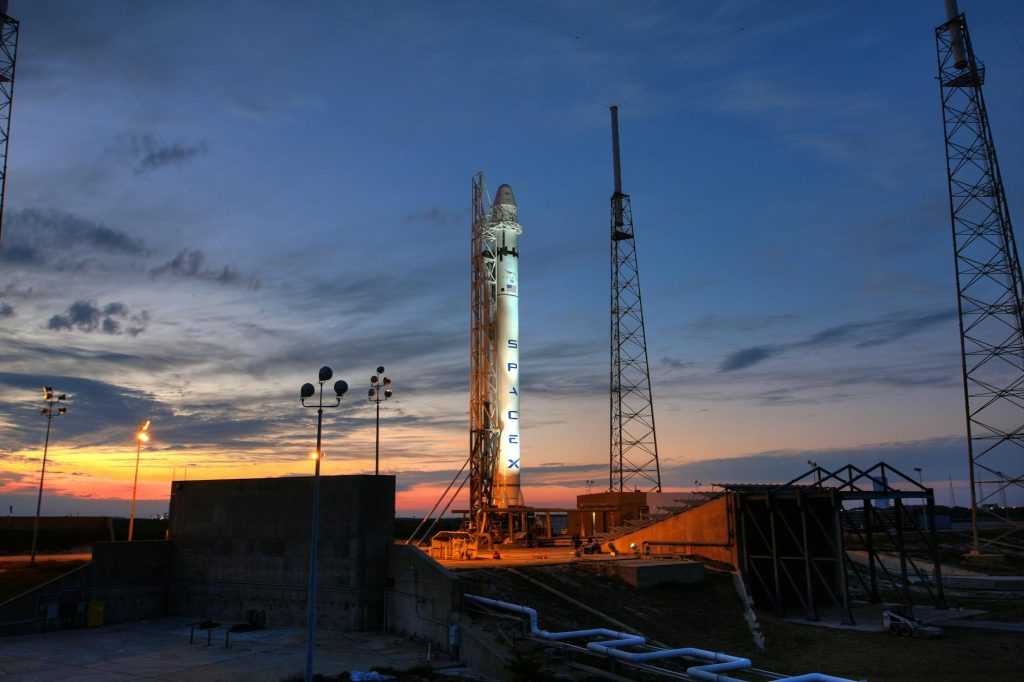
Elon Musk’s Ambitious Public Listing Set to Test Investor Appetite for Space Frontier
In the high-stakes world of venture capital and public markets, few announcements command attention quite like those involving Elon Musk. His latest endeavor to capture the imagination of Wall Street involves SpaceX, his ambitious rocket and satellite company, which is reportedly gearing up for an Initial Public Offering (IPO) that could redefine market capitalization. This isn’t just another tech listing; it’s a potential watershed moment for the commercial space industry, signaling a new era of investor confidence in ventures that once seemed confined to science fiction.
For years, SpaceX has operated largely within the confines of private capital, fueled by a mix of venture funding, government contracts, and Musk’s personal vision. Now, as the company matures and its Starlink satellite internet constellation expands its global footprint, the pivot to public markets appears imminent. The move comes amidst a palpable shift in investor sentiment, with a renewed appetite for high-growth technology companies emerging after a period of market volatility. SpaceX’s IPO is poised to become a litmus test for this evolving landscape, offering a glimpse into the future of space commerce and long-term, capital-intensive innovation.
The Road to Public Markets: A Landmark IPO in the Making
The prospect of SpaceX going public has been a subject of intense speculation for nearly a decade, with each new milestone from the company fueling further rumors. From the reusable Falcon 9 rockets to the groundbreaking Starship development and the rapid deployment of Starlink, SpaceX has consistently pushed the boundaries of what is technologically and commercially feasible in space. This impending IPO is not merely a fundraising exercise; it is a validation of a business model that intertwines audacious engineering with global infrastructure development, all under the banner of humanity’s multi-planetary future.
Targeting a June 12 Nasdaq Launch
According to recent reports from sources familiar with the matter, SpaceX is accelerating its listing timeline, with a potential stock market debut as early as June 12. The company has reportedly chosen the Nasdaq exchange for its listing, a natural fit for a technology and innovation-driven enterprise. This preference for Nasdaq, known for housing many of the world’s largest tech giants, underscores SpaceX’s identity as a cutting-edge technology company rather than a traditional aerospace firm. The swiftness of the timeline suggests a strategic move to capitalize on current market conditions, where investor interest in transformative technologies is on the upswing.
For Indian investors and businesses, the Nasdaq listing holds particular significance. Many Indian tech companies also eye Nasdaq for its deep liquidity and global investor base. SpaceX’s entry could set a precedent for how capital-intensive, future-forward ventures from emerging markets might also access broader public funding, potentially inspiring India’s burgeoning private space sector. The visibility and prestige associated with a Nasdaq listing also provide a powerful platform for global brand building and talent acquisition.
A Staggering $1.75 Trillion Valuation Target
Perhaps the most jaw-dropping aspect of the impending IPO is the reported valuation target: approximately $1.75 trillion. If achieved, this would not only make SpaceX the largest IPO ever but would also place it among the most valuable companies in the world, alongside behemoths like Apple, Microsoft, and Saudi Aramco. This staggering figure reflects not just current assets and revenues but also the immense future potential investors are attributing to SpaceX’s various ventures.
To put this into perspective, a $1.75 trillion valuation would dwarf the market caps of many established industries and even entire national economies. It signifies a profound belief in Elon Musk’s long-term vision and the company’s ability to execute on projects that range from global internet access to human missions to Mars. This valuation is a testament to the market’s evolving understanding of space as not merely a frontier for scientific exploration, but a burgeoning economic domain with vast commercial opportunities.
Starlink: The Revenue Engine Powering the Public Offering
While SpaceX is synonymous with rockets and space travel, it is the Starlink satellite internet constellation that is widely seen as the primary revenue driver underpinning this colossal valuation. Starlink provides high-speed, low-latency internet services to underserved and remote areas globally, leveraging a rapidly expanding network of thousands of satellites in low Earth orbit. This service has proven particularly valuable in regions with limited terrestrial infrastructure, offering a compelling alternative to traditional internet providers.
Starlink offers a recurring revenue model, providing a stable financial foundation for SpaceX’s more ambitious, longer-term projects like Starship development and Mars colonization. The steady growth in Starlink subscribers, coupled with its strategic importance in global connectivity (including during geopolitical events), positions it as a critical asset in the IPO prospectus. Investors are likely to view Starlink as a more predictable and scalable business, balancing the inherent risks associated with rocket launches and interplanetary travel.
For India, Starlink’s potential is significant, although its entry into the Indian market has faced regulatory hurdles. Should these be resolved, Starlink could address the digital divide in vast rural areas, much like it has in other parts of the world. Its success in other markets provides a blueprint for how satellite internet can complement traditional telecom infrastructure, creating a robust, multi-layered connectivity ecosystem.
Beyond Rockets: A Diversified Space Behemoth
SpaceX is far more than just a rocket company. Its operations span multiple critical segments of the space industry. The Falcon 9 and Falcon Heavy rockets have become workhorses for satellite launches, delivering payloads for commercial, government, and military clients. The company’s Crew Dragon spacecraft has successfully ferried astronauts to and from the International Space Station, restoring human spaceflight capabilities to the United States. And then there is Starship, the fully reusable super heavy-lift launch vehicle designed for missions to the Moon and Mars, which represents the pinnacle of SpaceX’s long-term ambition.
This diversification mitigates risk and offers multiple avenues for revenue generation. While Starlink provides immediate cash flow, the launch services and human spaceflight programs offer steady contracts and high-profile missions that maintain public and government interest. The long-term vision encapsulated by Starship, while speculative in its immediate returns, offers an unparalleled growth narrative that captivates investors looking for truly disruptive innovation.
Elon Musk’s Vision and Investor Confidence
No discussion of SpaceX’s public offering can ignore the ‘Elon Musk factor.’ Musk’s track record with Tesla, transforming it from a niche electric vehicle manufacturer into a global automotive and energy giant, has cultivated a unique brand of investor confidence. His ability to articulate a grand vision and then, against all odds, largely execute it, often commands a premium from the market. This “Musk premium” is likely to play a significant role in how investors perceive and value SpaceX.
However, Musk’s often-unconventional communication style and his involvement across multiple high-profile companies (Tesla, X, Neuralink, The Boring Company) also introduce a layer of complexity. Investors will weigh the benefits of his visionary leadership against potential distractions and the inherent volatility that sometimes accompanies his public persona. Ultimately, the IPO will be a test of how much of Musk’s personal brand equity translates into a stable, long-term investment proposition for a company as capital-intensive and futuristic as SpaceX.
Navigating Market Volatility: A Return of Investor Appetite
The timing of SpaceX’s IPO is strategic. The past few years have been characterized by significant market volatility, particularly impacting growth-oriented technology stocks. Rising interest rates, inflationary pressures, and geopolitical uncertainties led to a period of investor caution and a cooling off of the IPO market. However, recent months have seen a discernible shift, with a renewed appetite for high-growth technology companies beginning to return.
This resurgence is driven by several factors: a more stable interest rate outlook, signs of economic resilience, and investors’ perennial search for compelling growth stories. SpaceX, with its immense potential and established track record, fits perfectly into this narrative. Its IPO could serve as a bellwether for the broader market, indicating a full-fledged return of confidence in innovative, albeit sometimes risky, ventures. The success of this offering could open the floodgates for other late-stage private companies contemplating their public debuts.
The Underwriting Game: Wall Street’s Role
An IPO of this magnitude requires an immense logistical and financial undertaking, orchestrated by a syndicate of Wall Street’s top investment banks. While specific underwriters have not been publicly named, these firms would be responsible for due diligence, valuing the company, marketing the shares to institutional investors through roadshows, and managing the initial allocation process. The sheer scale of a $1.75 trillion valuation implies an unprecedented level of coordination and market-making activity.
The involvement of major financial institutions lends credibility to the offering and ensures a wide distribution of shares. For the banks involved, it’s a prestigious mandate that promises substantial fees and strengthens their position in the highly competitive investment banking landscape. Their expertise will be crucial in balancing investor demand with the company’s valuation expectations, ensuring a smooth and successful public debut.
Implications for the Global Space Industry
SpaceX’s public listing will send ripples across the global space industry. For competitors like Blue Origin, United Launch Alliance (ULA), and even national space agencies such as ISRO (Indian Space Research Organisation), the IPO will intensify the competitive landscape. A publicly traded SpaceX will have access to a deeper pool of capital, potentially accelerating its development cycles and further consolidating its dominant position in the launch market and satellite internet sector.
Conversely, it could also spur greater investment in other private space companies, as investors seek to diversify their exposure to the burgeoning space economy. For India’s nascent private space sector, with companies like Skyroot Aerospace and Agnikul Cosmos, SpaceX’s IPO offers both inspiration and a challenge. It demonstrates the immense capital required and the global scale achievable, pushing Indian startups to innovate faster and attract larger investments. It also highlights the potential for public markets to fund long-term, strategic national capabilities.
Future Funding and Growth: What an IPO Unlocks
Beyond providing liquidity for early investors and employees, going public unlocks significant capital for SpaceX’s future growth. The proceeds from the IPO will likely be channeled into a variety of strategic initiatives: accelerating the development and testing of Starship, expanding the Starlink constellation to achieve even greater global coverage, investing in advanced research and development for future space technologies, and potentially funding ambitious Mars missions. Public capital offers a more sustainable and less dilutive funding mechanism compared to repeated private funding rounds for a company with such monumental capital requirements.
The IPO also provides a transparent valuation mechanism, allowing the company to use its stock as currency for potential acquisitions or strategic partnerships. This financial flexibility is critical for a company operating at the cutting edge of technology and space exploration, where innovation cycles are rapid and the need for capital is constant.
Potential Risks and Challenges on the Public Stage
While the excitement surrounding SpaceX’s IPO is undeniable, the move to public markets also comes with significant challenges and risks. Public companies face intense scrutiny from regulators, shareholders, and the media. Quarterly earnings reports, corporate governance, and executive compensation will all be under a microscope. SpaceX will need to balance its long-term, visionary goals with the short-term demands of public market investors, who often prioritize profitability and consistent growth.
Technological risks remain inherent in space exploration. Launch failures, satellite malfunctions, or delays in Starship development could significantly impact investor confidence. Competition from established aerospace players and emerging startups will continue to be fierce. Regulatory hurdles, particularly for Starlink’s global expansion and orbital debris mitigation, also present ongoing challenges. Navigating these complexities while maintaining its innovative edge will be SpaceX’s ultimate test as a public entity.
Conclusion: A New Era for Space Investment
SpaceX’s impending Nasdaq debut is more than just a financial transaction; it is a declaration of intent for the future of humanity’s relationship with space. A $1.75 trillion valuation, if realized, would firmly establish commercial space as a mainstream investment category, moving it beyond the realm of niche venture capital into the portfolios of institutional and retail investors worldwide. This IPO represents a powerful vote of confidence in Elon Musk’s ambitious vision and the potential for private enterprise to drive unprecedented advancements in space exploration and global connectivity.
For the Indian technology and startup ecosystem, the SpaceX IPO serves as a potent reminder of the transformative power of deep tech and long-term vision. It underscores the importance of fostering an environment where audacious ideas can attract significant capital, ultimately leading to global impact. As SpaceX prepares to embark on its public journey, it is not just launching shares; it is launching a new era of space investment, one where the final frontier is increasingly defined by market forces and entrepreneurial spirit.