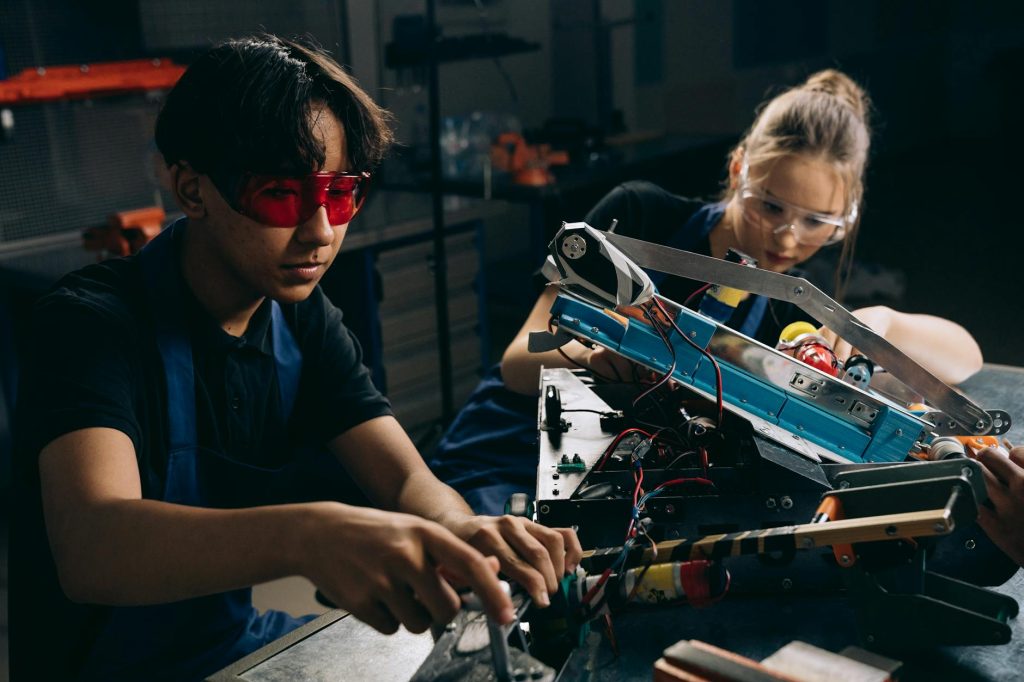
It’s a sweltering Tuesday afternoon in Bhubaneswar, and 17-year-old Priya Mohanty isn’t cramming for her board exams. Instead, she’s hunched over a workbench, soldering wires to a small circuit board. Around her, the controlled chaos of an Atal Tinkering Lab hums with the sound of 3D printers and quiet, intense collaboration. Priya and her team are building a low-cost, solar-powered water purity sensor for rural households, an idea born from visiting her grandmother’s village last summer. They have a rough prototype, a half-finished pitch deck on a nearby laptop, and an unshakeable belief that they can solve this problem.
For years, my work has taken me to the gleaming glass offices of HSR Layout in Bangalore and the bustling co-working spaces of Gurugram. I’ve chronicled the stories of billion-dollar unicorns and celebrated founders who raised staggering Series C rounds. But lately, the most exciting story in Indian entrepreneurship isn’t happening in boardrooms. It’s happening in places like Priya’s school lab. A quiet, systemic rewiring is underway in India’s innovation pipeline. We are finally moving beyond just celebrating the harvest and starting to meticulously cultivate the soil.
This is the story of the seedcorn stage. It’s a nationwide, multi-pronged effort to embed the very DNA of entrepreneurship, problem-solving, and critical thinking into students long before they even choose a college major. It’s a bet that the founders who will define India’s 2030s and 2040s won’t just stumble into entrepreneurship after a stint at a consulting firm, they will be purpose-built for it from their teenage years.
From Rote Memorization to Building an MVP
For generations, the Indian education system has been a formidable machine, optimized for one primary output: exceptional test-takers. It prioritized memorization over experimentation, conformity over curiosity, and risk-aversion over resilience. This system produced brilliant doctors, engineers, and civil servants, but it was hardly a fertile ground for the chaotic, failure-tolerant journey of a startup founder.
The psychological leap required to go from fearing a red mark on an exam paper to embracing a failed product iteration is massive. The startup world runs on a currency of hypotheses, pivots, and MVPs (Minimum Viable Products), concepts entirely alien to a curriculum built around standardized tests and singular right answers. This fundamental mismatch has been the silent handbrake on India’s true entrepreneurial potential.
What we are witnessing now is a deliberate attempt to dismantle that old machinery. It is an acknowledgment that to truly become a product-led nation, we need to produce a generation that thinks in terms of problems and solutions, not just questions and answers. The new goal is to foster what I call ‘builder’s literacy’, the innate ability to see a gap in the world and feel empowered to create something, however small, to fill it.
The Government’s Grand Experiment: Atal’s Army
At the heart of this transformation is the government’s ambitious Atal Innovation Mission (AIM), championed by NITI Aayog. Its flagship initiative, the Atal Tinkering Labs (ATLs), is perhaps the single largest formal intervention in grassroots innovation anywhere in the world. The government has established over 10,000 of these labs in schools across 700 districts, equipping them with tools that were once the exclusive domain of university engineering departments or expensive private workshops.
Step inside any ATL, and you’ll find:
- 3D printers humming away, turning digital designs into tangible objects.
- DIY robotics kits and microcontroller boards like Arduino and Raspberry Pi.
- Sensors, IoT (Internet of Things) devices, and basic electronics components.
But the tools are only half the story. The real magic of the ATL is the permission it grants students to fail. It is a space designed for tinkering, for breaking things and putting them back together, for asking “what if?” without the pressure of a syllabus. For a student like Priya in Bhubaneswar, the lab isn’t just a room with fancy equipment; it’s a sandbox for her ambition. Her water purity sensor might not become a unicorn, but the process of building it, from identifying the problem to prototyping a solution, is an education in itself. She is learning about product design, user feedback (by talking to her own family), and bootstrapping, all before her 18th birthday.
AIM’s efforts extend beyond just labs. They organize hackathons, innovation challenges, and mentorship programs that connect students with real-world entrepreneurs and academics. This creates a powerful feedback loop, demystifying the startup journey and making it feel like a viable, accessible career path, not some mythical quest reserved for IIT graduates in Bangalore.
The Ivory Tower Opens Its Gates
This grassroots movement is being met halfway by India’s premier academic institutions. The IITs and IIMs, long seen as the finishing schools for corporate India, are now aggressively reaching down the pipeline to identify and nurture talent at a much earlier stage.
The Entrepreneurship Cells (E-cells) on these campuses, once sleepy clubs that organized an annual business plan competition, are now vibrant, year-round hubs of activity. They are running pre-incubation programs specifically for undergraduate students, offering them mentorship from alumni who have built successful companies, access to legal and financial advice, and often, a small grant to build their first proof-of-concept.
Look at the IIT Madras Research Park, a veritable ecosystem unto itself. While it houses deep-tech giants and established startups, it also actively fosters student-led innovation. They understand that the student who builds a smart irrigation system for a college project today could be the agritech founder who transforms Indian farming tomorrow. Similarly, IIM Ahmedabad’s CIIE.CO, one of India’s most renowned incubators, is deeply involved in programs that encourage innovation at the pre-idea stage, recognizing that a founder’s mindset must be nurtured before a business plan is even written.
These institutions are realizing that their most valuable asset isn’t just their research papers or their placement statistics, but their ability to act as a crucible for new ventures. By sanctioning and supporting student entrepreneurship, they send a powerful signal that building a company is as prestigious a path as landing a high-paying job at a multinational.
This shift has tangible effects. Students are now forming teams in their dorm rooms to tackle problems they see around them, from hyper-local delivery and waste management solutions to edtech platforms that help their peers. They have a dramatically shorter path from idea to execution. They can walk across campus to a fabrication lab to build a prototype, get feedback from a seasoned professor, and pitch their idea to an alumni angel investor, all within the same ecosystem. The runway starts in the hostel, not after graduation.
The Quiet Revolution Beyond the Metros
Perhaps the most profound impact of this movement is its democratizing force. For decades, the Indian startup story was overwhelmingly a metropolitan one. The network, the capital, and the talent were concentrated in a few key hubs. An aspiring founder in a tier-2 or tier-3 city faced an almost insurmountable information and access gap.
Initiatives like the ATLs and the government’s broader Startup India program are changing this narrative. By placing the tools of innovation directly into schools in places like Nagpur, Visakhapatnam, and Guwahati, they are decentralizing opportunity. A student in a small town now has access to the same 3D printers and IoT kits as a student in a top international school in Delhi. This levels the playing field in a way nothing has before.
This is critical because the most pressing, scalable problems in India often exist outside the urban bubbles. Founders with a deep, lived understanding of the challenges in agriculture, last-mile logistics, affordable healthcare, and vernacular education are more likely to emerge from these regions. When you empower a student in rural Maharashtra who has seen her family struggle with unpredictable crop yields, she is more likely to build a relevant agritech solution than a coder in Bangalore who has only read about the problem.
This grassroots push is creating a new generation of founders who are problem-first, not solution-first. They aren’t just building another social media app or a food delivery clone. They are building solutions for their own communities, born from authentic pain points. This is the pipeline that will produce the startups that solve India’s unique, complex challenges.
Cultivating the Founders of 2035
The full impact of this educational shift won’t be visible in tomorrow’s funding announcements or the next list of unicorns. This is a long-term investment, a patient cultivation of human capital. The students tinkering in these labs today will enter the workforce and the startup ecosystem over the next five to ten years.
But when they arrive, they will be a different breed of founder. They will be digitally native, comfortable with rapid prototyping, and psychologically conditioned to view failure as data. Their GTM (Go-To-Market) strategy will be something they first drafted for a school competition. Their understanding of CAC (Customer Acquisition Cost) and LTV (Lifetime Value) will be rooted in the practical experience of trying to get their first ten users for a college project.
We are teaching an entire generation the language and the logic of building. We are shifting the national mindset from job-seeking to job-creating. The students in these programs may not all become founders, but they will all become problem-solvers, and that is a victory in itself. The ones who do take the plunge, however, will be starting the race miles ahead of their predecessors. They are India’s true seedcorn, and the future harvest looks very promising indeed.