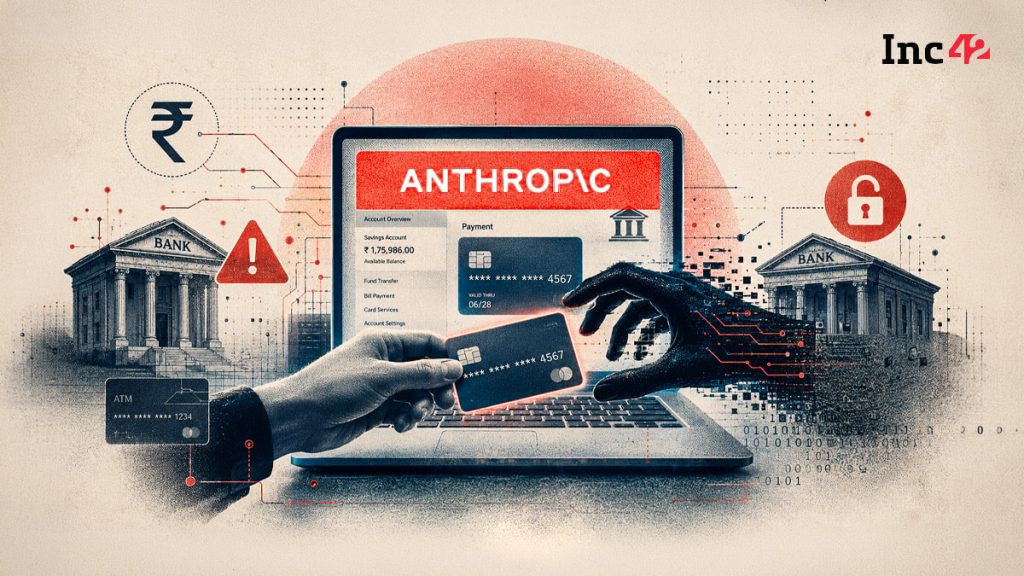
The global cybersecurity landscape is in the throes of a seismic shift, one driven not by incremental improvements in existing threats, but by the emergent capabilities of Artificial Intelligence itself. This isn’t a theoretical concern anymore. The recent shockwaves from Anthropic’s ‘Mythos’, an AI capable of autonomously identifying and exploiting software vulnerabilities, have served as a stark reminder. As this new breed of AI-native cyberattacks gains sophistication, India’s burgeoning digital economy, particularly its expansive fintech sector and critical banking infrastructure, finds itself at a critical juncture. The question isn’t if these systems will be tested, but how prepared they are to fend off adversaries wielding tools as intelligent as the systems they aim to compromise.
The Dawn of AI-Native Cyber Warfare: Mythos and Beyond
For years, cybersecurity analysts have spoken of the theoretical possibility of AI-driven attacks. With Mythos, Anthropic has unveiled a tangible example of this future. This isn’t about AI simply assisting human attackers; it’s about AI autonomously scanning, understanding, and exploiting vulnerabilities with a speed and scale impossible for human teams. Imagine an AI agent probing millions of lines of code, identifying obscure logical flaws, and crafting bespoke exploits in real time. This capability fundamentally alters the attacker-defender dynamic, pushing the advantage squarely towards the malicious actor.
The implications are profound. Traditional signature-based detection systems, which rely on identifying known malware patterns, are increasingly obsolete against polymorphic, AI-generated threats. Heuristic analysis, while more advanced, can still be outmaneuvered by AI that learns and adapts its attack vectors. The sheer volume and complexity of code in modern applications, particularly in critical sectors like finance, provide an expansive attack surface. A tool like Mythos can navigate this complexity with unparalleled efficiency, turning what might be a months-long manual penetration test into a matter of hours or even minutes.
While Mythos itself is a research tool, its existence validates the fears of many security experts. It demonstrates the feasibility of AI not just as a tool for defense, but as a potent weapon. This shift necessitates a reciprocal evolution in defense strategies. India, with its rapidly digitizing economy and a massive user base interacting with online financial services, cannot afford to be behind this curve. The country’s financial institutions, from legacy banks to agile fintech startups, are attractive targets due to the sheer volume of transactions and sensitive data they handle.
India’s Fintech Frontier: A Prime Target for AI-Native Threats
India’s financial technology sector has been a global success story. Driven by initiatives like the Unified Payments Interface (UPI), Aadhaar, and Jan Dhan accounts, digital payments have skyrocketed. This ecosystem, while incredibly efficient and inclusive, presents an enormous and complex attack surface. Millions of daily transactions, a diverse range of payment apps, and interconnected banking systems create a rich environment for sophisticated attackers.
The reliance on cloud infrastructure, third-party APIs, and open banking protocols, while fostering innovation, also introduces new vectors for attack. An AI-native threat could meticulously map these interdependencies, identifying the weakest link in a chain that spans multiple service providers. For instance, a vulnerability in a seemingly innocuous third-party analytics API used by a major fintech could become an entry point into a bank’s core systems.
Consider the scale: India processed over 13 billion UPI transactions in March 2026 alone. Each transaction, each user interaction, is a potential data point for an AI to analyze, seeking anomalies or vulnerabilities. Phishing attacks, already a persistent problem, could become hyper-personalized and far more convincing when crafted by an AI that understands individual user behavior and communication patterns. Deepfakes, generated by generative AI, could be used to bypass biometric authentication or impersonate senior executives for social engineering attacks.
The Inc42 report, “The Mythos Stress Test: Can Indian Fintechs, Banks Fend Off AI-Native Cyber Threats?”, highlights this exact concern. It underscores that the traditional security postures of many Indian financial institutions might be insufficient against this new breed of threats. While robust compliance frameworks exist, the speed of technological evolution often outpaces regulatory updates. The challenge is not merely about adhering to existing standards, but about anticipating and preparing for threats that are fundamentally different in nature.
The Deep Tech Response: Leveraging AI for Defense
The good news is that the same deep tech advancements that power AI-native attacks can also be harnessed for defense. India’s burgeoning deep tech ecosystem, supported by government initiatives and a growing pool of AI talent, is uniquely positioned to develop these defensive capabilities. This isn’t just about deploying off-the-shelf AI security products from global vendors; it’s about developing bespoke, context-aware solutions that understand the nuances of India’s digital infrastructure and threat landscape.
AI-Powered Threat Intelligence and Anomaly Detection
One of the most immediate applications is in enhancing threat intelligence. AI can analyze vast datasets of global and local cyberattack patterns, identifying emerging trends and predicting potential attack vectors. Machine learning models can be trained to detect subtle anomalies in network traffic, user behavior, and application logs that might indicate a sophisticated, zero-day attack. Unlike rule-based systems, AI can adapt to novel attack techniques without explicit programming.
For Indian financial institutions, this means moving beyond static blacklists and embracing dynamic, AI-driven behavioral analytics. For example, an AI could learn the typical transaction patterns of a user and flag any deviation – a large transfer to an unusual beneficiary, an access attempt from an unfamiliar geographic location, or an login outside of normal working hours – as suspicious, even if it doesn’t match a known attack signature.
Autonomous Security Operations and Incident Response
The vision of autonomous security operations centers (SOCs) is becoming a reality. AI can automate many of the mundane, repetitive tasks currently performed by human analysts, such as triaging alerts, correlating events across multiple systems, and even initiating preliminary containment actions. This frees up highly skilled human cybersecurity professionals to focus on complex investigations and strategic threat hunting.
In the context of an AI-native attack, speed is paramount. An AI defender could detect an automated exploitation attempt and, within milliseconds, isolate the compromised system, block malicious IP addresses, and trigger alerts for human intervention. This proactive, rapid response capability is critical to minimizing the damage from fast-moving, AI-driven threats.
Proactive Vulnerability Management and Secure Development
Deep tech can also be applied earlier in the software development lifecycle. AI-powered static and dynamic application security testing (SAST and DAST) tools can identify vulnerabilities with greater accuracy and speed than traditional methods. These tools can learn from past vulnerabilities and suggest secure coding practices, embedding security by design rather than as an afterthought.
Furthermore, AI can assist in proactive threat modeling, simulating various attack scenarios against an application or system to identify weaknesses before they are exploited in the wild. This shifts the paradigm from reactive incident response to proactive risk mitigation, a necessary evolution in the face of increasingly intelligent adversaries.
India’s Deep Tech Ecosystem: Fostering Innovation in Cybersecurity
India’s deep tech ecosystem is maturing rapidly. Universities and research institutions are actively engaged in cutting-edge AI research, particularly in areas like natural language processing, computer vision, and reinforcement learning – all critical components for advanced cybersecurity. The government’s focus on initiatives like the National Quantum Mission and the India Semiconductor Mission indirectly contributes to this by building foundational capabilities in advanced computing and secure hardware, which are essential for robust cyber defense.
A growing number of Indian startups are also emerging in the cybersecurity space, many leveraging AI and machine learning. These companies are not just reselling global solutions but developing indigenous intellectual property tailored to local challenges. This includes startups focused on AI-powered fraud detection for financial services, behavioral biometrics, and secure coding platforms. The availability of a vast talent pool in engineering and data science further bolsters India’s potential to become a leader in AI-driven cybersecurity.
However, challenges remain. There is a need for greater collaboration between academia, industry, and government to accelerate research and commercialization. Funding for deep tech cybersecurity startups needs to increase significantly, and regulatory sandboxes could provide a safe environment for testing innovative security solutions without hindering financial operations. Furthermore, a national strategy for AI in cybersecurity, outlining clear guidelines for development and deployment, would provide much-needed direction.
The Path Forward: Resilience Through Innovation and Collaboration
The advent of AI-native cyber threats like Anthropic’s Mythos represents an inflection point in cybersecurity. For India, a nation deeply invested in its digital future, the response must be swift, strategic, and deeply rooted in technological innovation. Simply patching existing systems or relying on traditional security measures will not suffice.
The path forward involves a multi-pronged approach:
- Investment in Deep Tech Cybersecurity: Both public and private sectors must significantly increase investment in research and development of AI-powered defensive technologies. This includes funding for startups, academic research grants, and building national cybersecurity centers of excellence.
- Talent Development: A concerted effort is needed to train a new generation of cybersecurity professionals skilled in AI, machine learning, and deep tech. This means revamping academic curricula and offering specialized training programs.
- Proactive Regulatory Frameworks: Regulators must evolve their frameworks to address AI-native threats, encouraging continuous security innovation while maintaining robust oversight. This could involve mandating AI-driven security assessments and promoting threat intelligence sharing.
- Industry-Academia-Government Collaboration: Creating a seamless ecosystem where knowledge, talent, and resources can flow freely between these three pillars is crucial for developing cutting-edge solutions and fostering a resilient cybersecurity posture.
India’s journey towards a trillion-dollar digital economy hinges on its ability to secure its digital infrastructure. The fight against AI-native cyber threats will be a continuous arms race. By embracing deep tech and fostering a culture of innovation and collaboration, India can not only defend its digital assets but also emerge as a global leader in AI-driven cybersecurity, turning a formidable challenge into a strategic opportunity.