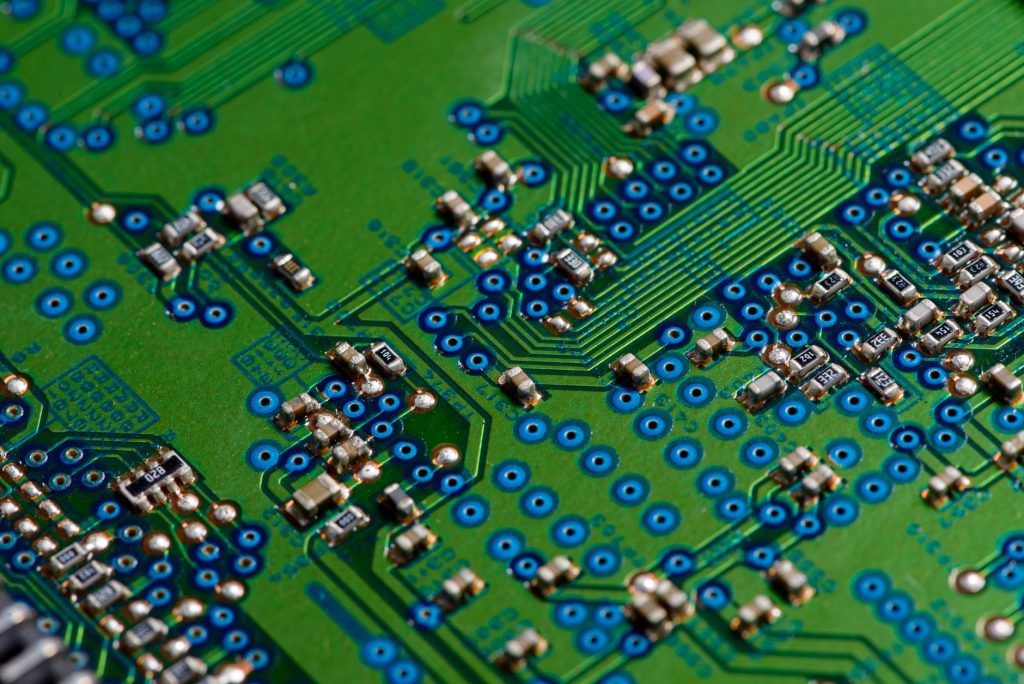
The inauguration of CG Semi’s semiconductor manufacturing facility in Sanand, Gujarat, marks a pivotal moment in India’s technology narrative. It is far more than just another factory opening; it represents a tangible step towards achieving a long-cherished, yet often elusive, ambition: establishing a robust, indigenous semiconductor ecosystem. This development signals a strategic pivot, demonstrating India’s intent to move beyond being merely a consumer of advanced technology to becoming a critical producer, fundamentally reshaping its role in the global electronics value chain.
For years, India has been a powerhouse in software and IT services, but its reliance on imported hardware, particularly semiconductors, has remained a glaring vulnerability. This dependence became acutely evident during the global chip shortages of recent years, which crippled industries from automotive to consumer electronics, underscoring the strategic imperative for domestic chip production. The Sanand facility, with its focus on Assembly, Testing, Marking, and Packaging (ATMP) operations, is the first significant stride in mitigating this risk and laying the groundwork for a more self-reliant digital future.
The Sanand Blueprint: A Strategic First Step in ATMP
The CG Semi facility in Sanand, officially launched this month, represents a crucial entry point for India into the complex world of semiconductor manufacturing. Rather than immediately attempting the immensely capital-intensive and technologically challenging front-end wafer fabrication, India is pragmatically focusing on ATMP. This “back-end” process involves taking silicon wafers, often fabricated elsewhere, dicing them into individual chips, packaging them for protection and connectivity, and then rigorously testing them to ensure functionality and reliability.
This approach is highly strategic. ATMP operations, while less glamorous than cutting-edge fabrication, are essential for developing foundational expertise in precision manufacturing, supply chain management, and quality control specific to the semiconductor industry. It allows India to build a skilled workforce, attract ancillary industries, and foster a local ecosystem that can eventually support more advanced manufacturing. For a nation that consumes a vast quantity of electronics, having domestic ATMP capabilities significantly reduces turnaround times, lowers logistics costs, and most importantly, enhances supply chain security for a wide array of products, from smartphones and consumer appliances to electric vehicles and defense systems.
The significance of this launch was underscored by the Prime Minister’s presence, highlighting the government’s unwavering commitment to the “Make in India” initiative. This facility is not just about producing chips; it is about cultivating an industrial base, creating high-skill jobs, and embedding advanced manufacturing into the national economic fabric.
Beyond Packaging: India’s Ambitious Chip Ecosystem
The Sanand facility is merely the vanguard of a much grander vision encapsulated by the India Semiconductor Mission (ISM). Launched with the explicit goal of making India a global hub for semiconductor design, manufacturing, and technology development, the ISM outlines an ambitious roadmap. It aims to attract substantial investments across the entire semiconductor value chain, from design houses and intellectual property development to wafer fabrication and advanced packaging.
The government’s commitment is tangible through significant financial incentives, including Production-Linked Incentive (PLI) schemes. These schemes are designed to de-risk investments for global and domestic players, offering direct financial support tied to production targets and capital expenditure. Such incentives are critical in an industry where initial investments can run into billions of dollars and returns can be long-term. India is learning from the playbooks of other nations, including the United States, European Union, and Japan, which have deployed similar strategies to bolster their domestic semiconductor capabilities in response to geopolitical shifts and supply chain vulnerabilities.
The ultimate goal is to move beyond ATMP to full-scale wafer fabrication. This involves creating the raw silicon wafers and then etching intricate circuit designs onto them, a process requiring extreme precision, ultra-clean environments, and billions in specialized equipment. While the Sanand facility represents a crucial first step, it is the foundation upon which more advanced fabrication plants, or “fabs,” will ideally be built, completing India’s journey towards true semiconductor sovereignty. This staged approach, starting with less complex but equally critical segments, allows for organic growth and skill development.
Navigating the Technical and Economic Currents
Building a robust semiconductor industry is fraught with technical and economic challenges. The capital expenditure required for a modern fab is astronomical, often exceeding $10 billion, with a typical construction timeline of several years. Beyond the financial outlay, the industry demands an extremely specialized workforce – engineers, material scientists, and technicians with expertise in fields ranging from quantum physics to advanced robotics. India, with its vast talent pool, has a significant advantage here, but continuous investment in specialized education and training programs will be paramount to bridge the skill gap.
Furthermore, the semiconductor supply chain is arguably the most complex in the world, involving hundreds of highly specialized companies across multiple continents. From equipment manufacturers and chemical suppliers to design software providers and intellectual property licensors, integrating into this global ecosystem requires meticulous planning and international collaboration. India’s strategy therefore involves not just attracting manufacturing units but also fostering a vibrant domestic ecosystem of design houses, research institutions, and material suppliers.
Parallel to manufacturing, India’s strength in chip design is a critical asset. Many global semiconductor companies already have significant design and R&D operations in India. Leveraging this existing expertise to develop indigenous intellectual property and custom chip designs will be vital. This dual focus – manufacturing chips and designing them – will accelerate India’s journey towards self-reliance.
Global Rerouting: India’s Place in a Fragmented Supply Chain
The global semiconductor landscape is undergoing a profound transformation. Geopolitical tensions, trade disputes, and the lingering memories of pandemic-induced supply disruptions have spurred a worldwide push for regionalization and diversification of chip manufacturing. Nations are increasingly viewing semiconductor capabilities as a matter of national security and economic competitiveness.
In this context, India is positioning itself as a reliable and secure alternative hub. Its democratic governance, large domestic market, and growing geopolitical significance make it an attractive partner for global chip majors looking to diversify their manufacturing footprints away from concentrated regions. The Sanand facility, and others that will follow, offers an opportunity for India to integrate itself more deeply into the global supply chain, not just as a consumer or a design services provider, but as a manufacturing partner. This shift could help stabilize global supply chains, making them more resilient to future shocks.
The focus on collaboration, rather than isolation, is key. While the ambition is self-reliance, the reality of the semiconductor industry dictates global partnerships. India’s success will depend on its ability to attract leading international players to invest, transfer technology, and co-develop cutting-edge solutions within its borders.
Impact Across Sectors: From EVs to AI
The ripple effect of a thriving domestic semiconductor industry extends across virtually every technology sector.
In
Mobility and Electric Vehicles
, locally produced chips will be critical for battery management systems (BMS), power electronics, advanced driver-assistance systems (ADAS), and sophisticated infotainment units. As India accelerates its EV adoption curve, indigenous chip manufacturing can reduce costs and enhance the security of these vital components. The recent incidents of remote shutdowns of e-rickshaw batteries, for instance, highlight the critical need for secure, localized control over embedded systems, an area where domestic chip production can play a pivotal role.
For
Artificial Intelligence and Machine Learning
, specialized processors, GPUs, and custom AI accelerators are the bedrock. India’s burgeoning AI research and application ecosystem will benefit immensely from local access to advanced hardware, fostering innovation and reducing dependence on imported, often restricted, components.
The
B2C and Retail Technology
sectors, driven by smartphones, smart home devices, and IoT gadgets, are massive consumers of semiconductors. Local production can lead to more affordable and innovative consumer electronics, boosting the “Digital India” vision. Similarly,
Enterprise Software and Cloud Infrastructure
rely heavily on high-performance processors and memory chips. A domestic supply can enhance data security and sovereignty for India’s burgeoning cloud market.
Even
Sustainability and Clean Tech
stand to gain. Power management integrated circuits (PMICs) and control chips are essential for solar inverters, wind turbine controls, and smart grids. Local production can accelerate the deployment of clean energy solutions and enhance energy security. The multiplier effect of a robust domestic semiconductor industry will be transformative, touching every aspect of India’s digital economy.
The Road Ahead: Challenges and Long-Term Vision
While the launch of the Sanand facility is a momentous occasion, it is important to contextualize it as the beginning of a long and arduous journey. The semiconductor industry is characterized by relentless innovation, rapid technological cycles, and intense global competition. Sustained policy support, consistent investment in research and development, and aggressive talent development will be crucial for India to solidify its position.
The vision is clear: to transform India from a strategic consumer to a strategic producer in the global semiconductor landscape. This involves not just manufacturing, but also becoming a hub for cutting-edge research, design innovation, and a reliable partner in the global supply chain. The path to full-stack chip sovereignty is long, but with the Sanand facility, India has definitively taken its first major stride, setting the stage for a new era of technological self-reliance and global influence. The coming decade will reveal whether India can truly etch its mark on the silicon world.