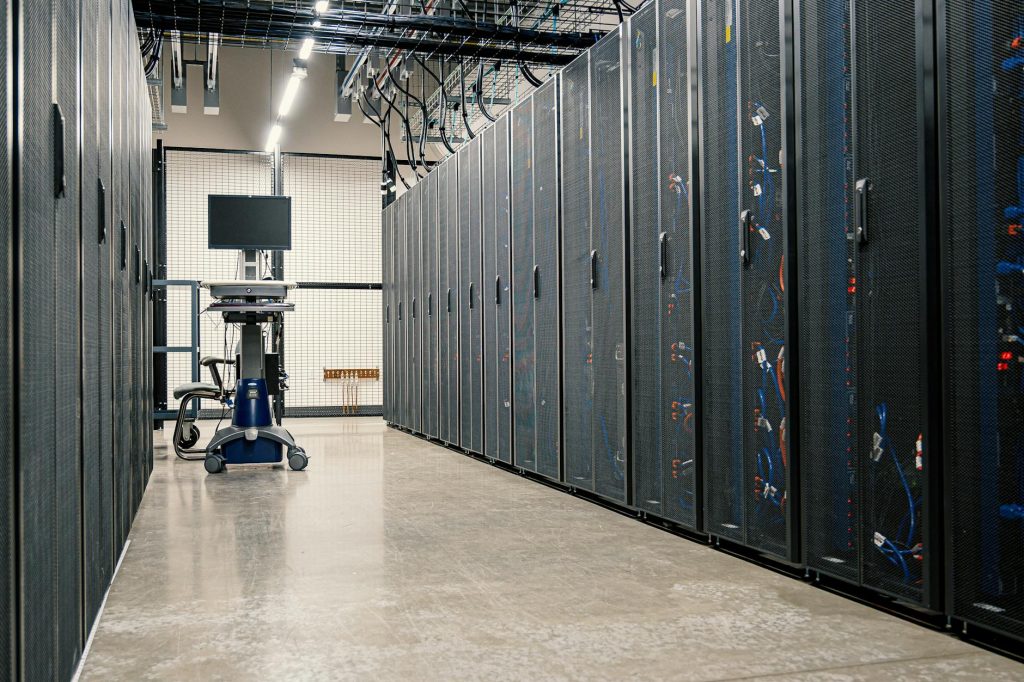
India is racing to build its own sovereign artificial intelligence infrastructure, a laudable goal backed by government missions and celebrated by enterprise partnerships. Yet, this entire national project is at risk of stalling, not because of a lack of software talent or ambitious vision, but due to a looming, and perhaps underestimated, global chokepoint: the severe shortage of high-bandwidth memory (HBM) essential for powering AI accelerators. A stark warning from a senior executive at Micron Technology, one of the world’s three dominant memory manufacturers, suggests India is dangerously unprepared for a supply crunch that could extend well beyond 2028, threatening to turn its AI dreams into expensive, empty data centers.
The issue goes far beyond a simple supply-and-demand imbalance. It strikes at the heart of how Indian enterprises procure critical technology and exposes a strategic vulnerability in the nation’s quest for digital sovereignty. While global hyperscalers like Amazon, Google, and Microsoft have been locking in their HBM and GPU supply chains for years, many Indian firms remain trapped in a cycle of price-sensitive, short-term purchasing. This approach, which serves well in a commoditized market, is proving to be a critical failure in the new era of generative AI, where access to cutting-edge silicon is the primary determinant of success.
The HBM Bottleneck: Why AI Runs on Specialized Memory
To understand the gravity of the situation, one must first grasp why AI is so uniquely dependent on this specific type of memory. Modern AI models, particularly the large language models (LLMs) that power generative services, are gargantuan. They involve billions, sometimes trillions, of parameters that need to be accessed by the processing unit, typically a Graphics Processing Unit (GPU) from a company like Nvidia, at incredible speeds. Standard DRAM (Dynamic Random-Access Memory), the kind found in most PCs and servers, simply cannot keep up.
Think of it as the difference between a single-lane country road and a sixteen-lane superhighway. Standard DRAM is the country road, adequate for most computing tasks. HBM, however, is the superhighway. It achieves its immense bandwidth by vertically stacking multiple memory dies and connecting them to the processor through a wide interface. This architecture allows for a massive volume of data to be moved simultaneously, feeding the voracious appetite of AI chips and preventing them from sitting idle waiting for data.
This complex, three-dimensional manufacturing process, known as 2.5D or 3D packaging, is exceedingly difficult. Only three companies in the world, SK Hynix, Samsung, and Micron, produce HBM at scale. With the explosion in demand for AI servers, these manufacturers are sold out for the foreseeable future. Every Nvidia H100 or H200 Tensor Core GPU, the workhorses of the AI revolution, requires a specific allocation of HBM. Without it, the GPU is just an inert piece of silicon.
India’s Procurement Paradox: A Cost-First Mindset in a Supply-First World
The warning from Micron’s Chief Business Officer, Sumit Sadana, highlights a cultural and operational gap between Indian enterprises and their global counterparts. The Indian market has long been characterized by a sharp focus on total cost of ownership and a preference for negotiating favorable terms on the spot market. This has historically forced technology vendors to compete aggressively on price. However, in the current semiconductor landscape for AI, the power dynamic has completely inverted.
It is now a seller’s market, and the sellers are prioritizing customers who offer predictability and long-term commitment. Global cloud providers and major AI labs secure their future capacity by placing massive, multi-year, non-cancellable orders. They are not just buying chips for next quarter, they are booking manufacturing capacity for 2027 and beyond. This gives memory manufacturers the confidence to invest billions in expanding their highly complex HBM production lines.
Indian companies, by and large, have not adapted to this new reality. The reluctance to sign long-term procurement contracts, often due to internal financial policies or an underestimation of the supply chain’s fragility, places them at the bottom of the priority list. When a new batch of HBM-equipped GPUs becomes available, it is allocated first to the customers who committed to buying it two years ago, not to the ones hoping to negotiate a deal on the spot market. This leaves Indian firms scrambling for limited, and far more expensive, leftover inventory.
Implications for the IndiaAI Mission and Enterprise Growth
This procurement gap has profound implications for every facet of India’s technology ambitions, from government policy to the startup ecosystem.
The Sovereign AI Infrastructure Question
The Government of India has launched the IndiaAI Mission with the explicit goal of building domestic AI capabilities, including sovereign large language models trained on Indian data. This requires immense computational power. Recent announcements, such as Uber’s partnership with the Adani Group to build a massive data center in India, underscore the scale of investment flowing into the physical infrastructure. However, these state-of-the-art facilities will be rendered impotent without a reliable supply of AI accelerators.
If Indian public sector undertakings and private conglomerates tasked with building this sovereign cloud cannot secure a steady pipeline of the latest GPUs, the entire mission will fall behind schedule. The models they develop will be based on older, less powerful hardware, putting them at a permanent disadvantage against models developed by global competitors with access to the cutting edge.
Enterprise and SaaS Competitiveness
The impact extends deep into the private sector. India’s burgeoning SaaS industry, which is increasingly embedding generative AI features into its products, relies on cloud infrastructure. As the cost of AI-ready cloud instances rises due to the underlying hardware shortage, these companies will face thinning margins or be forced to pass on costs to customers, potentially making them less competitive globally. Enterprises in sectors like banking, manufacturing, and retail looking to deploy their own AI models for functions like fraud detection, supply chain optimization, or customer service will face the same hurdles: exorbitant costs and long waiting periods for the necessary hardware.
Connecting to the India Semiconductor Mission
One might argue that the India Semiconductor Mission (ISM) is the long-term solution. While the progress under ISM is significant, it is crucial to understand its current scope. The Micron ATMP (Assembly, Test, Mark, and Pack) facility being set up in Sanand, Gujarat, is a monumental first step. It will build India’s capability in the crucial back-end of the chipmaking process. However, it will initially focus on packaging standard DRAM and NAND flash memory, not the complex HBM stacks required for AI.
The journey from packaging standard memory modules to fabricating and stacking HBM is a multi-decade marathon, not a sprint. It requires a deep ecosystem of materials science, precision manufacturing, and advanced research that is still nascent in India.
Similarly, the Tata Group’s fab in Dholera is focused on mature process nodes (like 28nm and above), which are vital for automotive and consumer electronics but are generations behind the leading-edge logic required for AI processors. Strategic partnerships, like the recent dialogue to strengthen semiconductor cooperation with the Netherlands, home to lithography giant ASML, are essential. But they will not solve the immediate HBM shortage that threatens India’s AI ambitions today.
A Strategic Shift is Non-Negotiable
The memory crunch is more than a temporary supply chain headache. It is a strategic inflection point. For India to realize its goal of becoming a leading AI power, a fundamental shift in mindset is required, moving from tactical, cost-based procurement to strategic, long-term capacity planning.
Indian enterprises, both public and private, must begin to operate like global hyperscalers. This means engaging directly with semiconductor manufacturers, understanding their production roadmaps, and being willing to make multi-year financial commitments to secure future supply. It requires a level of long-term capital allocation and risk-taking that may be uncomfortable but is now absolutely necessary for survival and growth in the AI era.
Policymakers, too, must look beyond manufacturing incentives. They need to facilitate consortiums that can aggregate demand from various Indian companies to place large, strategic orders that will get the attention of global suppliers. The government could act as an anchor client or underwriter for such long-term agreements, de-risking the proposition for private players.
The race for AI supremacy will not be won by code alone. It will be won by those who have preferential access to the silicon that brings that code to life. India has the talent and the ambition in spades. The critical question now is whether its leaders in business and government can make the tough, strategic decisions needed to secure its place at the front of the line for the most important resource of the 21st century. Failure to do so will mean watching the AI revolution from the sidelines, powered by someone else’s infrastructure.