In the relentless gold rush of artificial intelligence, access to computing power is everything. For years, that has meant one thing: buying as many of Nvidia’s graphics processing units (GPUs) as possible. A potential deal, however, is quietly taking shape that threatens to rewrite this fundamental law of the AI economy. Anthropic, the formidable AI research lab behind the Claude family of models, is reportedly in talks to use Microsoft’s own custom-designed AI accelerator chips. This is far more than a simple cloud contract. It is the most significant validation to date for a non-Nvidia hardware stack to power a frontier-level large language model, signaling a tectonic shift in the AI infrastructure landscape.
For the uninitiated, this might seem like an arcane infrastructure update. But for those of us tracking the technology from silicon to software, this is a pivotal moment. It represents a strategic masterstroke by Microsoft and a calculated, perhaps necessary, gamble by Anthropic. This isn’t merely a customer renting servers; it is a top-tier AI research lab, one of OpenAI’s primary competitors, potentially betting its future on a new, proprietary hardware architecture. The implications are profound, challenging Nvidia’s market dominance, reshaping the economics of cloud computing, and offering a glimpse into a future where the AI hardware market is no longer a monopoly but a fiercely contested battlefield.
What is Microsoft’s Secret Silicon?
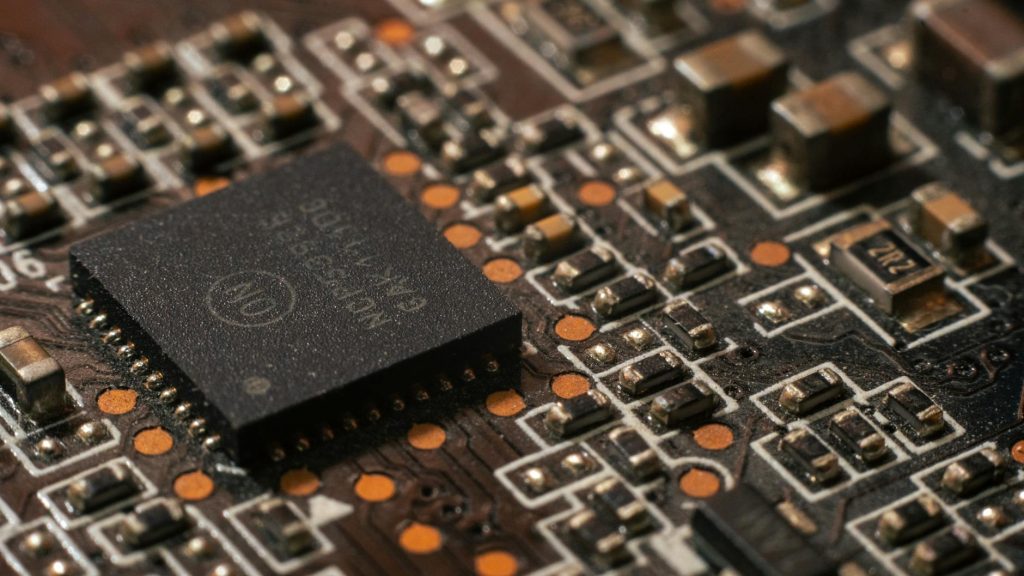
The story begins deep inside Microsoft’s data centers with a multi-year, multi-billion dollar project to reduce its dependency on third-party silicon. The fruits of this labor are two key pieces of hardware: the Cobalt CPU, an ARM-based processor designed to compete with Intel and AMD in general-purpose computing, and the far more critical Maia 100 AI Accelerator, the chip at the heart of the Anthropic discussions.
The Maia chip is not a direct, feature-for-feature competitor to an Nvidia H100 or B200 GPU. It is not designed for graphics or gaming. It is a purpose-built Application-Specific Integrated Circuit (ASIC), meticulously engineered for one task: accelerating the massive matrix multiplication and transformer workloads that define modern AI. By narrowing the chip’s focus, Microsoft can strip out unneeded components, optimizing for the precise mathematical operations required by models from its key partner, OpenAI, and now, potentially, Anthropic.
The Rationale for Custom Silicon
Why would Microsoft, one of Nvidia’s largest customers, spend billions developing its own chip? The answer lies in control and economics.
- Supply Chain Sovereignty: The AI boom of the last few years created an unprecedented supply crunch for high-end GPUs. By designing its own chips, Microsoft mitigates its exposure to Nvidia’s manufacturing lead times and allocation decisions, giving it a more predictable path to scaling its AI infrastructure.
- Performance-per-Watt Optimization: Data centers consume staggering amounts of electricity. ASICs like Maia can be designed to be more power-efficient for specific AI tasks than general-purpose GPUs. Over a fleet of millions of servers, even marginal gains in efficiency translate into hundreds of millions of dollars in operational savings.
- Total Cost of Ownership (TCO): While the initial R&D is expensive, owning the design allows Microsoft to control manufacturing costs (through partners like TSMC) and eliminate Nvidia’s hefty profit margins from its bill of materials. This lowers the long-term TCO and allows Microsoft to offer AI computing services more competitively.
- System-Level Integration: Microsoft isn’t just designing a chip; it’s designing an entire system. The Maia accelerator, the Cobalt CPU, the custom server racks, and the Azure cloud software are all co-designed to work in harmony. This level of vertical integration can unlock performance gains that are impossible to achieve when simply plugging a third-party GPU into a standard server.
Until now, the Maia project has been largely an internal effort, with OpenAI serving as the primary test case and anchor tenant. Landing Anthropic would be its public debut, a statement to the world that Microsoft’s silicon is ready for the major leagues.
Anthropic’s Multi-Cloud, Multi-Chip Strategy
To understand why Anthropic would entertain this, one must appreciate the precarious position of all major AI labs. Their very existence depends on a steady, affordable, and massive supply of computational power. Anthropic has already pursued a deliberately diversified strategy, building its models on both Amazon Web Services (AWS), using its Trainium chips, and Google Cloud Platform (GCP), using Google’s Tensor Processing Units (TPUs). This multi-cloud approach prevents vendor lock-in and provides leverage in negotiations.
For hyperscalers like Microsoft, the endgame is not just to sell cloud services, but to control the entire technology stack, from the silicon in the data center to the API calls developers make.
Adding Microsoft Azure, specifically with its first-party silicon, to this mix is the next logical step. It’s a hedge. A massive one. If Nvidia’s next-generation chip, Blackwell, faces delays or its prices remain astronomical, having a viable, high-performance alternative running on Azure gives Anthropic a critical lifeline. It diversifies their risk not just across cloud providers, but across hardware architectures.
Furthermore, a deep partnership with Microsoft could offer technical advantages. Anthropic’s engineers would likely gain the ability to work closely with Microsoft’s hardware and software teams to fine-tune the entire stack, from the lowest-level firmware on the Maia chip to the networking fabric connecting the servers, specifically for the architecture of their Claude models. This is a level of co-optimization that is difficult to achieve with an off-the-shelf solution from Nvidia. It’s a trade-off: they risk betting on a newer, less proven platform in exchange for the potential of superior performance and a more collaborative engineering relationship.
The New War for AI Infrastructure
This development does not exist in a vacuum. It is the most visible salvo in a broader campaign by the world’s largest technology companies to break free from Nvidia’s orbit. Google has been developing and using its TPUs internally and on its cloud platform for years. Amazon has its Trainium (for training) and Inferentia (for inference) chips. The success of these homegrown efforts has been mixed, with none so far managing to lure a major, independent AI lab of Anthropic’s stature away from the Nvidia ecosystem for its most demanding workloads.
If the Microsoft-Anthropic deal proceeds and proves successful, it validates the entire hyperscaler custom silicon strategy. It demonstrates that you don’t need to be a traditional semiconductor company to design world-class AI chips. The biggest customers of chips are becoming the most innovative designers of chips. This shift fundamentally alters the competitive dynamics of the industry.
Nvidia is no longer just competing with AMD and Intel. Its primary competitors are now its biggest customers: Google, Amazon, and Microsoft. These companies have the resources, the engineering talent, and, most importantly, the guaranteed internal demand to justify massive investments in silicon R&D. They can test and iterate their designs at a scale no startup could ever dream of.
What This Means for India
The shockwaves from this shift will inevitably reach Indian shores, impacting the country’s burgeoning AI ecosystem and its ambitious semiconductor goals.
For Indian AI startups and large enterprises, the current reality is one of dependency. They rely almost exclusively on renting Nvidia GPUs from global cloud providers. The cost of this compute is a significant barrier to entry and a major operational expense, limiting their ability to train foundational models from scratch and forcing them to focus on fine-tuning and application layers.
A more competitive and heterogeneous AI hardware market is unequivocally good news. If Microsoft’s Maia, Google’s TPU, and Amazon’s Trainium become viable, high-performance alternatives to Nvidia GPUs, the resulting competition will drive down prices. The emergence of credible alternatives to Nvidia GPUs could eventually translate into lower compute costs, democratizing access for Indian startups that are currently priced out of large-scale model training. This could spark a new wave of innovation, enabling local developers to build models tailored for Indian languages and contexts.
This trend also provides a crucial lesson for the India Semiconductor Mission. While the initial focus on mature fabrication nodes for power and display driver chips is a pragmatic starting point, the long-term vision must account for the rise of domain-specific architectures. The future of high-performance computing is not just about building faster general-purpose processors. It is about custom-designed ASICs for workloads like AI. This fragmentation of the market creates openings. India doesn’t need to build a direct competitor to Nvidia’s Blackwell overnight. Instead, Indian design houses, supported by government initiatives, could focus on creating specialized accelerators for specific industries, such as financial services, telecommunications, or bioinformatics, where the nation has deep domain expertise.
An Inflection Point for the AI Stack
The negotiations between Anthropic and Microsoft represent far more than a corporate partnership. They are a bellwether for the entire technology industry. It signals the maturation of custom AI silicon from an internal cost-saving measure to a strategic asset capable of attracting the world’s most demanding AI workloads.
This is the great unbundling of the AI stack. The era of a single, dominant hardware architecture may be coming to a close, replaced by a more diverse, specialized, and competitive ecosystem. For years, the question was who could acquire the most GPUs. Soon, the question will be who has the best-integrated system of hardware, software, and networking. Nvidia is a formidable company and will remain a dominant force for years to come, but its uncontested reign is now facing its most credible challenge yet, not from a rival chipmaker, but from the very cloud giants that fueled its ascent.