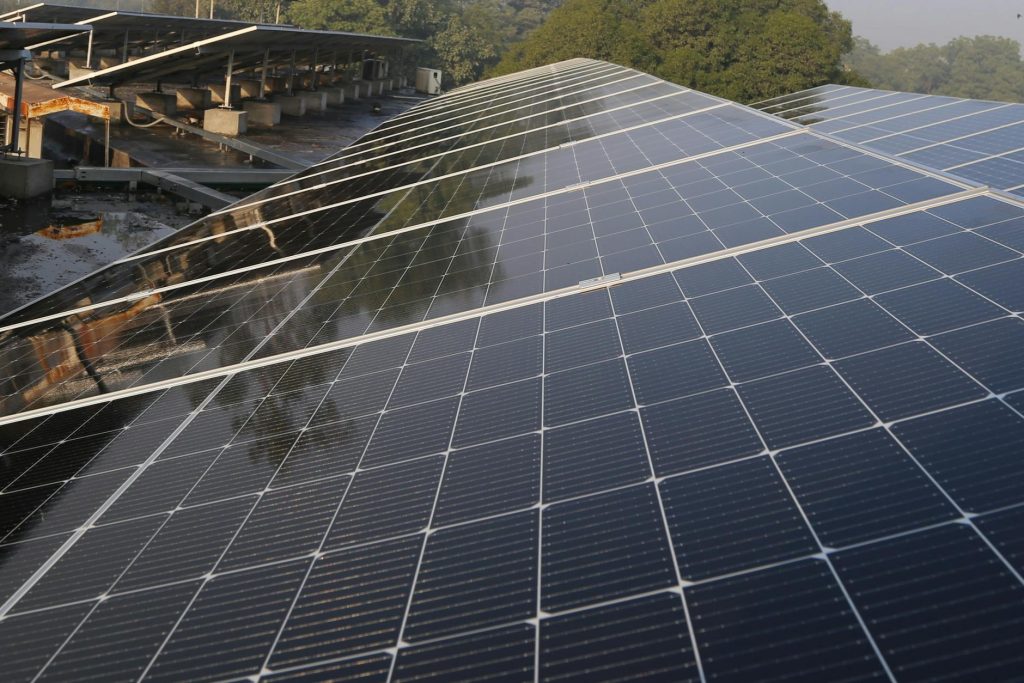
India’s grand solar ambitions have long been defined by sprawling, multi-gigawatt parks in the deserts of Rajasthan and Gujarat. But a far more distributed, and perhaps more impactful, energy transition is quietly unfolding on the rooftops of its bustling cities. At the epicentre of this shift is SolarSquare, a company simplifying solar adoption for homes and businesses, which is now in advanced discussions to close a significant Series C funding round.
The deal, expected to bring in between $55 million and $60 million, is poised to be co-led by B Capital and existing investor Lightspeed Venture Partners. This infusion of capital would value SolarSquare at a formidable $450 million to $500 million. It is a striking validation of the company’s model and, more broadly, a powerful signal that venture capital is now looking beyond software and services to power India’s green infrastructure buildout. This is not just another funding announcement, it is a marker for a market reaching its inflection point.
The Anatomy of a High Voltage Deal
The numbers themselves tell a story of accelerating conviction. The potential valuation represents more than a twofold increase in just 18 months. In December 2024, Lightspeed led SolarSquare’s $40 million Series B round, which valued the company at approximately $200 million post-money. That a seasoned investor like Lightspeed is not only re-investing but doing so from its larger growth fund, which typically backs more mature companies, underscores the belief that SolarSquare has moved from a promising startup to a potential market leader on a clear scaling trajectory.
The addition of B Capital, a global investment firm with deep ties to the Boston Consulting Group, brings more than just capital. It brings a global network and strategic expertise in scaling complex, operationally intensive businesses. This combination of investors suggests a clear strategy: to pour fuel on the fire of customer acquisition and operational expansion while laying the groundwork for sustainable, long term growth. The capital isn’t for survival, it is for dominance.
Beyond the Balance Sheet: Market Forces at Play
This funding surge is not happening in a vacuum. It is the direct result of a confluence of powerful tailwinds, a perfect storm of policy intervention, economic incentives, and technological maturity that has transformed the unit economics of rooftop solar for the Indian consumer.
The most significant catalyst is undoubtedly the central government’s ambitious PM-Surya Ghar: Muft Bijli Yojana, a program launched in 2024 with the goal of solarizing one crore (ten million) households. By providing substantial upfront subsidies, the scheme has drastically reduced the primary barrier to adoption: the initial capital cost. For a middle class family, what was once a five to seven year payback period on their investment can now be as short as two to three years. This shifts the decision from a purely environmental one to a compelling financial one.
Simultaneously, the rising and often unpredictable tariffs charged by state owned electricity distribution companies (DISCOMs) have made the allure of energy independence stronger than ever. The promise of a near zero electricity bill is a powerful motivator in a country where energy costs are a significant component of household expenditure. Companies like SolarSquare are effectively selling financial freedom packaged as a green technology solution.
Technology and supply chain dynamics are also playing a crucial role. The global price of photovoltaic (PV) modules has seen a steady decline, while efficiency has improved. Furthermore, India’s own Production Linked Incentive (PLI) scheme for semiconductor and solar manufacturing is beginning to bear fruit, fostering a more resilient domestic supply chain and reducing dependence on imports. This localization helps insulate companies from global price shocks and geopolitical tensions.
The Full Stack Approach: Cracking the Code of Consumer Trust
The residential solar market in India has historically been a fragmented and chaotic landscape, dominated by small, local installers with varying levels of quality and reliability. This created a massive trust deficit for consumers, who were often navigating a complex process involving technical specifications, structural assessments, and labyrinthine government approvals for net-metering.
SolarSquare’s core innovation has been to attack this complexity head on. It operates not as a mere hardware reseller but as a full stack, tech enabled energy platform. The customer journey is streamlined through a digital first approach:
- Consultation and Design: Using proprietary software and satellite imagery, the company can provide precise system designs and generation estimates remotely, demystifying the process for homeowners.
- Procurement and Quality Control: By centralizing procurement of high quality components like panels and inverters, SolarSquare ensures a standard of quality that local installers often cannot match.
- Installation and Commissioning: The company invests heavily in training its installation crews, aiming to standardize a process that is inherently local and variable. This focus on the “last mile” of execution is critical.
- Financing and Subsidies: Perhaps most importantly, SolarSquare acts as an intermediary, partnering with banks and non banking financial companies (NBFCs) to offer easy EMI options. They also handhold the customer through the subsidy application process, removing a major friction point.
This model replaces uncertainty with a branded, predictable experience. In doing so, SolarSquare is not just selling solar panels, it is selling peace of mind. Its primary competitors are not just other venture backed startups like Zunroof, but the thousands of unorganized local players that still command a large portion of the market. This new capital will be instrumental in building the brand and operational footprint needed to consolidate this fragmented space.
The Road Ahead: Navigating the Execution Labyrinth
Despite the massive opportunity and fresh funding, the path to scaling is fraught with challenges. The very nature of the business, which involves physical installation and interaction with local bureaucracies, makes it fundamentally different from a pure software play. The real test for SolarSquare will be its ability to deploy this capital to solve on the ground operational hurdles.
First is the challenge of quality at scale. As the company expands from its current urban strongholds into Tier 2 and Tier 3 cities, maintaining the same standard of installation quality and customer service will become exponentially more difficult. It requires a robust supply chain, logistics, and a continuously trained workforce of technicians, a resource that remains in short supply.
Second, the relationship with DISCOMs remains a critical variable. While policy at the national level is supportive, the implementation at the state and local level can be inconsistent. Delays in net-metering approvals or inspections can sour the customer experience and impact the company’s cash flow. Navigating this complex regulatory patchwork across dozens of states requires a sophisticated policy and operations team.
Finally, as the market matures, competition will inevitably intensify. Large industrial conglomerates, real estate developers, and international energy giants are all eyeing India’s distributed energy space. While SolarSquare currently has a head start in the residential segment, it will need to continue innovating on its technology platform, financing solutions, and customer experience to build a durable moat.
A Bellwether for India’s Green Economy
The impending $60 million fundraise for SolarSquare is more than just a vote of confidence in a single company. It is a landmark moment for India’s entire climate tech ecosystem. It signals that investors are now willing to write large checks for businesses that blend complex, on the ground operations with a scalable technology backbone.
For years, the narrative of India’s energy transition was written by government tenders and massive utility scale projects. SolarSquare and its peers are authoring a new chapter, one where the consumer is the protagonist. This shift towards a decentralized, democratized energy grid is not just about reducing carbon emissions, it is about building household wealth, creating skilled jobs, and enhancing national energy security from the ground up.
The capital being raised is the easy part. The true challenge lies in execution. How SolarSquare uses this war chest to navigate the operational complexities of a diverse and demanding market will determine not only its own future, but will also serve as a crucial bellwether for the future of distributed clean energy in India.