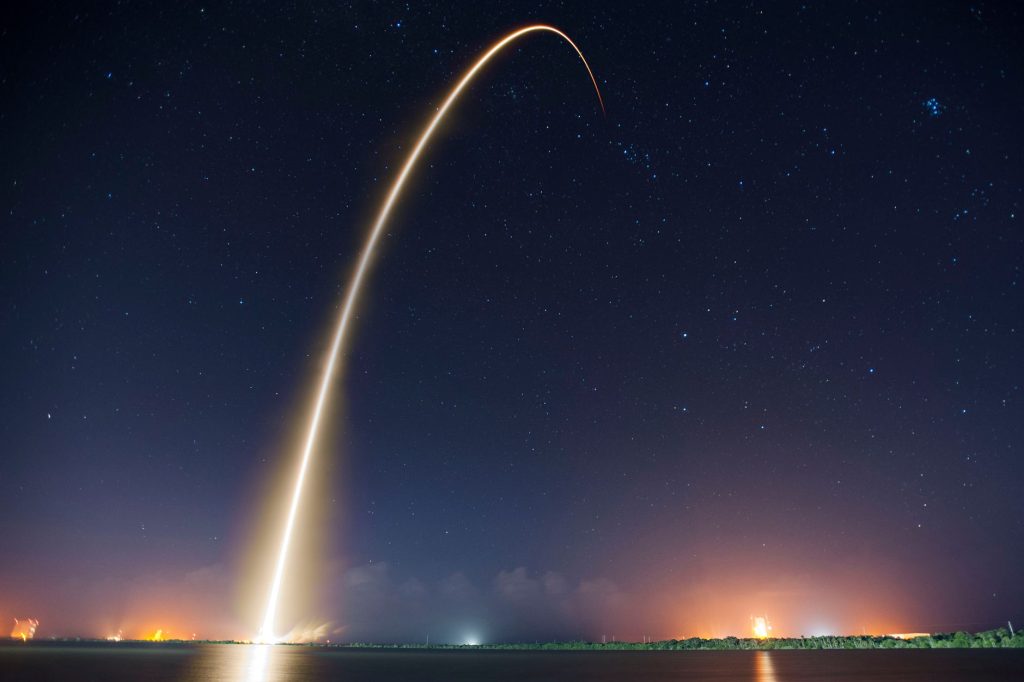
The public debut of
on the Nasdaq exchange this past Friday was not merely an initial public offering, it was a seismic event that recalibrated the scales of wealth and ambition in the technology sector. With shares opening at $150, an immediate 11% pop from its IPO price of $135, the aerospace giant ascended to a market capitalization exceeding $2 trillion, instantly cementing its position among the world’s most valuable companies. This landmark listing also propelled Elon Musk, its founder and CEO, into an unprecedented financial stratosphere, making him the world’s first trillionaire. This moment transcends conventional financial metrics; it signals a profound shift in how the market values long-term, capital-intensive deep tech ventures and highlights the extraordinary concentration of power and resources in the hands of singular visionaries.
A Quarter-Century Trajectory to an Unprecedented Public Debut
SpaceX’s journey to this monumental IPO has been anything but conventional. Founded 24 years ago with what Musk himself once estimated as a less than 10% chance of success, the company has consistently challenged the established norms of aerospace engineering. Its relentless pursuit of reusable rocket technology, embodied by the Falcon 9 and Starship programs, has dramatically reduced the cost of space access. Beyond satellite launches, the company’s
constellation has emerged as a critical global internet infrastructure, now serving millions of users across continents. These achievements, once viewed with skepticism, have matured into revenue-generating operations that underpin its colossal valuation.
The IPO itself was a masterclass in demand generation. The offering of 555.6 million shares at $135 each aimed to raise $75 billion, making it the largest in history. Yet, only about 4% of its shares were initially made available for public trading, a tight float that, combined with an oversubscription rate reportedly four times the available shares, fueled a rapid ascent. The immediate trading activity was staggering; within an hour of opening, approximately 263 million shares, representing $42 billion worth of stock, had changed hands. This frenzy underscores an insatiable investor appetite for companies that promise to redefine fundamental industries, even those with inherently long development cycles and high capital requirements. Platforms like Robinhood reported “record-breaking” traffic, a testament to the broad public interest in participating in this historic market event.
The Trillion-Dollar Threshold: Wealth and its Implications
Elon Musk’s ascension to trillionaire status is a financial milestone that demands examination. His net worth, estimated to have surpassed $1 trillion following SpaceX’s public debut, is a composite of his significant holdings in SpaceX, valued at approximately $860 billion before the IPO, combined with his substantial stake in
and other ventures. To put this into perspective, a trillion seconds stretches back 31,700 years, a timeline that predates the extinction of Neanderthals. Such an immense concentration of wealth in one individual’s hands is unprecedented in modern history, eclipsing even the peak fortunes of historical titans like John D. Rockefeller.
This level of wealth is not merely a number; it translates into immense power and influence. It enables private entities to undertake projects of national, even global, significance, traditionally reserved for governments. SpaceX’s mission to make life multi-planetary, for instance, is a vision that only a handful of nations could even contemplate, let alone pursue with such private sector agility. The implications for technological direction, resource allocation, and even geopolitical dynamics are profound. It raises questions about the balance between private innovation and public good, particularly as Musk’s influence extends across critical sectors from space to artificial intelligence and electric vehicles.
Beyond Rockets: The “Orbital AI Compute” Vision
While SpaceX is synonymous with rockets and satellites, its public filing, the S-1 registration document, revealed a strategic pivot that positions the company at the nexus of deep tech’s most transformative fields. SpaceX explicitly stated its goal is to “build the systems and technologies necessary to make life multiplanetary, to understand the true nature of the universe, and to extend the light of consciousness to the stars.” Crucially, it also articulated a unique proposition: “orbital AI compute,” aiming to place AI data center servers in space via its reusable rockets.
This is a profound technical ambition. Imagine the processing power of a hyperscale data center, unconstrained by terrestrial power grids, cooling infrastructure, or land availability, operating in the vacuum of space. The advantages could include significantly reduced latency for certain applications, enhanced security, and the ability to process vast datasets closer to their source, particularly from satellite imagery and remote sensing. This vision ties directly into the burgeoning field of artificial intelligence and machine learning, suggesting that SpaceX sees its future not just as a transport provider, but as a foundational infrastructure layer for the next generation of AI.
The challenges, however, are immense. Maintaining complex server farms in space requires breakthroughs in radiation hardening, thermal management, autonomous repair, and data transmission at unprecedented scales. Yet, if successful, “orbital AI compute” could redefine the economics and capabilities of AI, offering a competitive edge that terrestrial cloud providers might struggle to match. This strategic direction underscores the company’s understanding of converging technologies and its intent to play a central role in the future of computation.
The Confluence of Musk’s Empires: A Tesla-SpaceX Future?
The IPO has also rekindled discussions about the potential convergence of Elon Musk’s various enterprises, particularly
and SpaceX. Gwynne Shotwell, SpaceX’s President and COO, has openly hinted that a merger “might make Elon’s life a little easier.” Evidence of this foresight appeared in an amendment to SpaceX’s S-1 document, adding new language in its risk factors section concerning mergers and acquisitions, specifically noting that the company “may issue a significant amount of equity in connection with mergers and acquisitions.”
Such a merger would create an unparalleled conglomerate, uniting advanced robotics, electric vehicle technology, energy storage, satellite internet, and space launch capabilities under a single corporate umbrella. Tesla, often pitched by Musk as an AI and robotics company, could find synergies in SpaceX’s deep engineering talent, manufacturing prowess, and the potential for shared advancements in AI, materials science, and autonomous systems. The vision of “orbital AI compute” could directly benefit Tesla’s AI ambitions, potentially powering future generations of autonomous driving or humanoid robotics.
However, the complexities of merging two such colossal and distinct entities, both with significant public and private investor bases, would be staggering. Regulatory scrutiny would be intense, and the operational challenges of integrating disparate corporate cultures and technological stacks would be immense. Yet, the very notion signals a grander strategy, one that seeks to leverage cross-sector innovations to accelerate progress towards ambitious, long-term goals.
Global Benchmarks and India’s Deep Tech Ambitions
The SpaceX IPO and Musk’s trillion-dollar valuation set a new global benchmark for what is achievable in deep technology, particularly in sectors once deemed the exclusive domain of state-funded agencies. This development offers both inspiration and a stark competitive landscape for emerging deep tech ecosystems, including India’s.
India’s burgeoning space tech sector, with startups like
and
, is making significant strides in private rocket development and small satellite launches. The Indian Space Research Organisation (ISRO) has fostered a vibrant ecosystem, but the scale of private capital and the speed of innovation demonstrated by SpaceX present a formidable challenge. For India, the lesson is clear: fostering deep tech requires not just governmental support and academic excellence, but also an environment where private capital is willing to take calculated risks on long-term, transformative ventures.
Furthermore, India’s ambitions in AI and semiconductor manufacturing, bolstered by initiatives like the Semiconductor Mission, must consider the implications of “orbital AI compute.” As global computation increasingly moves beyond traditional data centers, Indian researchers and companies will need to innovate rapidly to ensure they are not left behind in the next wave of infrastructure development. The ability to integrate AI with robust hardware and deploy it in novel environments will be critical.
The Indian EV sector, currently experiencing its own growth spurt, as evidenced by companies like
raising substantial capital, can also draw parallels. While the immediate scale is different, the underlying principle of disrupting established industries through technological innovation and significant capital infusion remains. Ather’s recent board approval to raise ₹2,500 crore (approximately $300 million) signals the growing investor confidence in India’s EV market, a crucial step towards building sustainable mobility solutions at scale.
The Future of Innovation: A Double-Edged Sword
The SpaceX IPO and Elon Musk’s new status are undeniably a triumph of audacious vision, engineering prowess, and market confidence in deep tech. They validate the idea that private enterprise, when sufficiently capitalized and unburdened by bureaucratic inertia, can achieve feats once thought impossible. The potential for “orbital AI compute” and the broader vision of multi-planetary life offer glimpses into a future where technology transcends terrestrial limitations.
However, this triumph also casts a long shadow. The concentration of such unprecedented wealth and power in the hands of a single individual, even a visionary one, raises important societal questions. Who ultimately benefits from these monumental technological leaps? How are ethical considerations managed when private entities wield such influence? These are not questions with easy answers, but they are questions that must be continuously asked as the world enters an era where the lines between science fiction and reality are increasingly blurred by the relentless march of deep technology, powered by unimaginable capital. The future of innovation, it seems, will be a delicate balance between boundless ambition and societal responsibility.