A service professional enters a home to prepare a meal or clean a kitchen. They switch on a body-worn camera, and a small green light begins to flash. To the client, this might seem like a modern quality control measure, a way to ensure the job is done right. But what’s actually happening is far more consequential. This video feed, capturing the intricate dance of human hands washing dishes or chopping vegetables, is not just for review. It is a critical data stream, a lesson for an artificial intelligence that is learning to see, understand, and eventually act in the physical world. This is the new frontier of AI development, and it’s unfolding not in a sterile lab, but in our homes.
The startup Pronto, which offers on-demand home services, has implemented this exact model. Its professionals record their activities, ostensibly for training and verification. The deeper purpose, however, is to generate a torrent of video data to train physical AI systems. This seemingly simple operational choice represents a fundamental paradigm shift in data acquisition for robotics and embodied AI. It also places India’s burgeoning gig economy at the epicenter of a complex ethical debate, forcing a confrontation between the relentless demand for AI training data and the sanctity of personal privacy.
This move has drawn a sharp line in the sand. Rivals like the industry behemoth Urban Company and the newer platform Snabbit have been quick to distance themselves, publicly stating they do not and will not engage in such practices. Their clarification underscores the gravity of the situation. The Indian home services market is no longer just competing on price and speed, but on a fundamental principle: is your home a private space, or is it a data farm for the next generation of machines?
From Pixels to Physical Action: The Embodied AI Bottleneck
For the past decade, the dominant narrative in artificial intelligence has been about software that understands language and images. Large Language Models (LLMs) like GPT and Gemini are trained on the vast expanse of the public internet, learning from text and pixels. But the next great leap for AI is physical embodiment, moving from the digital world to the real one. This requires an entirely different kind of intelligence.
An AI that can write a poem cannot necessarily pick up a cup. For a robot to navigate a cluttered room, open a refrigerator, or assemble a product, it needs to understand physics, object permanence, and the cause-and-effect of physical interaction. This is the domain of embodied AI, and its single greatest challenge is a scarcity of relevant training data. While the internet has petabytes of text, it has a relative dearth of high-quality, first-person video of humans performing mundane physical tasks.
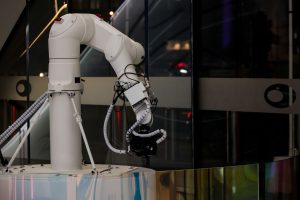
This is the problem Pronto’s model is engineered to solve. By turning its workforce into mobile data collectors, it bypasses the bottleneck. The technique at play is often a form of imitation learning or behavioral cloning. The AI model watches thousands of hours of video showing a human performing a task, learning to map sensory inputs (what the camera sees) to motor outputs (the corresponding hand and body movements). Every video of a countertop being wiped or a meal being plated becomes a page in the textbook for a future kitchen robot.
The Indian Context: A Perfect Storm for Data Collection
It is no coincidence that this model is emerging in India. The country presents a unique convergence of factors that make it an ideal testbed. First is the sheer scale of the gig economy. Millions of workers are engaged in service-based platform work, from deliveries to home maintenance. This provides a massive, distributed network of potential data collectors. Second, the diversity of Indian homes, from compact urban apartments to larger suburban houses, offers an incredibly rich and varied dataset for an AI to learn from, far superior to what could be simulated in a lab.
The move by established players like Urban Company to reject this model is significant. It signals a belief that their customer base values privacy over the potential long-term benefits of contributing to AI research. It’s a strategic bet that the market will reward companies that draw a clear boundary around the home. For a disruptor like Pronto, however, the data-for-AI strategy is a powerful differentiator. It isn’t just selling cleaning services, it is building a proprietary data asset that could become exponentially more valuable than the service revenue itself. This data could be used to build its own robotic systems or be licensed to other technology companies for a significant premium.
This creates a two-tiered market. On one side, you have traditional service providers. On the other, you have service providers that are also, covertly or overtly, data harvesting operations for the future of automation. The choice for the consumer is no longer just about the quality of the service, but the nature of the transaction itself.
Privacy: The Unwritten Clause in the Service Agreement
The implications for personal privacy are profound and unsettling. A camera worn by a service professional captures far more than the task at hand. It captures the layout of a private residence, the items on a shelf, the brands in a kitchen, and potentially the faces and conversations of family members. This is not anonymized web-browsing data, it is a high-fidelity digital snapshot of a person’s most private environment.
Several critical questions remain unanswered. Who has ownership of this data? While the service professional records it, and Pronto processes it, the footage is of a private home owned by a client. The legal and ethical frameworks for this kind of data ownership are murky at best. Furthermore, the consent process is often buried deep within terms of service agreements, which few customers read in detail. Is a checked box on a signup form sufficient consent for the continuous video recording of one’s home for the purpose of training a commercial AI?
The potential for misuse is substantial. A data breach could expose the intimate details of thousands of homes to malicious actors. Even without a breach, the data could be used for secondary purposes, like targeted advertising based on the products observed in a person’s home. De-anonymization is also a real risk. A home’s interior, combined with scheduling data, could easily be linked back to a specific individual and address.
Labor in the Age of AI: Service Worker or Data Annotator?
This new model also fundamentally redefines the role of the gig worker. They are no longer just being paid for their physical labor, they are also performing the valuable task of data generation. This is a form of digital piecework, analogous to the Amazon Mechanical Turk workers who label images or transcribe audio to train AI systems. Yet, it is unlikely their compensation reflects this dual role.
This raises a crucial question of labor rights and value extraction. Is it fair for a company to build a multi-billion dollar AI enterprise on the back of data collected by its lowest-paid workers, without explicitly compensating them for that data? The service professionals are, in effect, expert demonstrators, teaching the very machines that might one day make their skills less valuable. If their movements and expertise are the raw material for the next wave of automation, they should arguably have a stake in the outcome.
The future could see a bifurcation in the gig economy. Some platforms will compete on a “human-only” promise, emphasizing privacy and trust. Others will lean into the data collection model, perhaps offering discounted services in exchange for the “right” to record. This would create a system where privacy becomes a luxury good, available only to those who can afford not to trade it for a cheaper service.
The Inevitable Trade-Off?
The path Pronto is charting is provocative, but it may also be a glimpse into an inevitable future. The advancement of robotics and truly useful physical AI depends on this kind of real-world data. The sanitized environments of laboratories and the limitations of digital simulation can only take us so far. To build robots that can function in the messy, unpredictable reality of a human home, they must learn from it.
We are at a critical inflection point. The practices being established today by companies like Pronto will set the precedent for tomorrow. Before this type of ambient data collection becomes a standard, baked-in feature of the services we use every day, a robust public and regulatory conversation is essential. We need clear rules on data ownership, explicit and transparent consent, and fair compensation for the individuals whose lives and labor are being converted into training data.
The convenience of a perfectly cleaned home or a flawlessly prepared meal is alluring. But we must begin to ask what we are trading for it. The flashing green light on a service worker’s uniform is more than just a recording indicator. It is a signal of a future arriving, one where the line between service and surveillance is becoming dangerously blurred, and the cost of progress is measured in the currency of our own privacy.