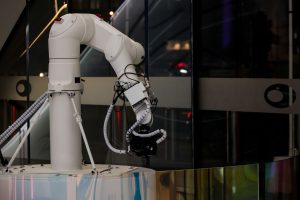
What if the simple act of folding a shirt or making a cup of tea was no longer just a mundane chore, but a high-value data stream for training an artificial intelligence? This is not a hypothetical scenario from a distant future. It is the reality of a new frontier in technology, one that was recently tested in Indian homes by a company named Pronto. Their pilot program in “Physical AI” has ignited a critical, and perhaps overdue, conversation about consent, surveillance, and the very nature of labor in the age of intelligent machines.
The controversy surrounding Pronto’s initiative forces us to look beyond our familiar debates about data privacy, which have largely centered on our digital footprints: clicks, searches, and social media posts. This is something fundamentally different. Physical AI aims to teach machines to understand and operate in the real, physical world. To do this, it needs to watch us, learn from our movements, and codify our physical intuition. Pronto’s pilot program effectively turned participants’ homes into research labs and their daily routines into training data, raising profound questions about whether they were willing participants or simply the first generation of an unwitting, uncompensated AI workforce.
What is ‘Physical AI’ and Why Is This Data Different?
For the past decade, the AI revolution has been fueled by data from the digital world. Large Language Models (LLMs) like GPT and Claude were trained on the vast expanse of the internet, a repository of human text and code. Image generation models learned from billions of labeled pictures. But for AI to move from our screens into our world, to power a robot that can assist an elderly person or work in a warehouse, it needs a different kind of knowledge. It needs to understand physics, space, and the complex, often unstated, sequence of actions required to complete a task.
This is the domain of Physical AI, often called Embodied AI. The goal is to build foundation models not for language, but for action. The technical challenge is immense. While text is discrete and easily tokenized, human movement is a continuous, high-dimensional stream of data. An AI needs to learn not just what a person is doing (making coffee), but how they are doing it: the grip on the mug, the force used to open a jar, the subtle adjustments made to avoid spilling. This requires video data, and lots of it. Not just static, labeled clips, but long-form, multi-angle video of people performing tasks in their natural environments.
This data is orders of magnitude more intimate and revealing than a search query. It captures:
- Kinematics and Dynamics: The precise motion of limbs, posture, and the interaction with objects.
- Environmental Context: The layout of a home, the objects within it, and their spatial relationships.
- Procedural Knowledge: The unspoken, step-by-step logic behind tasks that we perform instinctively.
- Personal Habits and Biometrics: Gait, routines, and even the ambient sounds and conversations of a household.
Pronto’s pilot sought to collect exactly this kind of data. By placing cameras in homes to observe chores, the company was building a proprietary dataset that could become the bedrock for the next generation of autonomous systems. This is a far cry from asking a smart speaker to play a song; it’s asking to observe the entirety of one’s physical existence within their most private space.
From Willing Participant to Unwitting Trainer
The core of the controversy lies in the nature of consent. While participants in the Pronto pilot likely agreed to be filmed, the crucial question is whether they understood the full implication of their participation. Were they merely subjects in a study, or were they providing the essential, high-skilled labor needed to train a commercial AI system?
There is a powerful argument to be made for the latter. The data being collected is not a passive byproduct of an activity; it is the primary product itself. Every action performed in front of Pronto’s cameras was, in essence, a lesson for the machine. This is a form of labor. It is the human expertise of navigating the physical world, digitized and transferred to an algorithm. This raises uncomfortable questions.
Did the consent forms explain that their movements would be broken down into machine-readable vectors to teach a robot how to mimic them? Did they clarify that this data could be used to build products that might one day automate jobs or be sold to other corporations for purposes unknown?
The current framework of “informed consent” feels woefully inadequate for this new paradigm. It was designed for a world of medical trials or software terms of service, not for a reality where your daily life becomes the curriculum for a non-human intelligence. The line between a person and their data is already blurry, but with Physical AI, the data is the person, captured in motion. This isn’t just a privacy issue; it’s an issue of digital dignity and economic justice.
India’s Regulatory Blind Spot
That a pilot like this took place in India is significant. The country offers a massive, diverse population and, critically, a regulatory environment that is still playing catch-up with the pace of technological change. While the Digital Personal Data Protection (DPDP) Act of 2023 was a step forward, its application to a case like Pronto’s is unclear.
The DPDP Act hinges on concepts like “purpose limitation,” meaning data can only be collected for a specified purpose. But what is the purpose here? Is it “research,” a broad and often permissive category? Or is it “commercial product development”? When the research itself involves creating a foundational asset for a commercial product, the line is conveniently blurred. Furthermore, is a video of someone’s hands washing dishes considered “personal data” in the same way as their name or phone number? The law is ambiguous on these new forms of biometric and behavioral data.
This ambiguity creates a gray zone that tech companies can exploit. Without explicit rules governing the collection and use of physical action data for AI training, India risks becoming a frictionless data extraction ground for global AI ambitions. The government’s push for AI development and innovation is commendable, but it cannot come at the cost of citizens’ fundamental rights to privacy and autonomy in their own homes. We need a more robust public discourse and a regulatory framework that specifically addresses the challenges posed by Physical AI, moving beyond the current definitions of personal data to include our physical and behavioral identities.
The Commercial End Game: A World of Autonomous Agents
Why is this data so valuable? Because the race to build general-purpose humanoid robots and autonomous systems is well underway. Companies like Tesla with its Optimus robot, Figure AI, and Boston Dynamics are all tackling the hardware and software challenges. But they all face the same bottleneck: a lack of high-quality, real-world training data.
Pronto’s data-first strategy is an attempt to solve this problem. By capturing the nuance of human action in diverse, unstructured environments like a home, they are creating an invaluable asset. This dataset could be used to:
- Train household robots capable of performing complex chores.
- Develop assistive technology for the elderly or people with disabilities.
- Create more sophisticated simulation environments for training other AIs.
- Power autonomous systems in logistics, manufacturing, and retail.
The potential market is astronomical, and the company that builds the best foundational model for physical action will have a formidable advantage. The pilot in India was not just a small experiment; it was a strategic move to acquire the fuel for this next wave of AI. The potential benefits of this technology are real and should not be dismissed. An assistive robot could grant an elderly person more years of independence at home. But as a society, we must weigh these potential future benefits against the immediate ethical costs of how the foundational data is being collected.
The Pronto pilot serves as a critical warning. It is a preview of the difficult conversations we must have about the value of our everyday actions and who gets to profit from them. Before our homes are ubiquitously wired with sensors to teach the next generation of machines, we need to establish clear rules of engagement. This conversation must move from the abstract realm of policy papers into the public square. We need to decide, collectively, what parts of our human experience are for sale and what must remain sacredly private, beyond the reach of any algorithm.