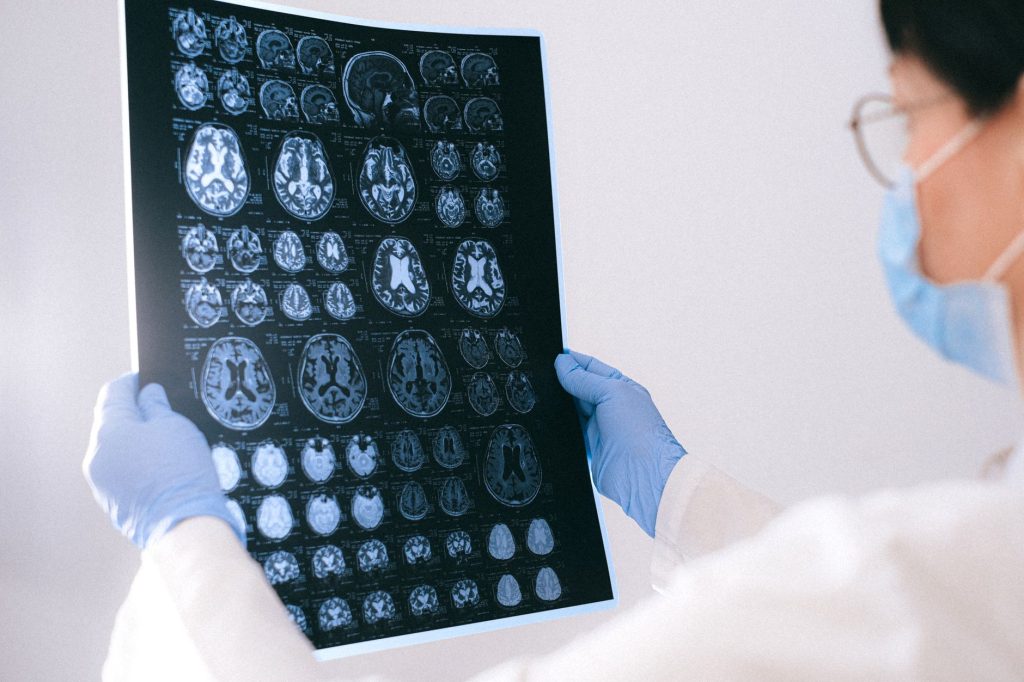
In a significant boost for India’s burgeoning deep tech healthcare landscape, Bengaluru-based eNLife Research has successfully closed a Rs 6 crore seed funding round. This vital capital infusion, led by Piper Serica VC Fund, is set to accelerate the development of the company’s groundbreaking AI-powered diagnostic platforms, designed to detect neurodegenerative diseases like Alzheimer’s years before clinical symptoms manifest. The raise signals a growing investor appetite for innovative solutions addressing some of the most complex and debilitating health challenges of our time, particularly within the Indian context.
The urgency of eNLife Research’s mission cannot be overstated. Neurodegenerative diseases represent a silent epidemic, progressively eroding cognitive function and quality of life for millions globally. India, with its vast and aging population, faces a looming crisis that existing diagnostic methods are ill-equipped to handle efficiently or affordably. eNLife Research’s approach, marrying advanced biomarker detection with sophisticated machine learning, promises a paradigm shift, offering hope for earlier intervention and potentially slowing disease progression. This seed round isn’t just about capital; it’s a validation of a vision that could redefine geriatric care and neurological health in the country.
About eNLife Research: Pioneering Early Diagnostics for Neurodegenerative Conditions
Founded in 2025 by a trio of seasoned innovators, Deepak Kumaran Nair, Jojo Jacob, and Anish Mathew, eNLife Research is a deep tech startup with an ambitious, yet critically important, goal: to make early detection of neurodegenerative diseases accessible, scalable, and affordable. Operating out of Bengaluru, a hub for both deep tech and biomedical innovation, the company is at the forefront of developing diagnostic platforms that can identify the earliest biological signatures of diseases such as Alzheimer’s long before noticeable symptoms appear.
What truly sets eNLife Research apart is its multi-pronged scientific strategy. The company is meticulously combining highly sensitive biomarker detection techniques, utilizing easily accessible body fluids like blood, with cutting-edge machine learning algorithms. This synergy allows their platform to not only identify minute biological markers but also to discern subtle correlations that traditional diagnostics often miss. Their commitment extends beyond just technology; they are actively collaborating with leading Indian research institutions, including the Indian Institute of Science (IISc), the National Institute of Mental Health and Neurosciences (NIMHANS), Tata Institute of Fundamental Research (TIFR Hyderabad), and the Centre for Brain Research (CBR Bengaluru). This collaborative ecosystem is crucial for building a diagnostic platform specifically tailored to Indian genetic and lifestyle risk profiles, ensuring relevance and efficacy for the local population.
The founders’ vision is driven by a deep understanding of the societal and personal toll of these diseases. They recognize that early detection is not merely a medical advancement, but a humanitarian imperative, offering patients and their families precious time for planning, treatment, and potentially, greater quality of life. Their work aims to democratize access to advanced diagnostics, moving it from specialized tertiary care centers to routine diagnostic facilities, a critical step for a country with diverse healthcare infrastructure.
The Seed Round: Backing a Visionary Deep Tech Venture
eNLife Research’s seed funding round saw an investment of Rs 6 crore, led by the astute Piper Serica VC Fund. This capital infusion marks a significant milestone for the young deep tech venture, providing the necessary runway to transition its innovative prototypes into clinically validated solutions. While the company did not disclose its valuation during this round, the participation of a fund like Piper Serica underscores the immense potential recognized in eNLife’s technological approach and market opportunity.
Piper Serica VC Fund has a distinct thesis, often seeking out companies that are leveraging profound scientific and engineering breakthroughs to solve complex, real-world problems. Their investment in eNLife Research is a testament to their conviction in the startup’s ability to disrupt the neurodegenerative disease diagnostics space. For Piper Serica, the attraction likely lies in eNLife’s unique synthesis of biomarker science, artificial intelligence, and a clear focus on a massive, underserved market. The fund is known for backing ventures that demonstrate not just technological prowess, but also a scalable business model and a clear path to clinical and commercial adoption. Their support suggests a belief in the founding team’s expertise and the robustness of their R&D roadmap.
This seed round serves as foundational capital, enabling eNLife Research to mature its technology and move towards critical regulatory and clinical milestones. It also signals to the broader venture ecosystem that deep tech in healthcare, particularly in areas with high unmet needs, continues to be a compelling investment frontier in India.
Strategic Deployment of Fresh Capital: Fueling Innovation and Validation
The Rs 6 crore secured in this seed round is earmarked for a highly strategic deployment plan, focusing on critical development and validation phases. eNLife Research has outlined three primary areas for capital allocation, each crucial for bringing their diagnostic platform closer to market readiness.
Firstly, a significant portion of the funds will be dedicated to building and validating its blood-based biomarker platform. This involves refining the sensitivity and specificity of their detection methods, ensuring the accuracy and reliability of the biomarkers identified in accessible body fluids. This is a highly iterative and rigorous process, requiring sophisticated laboratory equipment, advanced reagents, and meticulous experimental design. The goal is to establish a robust and reproducible platform that can consistently identify disease-specific markers with high precision.
Secondly, the company plans to expand its Bengaluru-based R&D team. Deep tech innovation is inherently talent-intensive, requiring a multidisciplinary team of scientists, engineers, data specialists, and clinicians. Expanding the team will allow eNLife Research to accelerate its research efforts, bring in specialized expertise in areas like genomics, proteomics, and advanced AI model development, and manage the increased workload associated with clinical validation. A larger, more diverse team will also foster faster iteration cycles and more comprehensive analysis of complex biological data.
Finally, and perhaps most critically, the capital will be deployed to take its first diagnostic assay from prototype to clinical grade validation. This is the crucial step where the laboratory-developed test is rigorously evaluated in human subjects to prove its safety, efficacy, and clinical utility. This phase involves extensive clinical trials, adherence to stringent regulatory guidelines, and collaboration with hospitals and healthcare providers. The transition from a promising prototype to a clinically validated product is often the most capital-intensive and time-consuming part of medical device development, and this funding provides the necessary impetus to navigate this complex journey successfully.
Each of these deployments is interconnected, forming a cohesive strategy to move eNLife Research from a research-intensive phase to a product-development and validation phase, laying the groundwork for eventual market entry.
Market Opportunity: A Vast and Unmet Need in Neurodegenerative Diagnostics
The market opportunity for eNLife Research’s innovative diagnostic platform is truly immense, driven by the escalating global burden of neurodegenerative diseases. Conditions like Alzheimer’s, Parkinson’s, and other dementias affect tens of millions worldwide, with numbers projected to soar as populations age. In India, estimates suggest millions are already living with dementia, and these figures are expected to double every 20 years. The economic and social costs are staggering, encompassing direct medical care, long-term care, and the profound impact on caregivers and families.
A critical gap in current medical practice is the lack of effective, non-invasive, and affordable tools for early detection. Diagnosis often occurs late in the disease progression, after irreversible neuronal damage has taken place and clinical symptoms are already pronounced. This late diagnosis limits the effectiveness of therapeutic interventions, which are generally more impactful in the earlier stages of disease. Existing diagnostic methods, such as expensive neuroimaging (MRI, PET scans) or invasive procedures (lumbar punctures for CSF analysis), are often inaccessible, cost-prohibitive, or unsuitable for widespread screening, particularly in a diverse healthcare landscape like India’s.
eNLife Research is uniquely positioned to capture a significant share of this underserved market. By focusing on blood-based biomarkers, they offer a non-invasive, scalable, and potentially more affordable alternative. Their integration of AI not only enhances the accuracy of detection but also promises to unlock subtle patterns that could predict disease onset years in advance. Furthermore, their explicit focus on developing an India-specific biomarker dataset, in collaboration with premier national institutions, gives them a distinct advantage in tailoring their solution to the genetic and lifestyle profiles prevalent in the subcontinent. This localized approach is crucial for building trust and ensuring clinical relevance in a region with unique demographic and health characteristics.
While global efforts in neurodegenerative diagnostics are accelerating, eNLife’s commitment to affordability and accessibility, coupled with its deep tech foundation, positions it as a significant player. The ability to administer tests through routine diagnostic centers, delivering results within hours, could transform the diagnostic pathway, making early detection a realistic prospect for millions who currently have no viable options.
What’s Next: Towards Clinical Validation and Market Impact
With this seed capital, eNLife Research is now poised to hit several critical milestones on its journey to transform neurodegenerative disease diagnostics. The immediate focus is on the rigorous process of clinical grade validation for their first diagnostic assay. This involves moving beyond laboratory prototypes to demonstrate robust performance in real-world clinical settings, a process that will be crucial for regulatory approvals and eventual market adoption.
Over the next 9 to 18 months, the company expects to begin filing patents across multiple facets of its technology. These will likely cover their proprietary biomarker binders, the specific diagnostic assays they develop, and the architecture of their AI-powered detection platform. Securing intellectual property will be vital for protecting their innovations and establishing a strong competitive moat in a rapidly evolving field.
The vision for eNLife Research extends to making their test widely available and integrated into routine healthcare. They envision their test being administered through standard diagnostic centers, with a remarkably swift turnaround time of two to five hours for results. This efficiency is critical for enabling widespread screening and early intervention, especially in a country where timely access to specialized care can be a challenge. The continued training and refinement of their AI engine will be paramount, as it learns to identify increasingly subtle correlations between biomarkers, pushing the frontier of early disease detection even further.
Looking ahead, successful clinical validation will naturally lead to regulatory submissions, followed by a strategic market entry. While the initial focus is on India, the scalable nature of their platform and the universality of neurodegenerative diseases suggest a broader global potential. eNLife Research’s journey is a compelling narrative of how deep tech, combined with a clear understanding of an urgent medical need, can pave the way for a healthier future.