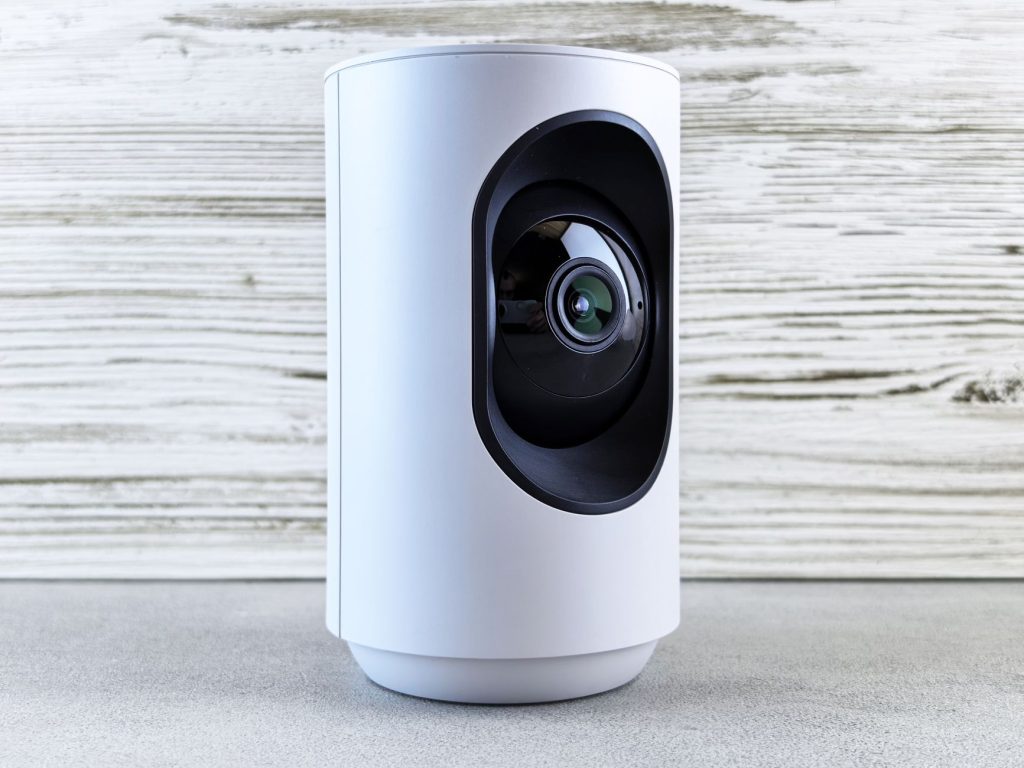
The smart home, for all its promised convenience, often feels a little… dumb. Anyone who has received a frantic “unknown person detected” alert from their smart camera, only to find it was their spouse heading to the kitchen for a midnight snack, understands this frustration. As of June 23, Google is rolling out an update to its Home platform that aims to dramatically enhance its ability to recognize familiar faces, even when those faces aren’t clearly visible. This represents a significant leap in consumer-grade AI perception, moving beyond simple facial biometrics to a more holistic, multimodal understanding of individuals within the home. But this technological sophistication inevitably ushers in a new era of privacy considerations, pushing the boundaries of what we consider acceptable monitoring in our most personal spaces.
The Evolution of Familiar Faces: Beyond Just a Glimpse
For years, Google’s “Familiar Faces” feature, primarily available through Nest cameras and doorbells integrated with Google Home, has relied on traditional facial recognition algorithms. Users would tag individuals in their library, and the system would attempt to match detected faces to these profiles, sending specific alerts or suppressing notifications for known residents. The problem, as many users experienced, was its fragility. A hat, a turned head, or poor lighting could easily confuse the system, leading to a cascade of inaccurate alerts or missed identifications.
The new update fundamentally changes this paradigm. Google’s smart home AI will now leverage “additional non-biometric signals” to identify people. This is not a subtle tweak; it is a significant architectural shift in how these systems perceive and process information. Imagine your smart camera not just seeing a face, but recognizing the distinct gait of a family member, the specific color of their favorite hoodie, or their general body build. These are the kinds of cues the updated system will employ. For instance, if a person tagged in the Familiar Faces library is walking away from the camera, obscuring their face, the AI can now correlate their body size, clothing color, and even movement patterns with stored profiles to maintain identification. This moves the system from a purely biometric, face-centric approach to a more comprehensive, contextual understanding of individual identity.
This enhancement is designed to make the system more robust and less prone to misidentification. The Familiar Faces library itself will also undergo an automatic updating process, continually refreshing with the most recent images of household members. This iterative learning means the AI should, in theory, become more accurate over time, reducing the instances of “outdated examples” causing incorrect notifications. The promise is a smart home that truly understands who belongs and who doesn’t, minimizing false alarms and enhancing peace of mind.
Multimodal Perception: The Ears of the Smart Home
The advancements aren’t limited to visual cues. Google’s AI-generated video event descriptions will now incorporate sound identification. This means your smart camera won’t just tell you there’s “motion detected at the front door,” but potentially “a dog barking at the front door” or “footsteps detected in the hallway.” The system can distinguish between various ambient sounds, such as alarms (smoke detectors, carbon monoxide alarms), breaking glass, or even the distinct sound of a package being dropped.
This integration of auditory data with visual information pushes Google Home further into the realm of multimodal AI. It’s no longer just a camera that sees, but a sensor network that both sees and hears, interpreting events with a richer, more contextual understanding. A security event, for example, could be triggered not just by an unrecognized face, but by the sound of breaking glass followed by the detection of an unfamiliar body shape. This convergence of sensory input allows for more nuanced event detection and, theoretically, more intelligent and actionable alerts for users.
From a technical perspective, this involves sophisticated deep learning models capable of processing concurrent streams of data. Computer vision models handle the visual analysis, extracting features like body shape, clothing color, and movement vectors. Simultaneously, audio processing networks are trained to classify specific sound events. The true innovation lies in how these disparate data points are fused and interpreted to form a coherent understanding of an event or an individual’s presence. It’s a step towards an ambient intelligence that perceives its environment much like a human would, drawing on multiple senses to build a complete picture.
The Double-Edged Sword: Convenience Versus Constant Scrutiny
While the convenience factor of these updates is undeniable, the privacy implications are substantial and warrant serious consideration. Moving beyond facial recognition to include “non-biometric signals” like body size and clothing color, combined with continuous sound monitoring, paints a picture of pervasive surveillance within the home.
The initial rollout of facial recognition in smart home devices already sparked considerable debate. Critics raised concerns about data security, the potential for unauthorized access to sensitive biometric data, and the chilling effect of constant monitoring. The new update amplifies these concerns. If an AI can identify you by your walk, your build, or even the color of your shirt, it means the system is continuously analyzing and categorizing your physical attributes. This data, while anonymized in Google’s internal processes, still represents an incredibly detailed digital footprint of your movements and presence within your own home.
Questions arise: How long is this non-biometric data retained? What are the precise boundaries of its use? Is it only for local recognition, or could aggregate data contribute to broader behavioral profiling? While Google emphasizes that the Familiar Faces feature is opt-in and data is processed locally on the device (for some models) or securely in the cloud, the sheer scope of data being collected and analyzed is expanding. The automatic updating of the Familiar Faces library, while convenient, also implies a continuous learning process where the system is constantly refining its understanding of you and your household.
The sound recognition capabilities, too, present a nuanced privacy challenge. While identifying a smoke alarm is universally beneficial, what about the system detecting a “heated argument,” “a baby crying excessively,” or “footsteps late at night”? While the current stated capabilities are focused on security and safety sounds, the underlying technology has the potential for far broader audio analysis. Users must trust that these systems will not cross the line into intrusive eavesdropping or behavioral inference that extends beyond the stated security purposes.
This technological leap forces a societal conversation about the trade-offs we are willing to make for convenience and security. As smart home devices become more sophisticated, they blur the lines between helpful assistants and always-on observers. The comfort of knowing your home is “smarter” might come at the cost of a subtle, but persistent, erosion of personal privacy.
The Competitive Landscape and the Future of Ambient AI
Google’s latest move places it squarely in a competitive arms race within the smart home ecosystem. Companies like Amazon, with its Ring cameras and Alexa Guard, and Apple, with HomeKit Secure Video, are all vying for dominance in this space. While each platform offers varying degrees of AI-powered security and automation, Google’s emphasis on multimodal, non-biometric recognition represents a distinct push towards a more advanced, ambient intelligence.
Amazon’s Ring cameras, for example, have long featured person detection and package detection, but their facial recognition capabilities have been more limited and controversial, often facing pushback from privacy advocates. Apple’s HomeKit Secure Video offers on-device analysis for person, animal, and vehicle detection, with a strong emphasis on privacy by processing video locally before encryption and cloud storage. Google’s approach, by integrating a wider array of visual and auditory signals, seeks to deliver a more robust identification system that aims to surpass the reliability of its competitors.
This escalating competition drives innovation, but also necessitates increased scrutiny. As these companies push the boundaries of what AI can perceive within our homes, the onus falls on them to implement robust privacy safeguards, transparent data policies, and clear user controls. Regulators, too, will need to grapple with how existing privacy laws (like GDPR or CCPA) apply to these evolving forms of continuous, multimodal data collection.
Looking ahead, this update is a harbinger of things to come. The future of ambient AI in our homes will likely involve systems that are hyper-aware of their environment and its occupants. Imagine homes that can predict your needs, anticipate security threats, or even personalize environmental settings based on who is present and what they are doing. This level of predictive intelligence, however, rests on an even deeper level of continuous, nuanced data collection. The challenge for companies like Google will be to deliver these advanced capabilities in a way that truly empowers users, rather than making them feel like they are living under a constant digital gaze.
A Call for Deliberate Design and Informed Consent
Google’s latest enhancements to its Home platform are a testament to the rapid advancements in AI, particularly in computer vision and multimodal perception. The ability to identify individuals not just by their faces, but by a combination of physical attributes and behavioral cues, coupled with sophisticated sound recognition, marks a significant step towards truly intelligent smart homes. For users, this promises fewer false alarms, more accurate security alerts, and a generally more reliable smart home experience.
However, the implications for privacy are profound. As our personal spaces become increasingly instrumented with AI that can see, hear, and interpret our presence in ever more detailed ways, the conversation around informed consent and data governance becomes paramount. It is no longer just about whether we agree to facial recognition, but whether we fully understand and consent to a system that analyzes our body shape, clothing, gait, and even the sounds of our daily lives.
The industry, led by giants like Google, must prioritize not just technical capability, but also ethical design. This means clear communication about what data is collected, how it is processed, where it is stored, and who has access to it. It means empowering users with granular controls over every aspect of their privacy settings, rather than broad opt-ins. As AI becomes more deeply embedded in the fabric of our homes, the line between convenience and pervasive surveillance will continue to blur. It is up to us, as consumers and citizens, to demand transparency and accountability, ensuring that the smart home of tomorrow is truly intelligent for human well-being, not just for technological prowess.