Picture this: 120 Indian startups, each a testament to homegrown ingenuity, are preparing to embark on a journey to France for Bharat Innovates 2026. This isn’t just a delegation; it’s a statement. And watching this burgeoning movement with a keen, experienced eye is Sudarshan Mogasale, CEO of Dassault Systèmes Solutions Lab (India), who is convinced that India’s moment on the global deep tech stage has not just arrived, but is rapidly accelerating into a defining phase.
For Mogasale, a veteran with over two decades in the field and a former ISRO engineer, the narrative is clear: India is no longer merely playing catch-up in deep tech. We are transitioning from a nation that excels at building and implementing solutions to one that is poised to lead in designing them. This isn’t a subtle shift; it’s a fundamental reorientation of our technological ambition, underscored by a global giant like Dassault Systèmes, whose software underpins the design of everything from aerospace components to automobiles worldwide.
The Design Revolution: India’s Untapped Potential
Dassault Systèmes, a French powerhouse, operates its Solutions Lab out of Pune, serving as a critical research and engineering hub. When a leader from such an organization speaks about India’s design capabilities, it carries significant weight. Mogasale’s perspective stems from an intimate understanding of the talent pool and the evolving ecosystem. India, after all, produces approximately 15 lakh engineers every year. This massive influx of technically proficient individuals forms the bedrock of our deep tech aspirations, providing an unparalleled human capital advantage.
The traditional perception of India as a global back-office for IT services or a manufacturing hub is steadily being replaced by a vision of innovation. This new era demands more than just execution; it requires fundamental problem-solving, intellectual property creation, and the ability to conceptualize complex systems from the ground up. Deep tech, by its very nature, pushes the boundaries of scientific and engineering possibility, and India’s founders are increasingly embracing this challenge.
Bharat Innovates 2026: A Global Showcase for Homegrown Ideas
The Bharat Innovates 2026 initiative serves as a powerful symbol of this shift. Sending 120 diverse startups to France is not just about exposure; it’s about embedding Indian innovation into the global consciousness, fostering cross-border collaborations, and attracting international investment. These startups, nurtured by a vibrant local ecosystem, are ready to demonstrate that their solutions are not just relevant for India, but for the world.
This initiative wouldn’t be possible without a concerted effort from government bodies and various ecosystem enablers. Startup India, a flagship program by the Department for Promotion of Industry and Internal Trade (DPIIT), has been instrumental in creating a supportive policy environment. Incubators like T-Hub in Hyderabad, CIIE.CO at IIM Ahmedabad, and 91Springboard across multiple cities, alongside programs at IITs and IIMs, have been diligently working to provide the mentorship, infrastructure, and early-stage capital necessary for deep tech ventures to flourish. They’re helping founders navigate the often-rocky path from ideation to product-market fit, ensuring they have the runway to iterate and innovate.
Beyond Physical Prototypes: The Power of Virtual Twins and Extended Reality
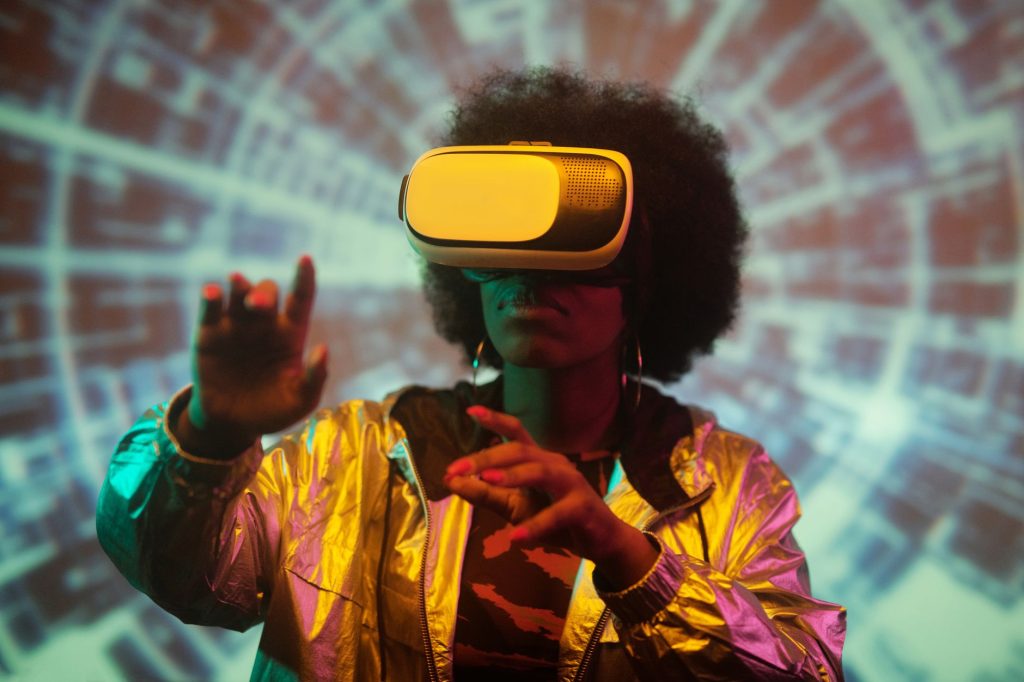
What does “designing for the world” truly entail in the deep tech context? It moves far beyond traditional blueprints. Mogasale emphasizes the concept of “virtual twins” – highly sophisticated digital replicas of physical products, processes, or even entire cities. These virtual twins allow engineers to simulate, test, and optimize designs in a digital environment before any physical manufacturing begins, dramatically reducing costs and accelerating development cycles. This is where technologies like Artificial Intelligence (AI) and Extended Reality (XR) become indispensable.
Consider the recent funding round for AutoVRse, an Indian startup that just raised $2.4 million (approximately ₹22.7 crore) to fuel its international expansion. AutoVRse is building AR/VR training solutions for enterprises, a crucial piece of the puzzle for a nation moving towards complex design and engineering. Imagine training factory workers on new machinery using a virtual twin, or enabling remote teams to collaborate on a product design in an immersive virtual space. This is precisely the kind of innovation that supports the broader deep tech agenda, making advanced design and operational efficiency accessible to a wider array of industries.
The applications for XR are vast, from highly specialized engineering simulations to more accessible enterprise training. As India embraces advanced manufacturing and R&D, the demand for precise, interactive, and scalable training solutions will only grow. AutoVRse’s success is a clear indicator that investors are seeing the tangible value and market potential in companies that are building the foundational tools for this new era of design and collaboration.
Navigating the AI Frontier: Tokenomics and Enterprise Adoption
While the promise of AI is immense, the operational realities are becoming increasingly complex, particularly for enterprises. At DevSparks 2026 in Bengaluru, a summit dedicated to India’s developer ecosystem, Jigar Halani, Senior Director of Enterprise Solutions Architecture and Engineering at NVIDIA South Asia, highlighted a critical emerging concern: “token economics.” AI models operate on “tokens,” which are the fundamental units of text they process and generate, and these tokens come with a direct cost. For many organizations, these costs are escalating faster than the value being generated, making “tokenomics” a boardroom-level discussion.
Halani stressed that the responsibility to manage these costs effectively falls squarely on developers. Choices around model size (a “30B, 100B, half a trillion, trillion model size”), whether to opt for cloud-based solutions or open-source alternatives, and the overall consumption strategy, all have direct implications for an organization’s AI bill. This insight reveals a maturing AI ecosystem in India, where the conversation has moved beyond just capability to include efficiency and cost-effectiveness. Startups in the deep tech space, building AI-driven design tools or simulation platforms, must inherently factor these considerations into their product architecture and pricing models if they wish to achieve sustainable product-market fit.
Moreover, selling complex AI solutions to enterprises requires more than just a slick sales pitch. Ahmed Mazhari, CEO of kAIgentic, a prominent player in the enterprise AI space, recently pointed out that education must precede contracts. India’s enterprise AI market is projected to skyrocket from $11 billion in 2025 to a staggering $71 billion by 2030, a testament to its explosive potential. However, this growth is contingent on enterprises truly understanding how to integrate agentic AI systems and automated decision engines into their existing workflows. Founders in this segment are not just selling software; they are selling a paradigm shift, which necessitates a deep commitment to educating their clients about the transformative power and practical implications of their innovations.
The Road Ahead: Sustaining the Momentum
India’s deep tech journey is a confluence of robust engineering talent, visionary entrepreneurship, and increasingly sophisticated government and private sector support. The shift from “building” to “designing” marks a significant leap in our global technological standing. It implies a greater emphasis on research, intellectual property, and proprietary innovation – areas where India has historically been seen as playing catch-up.
As the 120 startups head to France for Bharat Innovates 2026, they carry with them not just their individual aspirations, but the collective ambition of a nation ready to make its mark as a global design and innovation leader. The ecosystem continues to evolve, addressing challenges like AI cost optimization and enterprise education, ensuring that the momentum is sustained. The founders at the forefront of this wave are solving India-specific pain points in fintech, agritech, healthtech, and logistics, but they are doing so with a global mindset, leveraging deep tech to create solutions that resonate far beyond our borders. This is a truly exciting time to be an entrepreneur in India, especially in the deep tech and AI space, where the possibilities are only just beginning to unfold.