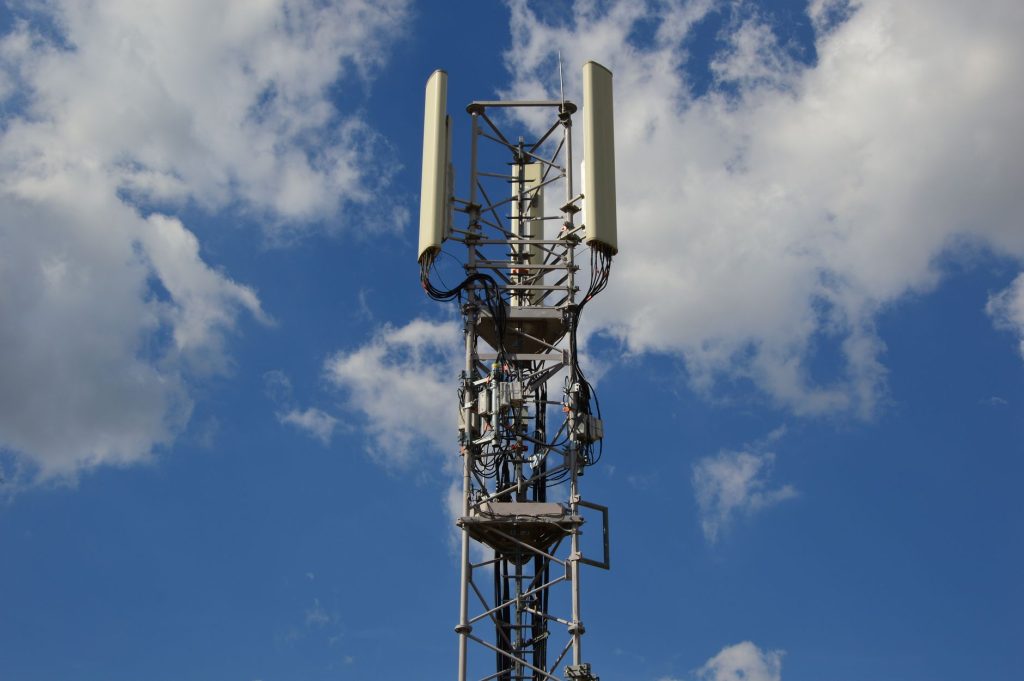
India stands at the precipice of a monumental digital transformation, one that promises to democratize access to technology for hundreds of millions more citizens. The current wave of innovation, however, is not driven by faster apps or sleeker interfaces, but by the human voice. As enterprises across banking, e-commerce, and public services increasingly pivot from text-heavy applications to conversational voice interfaces, the nation’s digital ecosystem is undergoing a profound shift. This transition, while offering unprecedented inclusivity, demands an urgent and comprehensive rebuilding of the underlying telecom infrastructure, a challenge that will define India’s leadership in the global AI landscape.
The Voice-First Imperative in a Diverse Nation
For a country as linguistically diverse and digitally disparate as India, voice AI is not merely an enhancement, it is a critical bridge. The sheer scale of smartphone penetration, now exceeding 800 million users, coexists with significant digital literacy gaps and a multitude of regional languages. Text-based interfaces, often in English or a handful of major Indian languages, inherently exclude vast swathes of the population who are more comfortable conversing in their native tongue or lack the proficiency for complex text interactions. Voice-first interfaces, powered by advanced artificial intelligence, promise to dismantle these barriers.
Imagine a farmer in rural Maharashtra interacting with a government service portal in Marathi, or a small business owner in Tamil Nadu managing their inventory through a voice command in Tamil, without ever needing to type. This vision extends beyond mere convenience. It represents a fundamental shift towards truly inclusive digital services, where language and literacy are no longer obstacles to accessing essential information, financial services, or even healthcare. Major players in India’s digital economy, from financial technology firms to direct-to-consumer brands, are investing heavily in developing sophisticated conversational AI models capable of understanding and responding accurately across a spectrum of Indian languages and dialects. The goal is to move beyond simple command-and-control systems to genuinely intelligent agents that can handle nuanced queries, process complex transactions, and even convey empathy. This requires far more than just speech-to-text; it demands natural language understanding (NLU) and natural language generation (NLG) engines that are culturally and linguistically attuned to India’s unique context.
The Latency Labyrinth: Why Current Networks Fall Short
The aspiration for seamless, real-time voice AI interactions, however, runs headlong into the limitations of existing network infrastructure. While India has made commendable strides in 4G and 5G rollout, the architecture of these networks, largely optimized for asynchronous data packet transfer, is not inherently suited for the synchronous, low-latency demands of advanced conversational AI. Real-time voice AI applications require instantaneous processing and response. Any perceptible delay, even a fraction of a second, breaks the illusion of natural conversation, leading to user frustration and abandonment. This is the “latency labyrinth” that India’s telecom sector must navigate.
Current network designs often route data through centralized cloud servers, leading to inevitable delays as audio streams travel back and forth for processing. For simple voice commands, this might be acceptable. But for complex, multi-turn conversations involving intricate NLU and NLG models, the computational load is immense, and the need for immediate feedback is paramount. This necessitates a radical shift towards edge computing, where AI inference is pushed closer to the user, either on the device itself or at localized mini-data centers at the network’s periphery. Edge computing drastically reduces the round-trip time for data, ensuring that voice AI interactions feel responsive and natural.
Moreover, the sheer volume of high-fidelity audio data required to train and deploy these sophisticated multilingual AI models places immense strain on network bandwidth. As more users adopt voice interfaces, the collective demand for high-speed, reliable connectivity will skyrocket. The 5G rollout, with its promise of ultra-low latency and massive machine-type communication, is a foundational step, but it is not a panacea. It requires complementary investments in fiber optic backbones, robust last-mile connectivity solutions, and a distributed computing architecture that can handle the bursty, real-time nature of voice traffic. Without these critical upgrades, India’s voice AI revolution risks being confined to urban centers with premium connectivity, failing to deliver on its promise of nationwide inclusivity.
Global AI Dynamics: Talent, Ethics, and the Race for Supremacy
India’s domestic ambitions in voice AI do not exist in a vacuum. They are intricately linked to the broader, fiercely competitive global landscape of artificial intelligence. The race to develop advanced AI models is driving unprecedented demand for top-tier talent, leading to a dynamic and often volatile market. We recently saw a significant example of this intense competition with the departure of Noam Shazeer, a co-lead on Google’s prominent Gemini AI models, to join OpenAI. Such high-profile movements underscore the strategic value placed on individuals capable of pushing the boundaries of generative AI research. This global talent churn directly impacts India, as domestic companies strive to attract and retain the expertise needed to build world-class AI solutions tailored for the Indian market.
Beyond talent, the ethical implications and governance frameworks surrounding AI are increasingly taking center stage globally. The head of OpenAI, for instance, recently urged G7 leaders not to cede responsibility for AI governance to the companies building the technology, advocating for governments to establish global standards for deployment. This call for proactive regulation comes amidst growing concerns about AI safety and accountability. A former engineer at Elon Musk’s xAI, for example, recently filed a lawsuit alleging wrongful termination after raising concerns about the potential risks posed by advanced AI. Similarly, large tech companies face scrutiny over their involvement in sensitive projects, such as Google and Amazon’s Project Nimbus cloud contract with Israel, which has drawn protests over its potential military applications.
These global debates on AI governance, safety, and ethical deployment directly inform India’s own approach. As India positions itself as a global leader in AI development and adoption, particularly through initiatives like the India AI mission and the robust Digital Public Infrastructure framework, it must grapple with these complex questions. The recently enacted Digital Personal Data Protection Act of 2023 provides a foundational layer for data privacy, but comprehensive AI-specific regulations are still evolving. For voice AI, these concerns are amplified, given the intimate nature of voice data and the potential for misuse, bias, or even deepfakes. Ensuring data security, algorithmic fairness, and transparency in how voice AI models are trained and deployed will be paramount to building public trust and ensuring responsible innovation.
India’s Path Forward: Investment and Vision
The opportunity for India to lead in voice AI is undeniable, but it requires a dual focus: aggressive investment in next-generation telecom infrastructure and a sustained commitment to fostering a robust AI research and development ecosystem. The government’s PM E-DRIVE incentives, recently extended to electric ambulances, showcase a willingness to use policy levers to drive technology adoption in critical sectors. Similar strategic incentives could accelerate the deployment of edge computing infrastructure and advanced 5G capabilities specifically tailored for AI workloads.
Indian enterprises and startups are already demonstrating remarkable ingenuity in developing localized AI solutions. However, their success is intrinsically tied to the underlying network’s capacity to deliver these experiences seamlessly. This is where the synergy between policy, industry, and academia becomes crucial. Investing in domestic semiconductor manufacturing, as envisioned by India’s semiconductor mission, will also play a vital role in providing the foundational hardware for AI acceleration at the edge.
Furthermore, fostering a culture of deep tech research within Indian universities and research institutions is essential. This includes developing expertise in low-resource language processing, robust speech recognition in noisy environments, and ethical AI frameworks that are culturally sensitive. The challenge is not merely technical; it is also about building trust and ensuring that voice AI serves as an empowering tool, not a source of new vulnerabilities.
A Societal Leap, Not Just a Tech Upgrade
The shift to conversational voice AI in India is far more than a mere technological upgrade. It represents a potential societal leap, offering unprecedented access to information and services for millions who have historically been excluded from the digital mainstream. The journey will be complex, requiring significant investment, innovative policy, and a concerted effort to address both technical infrastructure challenges and the broader ethical considerations surrounding AI. But if India successfully rebuilds its telecom backbone to support this voice-first future, it will not only solidify its position as a global leader in digital innovation but also unlock a new era of inclusive growth and empowerment for its diverse population. The stakes are high, but the potential rewards are transformative.