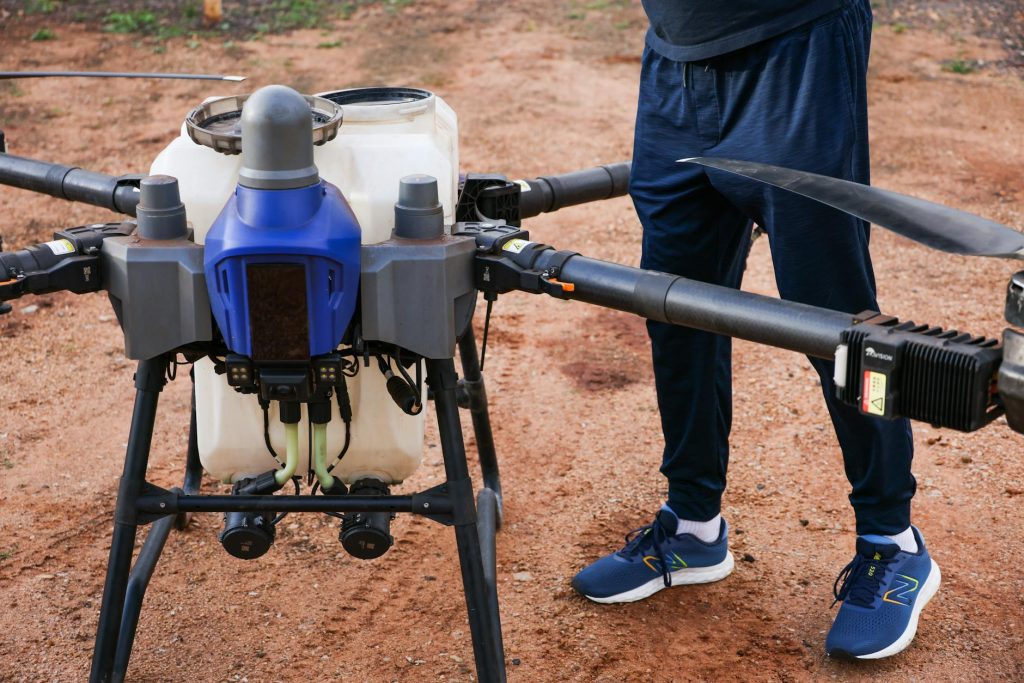
The monsoon clouds, a perennial harbinger of both hope and despair, dictate the rhythm of life for millions of Indian farmers. For generations, their livelihoods have been a gamble against unpredictable weather, volatile markets, and an ever-increasing burden of input costs. It’s a reality that hits home for many, but for Rohan Sharma, it sparked a mission. His childhood summers spent in his ancestral village in Maharashtra, watching his grandfather grapple with crop losses and market middlemen, etched a deep understanding of the systemic challenges that bind rural India. This intimate knowledge, combined with a decade in data analytics in Bangalore, would eventually lead him to found KhetKonekt, a venture that’s quietly revolutionizing how smallholder farmers cultivate, connect, and thrive.
The Monsoon’s Whisper and a Founder’s Resolve
Rohan’s “aha!” moment wasn’t a sudden flash of genius in a boardroom, but a slow burn of frustration and empathy. He recalled a particularly devastating drought year in 2018, when his grandfather, despite years of experience, lost nearly 70% of his cotton crop. “It wasn’t just about the rain. It was about not knowing
when
to plant,
how much
to irrigate, and
where
to sell for a fair price,” Rohan explains, his voice tinged with the memory. “There was so much data available, scattered across government reports and weather apps, but none of it was actionable for a farmer on a two-acre plot.”
He saw a glaring gap: while India’s tech boom was creating unicorns in urban centers, the agricultural backbone of the nation remained largely untouched by cutting-edge innovation. The existing solutions were either too expensive, too complex, or failed to address the hyper-local nuances of Indian farming practices. This realization, a blend of personal experience and professional expertise, catalyzed KhetKonekt in early 2022. Rohan wasn’t just building an app; he was building a bridge between data science and the soil.
From Idea to Impact: Nurturing a Digital Crop
KhetKonekt started with a simple premise: democratize data for farmers. Rohan and his small team, initially operating out of a co-working space in Pune, began by developing a low-cost, IoT-enabled soil sensor. This wasn’t some fancy, imported gadget. It was rugged, solar-powered, and designed to withstand the harsh Indian climate, meticulously collecting data on soil moisture, nutrient levels, and ambient temperature. But the hardware was just the beginning. The real magic happened in the cloud.
The raw data from these sensors flowed into KhetKonekt’s AI engine, which then cross-referenced it with hyper-local weather forecasts, historical yield data, and even pest outbreak patterns. The output? Simple, actionable advisories delivered directly to farmers’ feature phones via voice messages or text in their local vernacular. “We understood that a complex dashboard wasn’t going to work. It had to be intuitive, accessible, and immediately useful,” Rohan notes. “The farmer needs to know: ‘Should I irrigate today? Which fertilizer type is best for this week? Is there a pest risk developing?'”
Their initial pilot, involving 50 farmers across three villages in Maharashtra, was a trial by fire. There were connectivity issues, skepticism from older farmers, and the ever-present challenge of trust. “Building trust in rural communities takes time, patience, and showing tangible results,” Rohan recounts. “We spent months on the ground, explaining, demonstrating, and sometimes just sharing a cup of chai.” The breakthrough came when farmers reported an average 15-20% reduction in water usage and a noticeable improvement in crop health. The data-driven insights were translating into real savings and better yields.
The Ecosystem’s Fertiliser: Incubation and Early Investment
While KhetKonekt’s early traction was promising, scaling up required more than just technical prowess. It needed strategic guidance, network access, and capital. This is where India’s vibrant startup ecosystem stepped in. Rohan applied to several accelerator programs and was eventually accepted into the agritech cohort at
, the esteemed incubator at IIM Ahmedabad.
“CIIE.CO was a game-changer,” Rohan affirms. “Beyond the seed funding of 1.5 crore rupees we received in late 2023, the mentorship was invaluable. We refined our product-market fit, understood the nuances of our go-to-market strategy for diverse agricultural regions, and learned how to build a scalable sales force that could engage with farmers directly.” The program helped KhetKonekt transition from a promising pilot to a structured business, focusing on unit economics, customer acquisition costs (CAC), and lifetime value (LTV) in a traditionally underserved market. They also gained crucial insights into navigating government policies and potential subsidies for agritech adoption.
The network at CIIE.CO also proved instrumental in their seed round. In early 2024, KhetKonekt secured a 7 crore rupee seed investment led by a consortium of angel investors and a prominent agritech-focused venture fund, valuing the company at approximately 30 crore rupees. This capital infusion allowed them to expand their R&D, onboard more data scientists, and most importantly, scale their on-ground operations to reach more farmers.
Beyond the Farm Gate: Market Linkage and Financial Inclusion
KhetKonekt’s vision always extended beyond just improving yields. Rohan understood that even with bumper crops, farmers often lose out to exploitative middlemen and lack access to fair markets. In late 2025, they launched their integrated market linkage platform. Leveraging their network of farmers, KhetKonekt began connecting producers directly with bulk buyers, food processing units, and even urban retail chains, cutting out several layers of intermediaries.
“This was a critical pivot,” Rohan explains. “Improving yield is half the battle; ensuring fair price realization is the other, equally important half.” The platform uses predictive analytics to advise farmers on optimal selling times and connects them to the best available prices for their produce. This not only increases farmer income but also provides buyers with a reliable supply chain of quality produce.
Furthermore, KhetKonekt is exploring partnerships with micro-finance institutions and fintech startups to offer embedded credit solutions to its network of farmers. Access to affordable credit remains a significant barrier for smallholders, and KhetKonekt’s data on farming practices and expected yields provides a unique creditworthiness assessment tool. This move, still in its early stages of development, promises to further empower farmers, allowing them to invest in better seeds, equipment, and sustainable practices without falling into debt traps.
Cultivating the Future: Challenges and Opportunities
Today, in June 2026, KhetKonekt boasts a network of over 30,000 farmers across Maharashtra, Karnataka, and parts of Uttar Pradesh, managing over 75,000 acres of farmland. They’ve seen an average increase of 25% in farmer income and a 30% reduction in water consumption among their users. The company is currently in discussions for its Series A round, aiming to raise around 25 million dollars to fuel aggressive expansion into new states and further develop its market linkage and fintech offerings.
However, the journey is far from over. Scaling in a diverse country like India presents its own unique set of challenges. Internet penetration in remote areas, language barriers, and resistance to new technologies are constant hurdles. KhetKonekt’s GTM strategy relies heavily on a network of local “KhetMitras” (farm friends), community representatives who are trained to onboard farmers, provide technical support, and build local trust. This human-centric approach to tech adoption is crucial for success in rural India.
Rohan also acknowledges the need for deeper collaboration with government initiatives like
and various state agricultural departments. DPIIT recognition has provided tax benefits and easier access to grants, but integrating KhetKonekt’s data with broader agricultural policy frameworks could unlock even greater systemic impact. Imagine a future where localized crop advisories inform national food security strategies, or where micro-climate data guides regional water management.
KhetKonekt’s story is a powerful testament to the potential of Indian entrepreneurship when focused on core, ground-level problems. It’s not just about building a successful business; it’s about transforming lives, one farm, one farmer, one harvest at a time. Rohan Sharma and his team are not just sowing seeds in the soil; they are cultivating a future where technology empowers those who feed the nation, proving that some of the most profound innovations spring from the deepest understanding of human need.