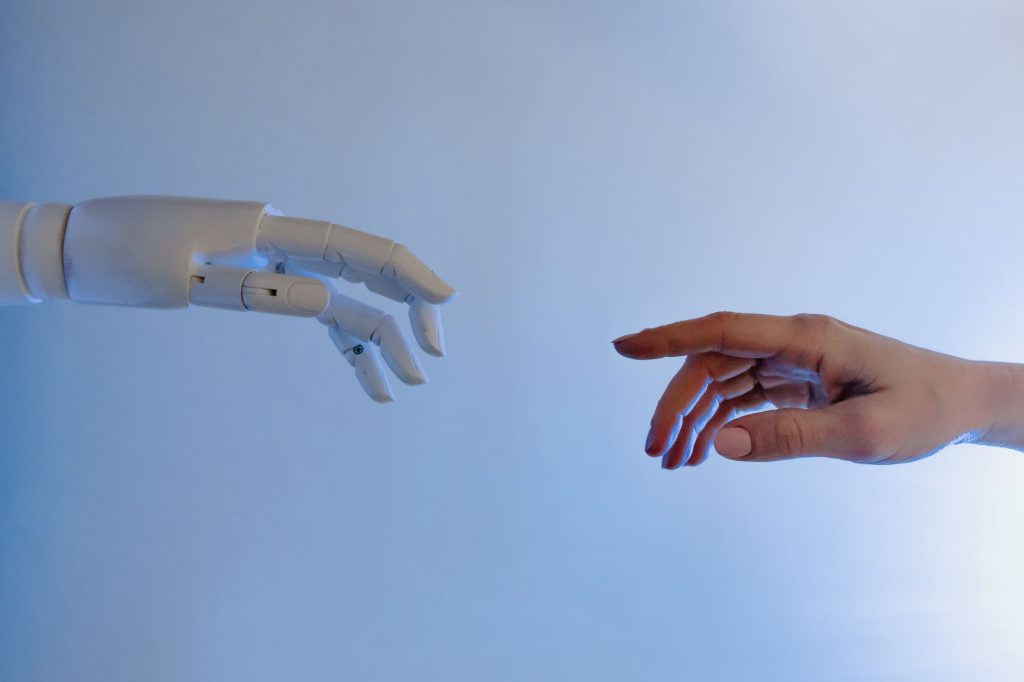
For those who have lost the ability to communicate verbally, the world often shrinks. Conditions like amyotrophic lateral sclerosis (ALS), stroke, or locked-in syndrome can trap brilliant minds within bodies unable to form a single spoken word or even type with a conventional interface. The dream of restoring that fundamental human connection, the simple act of expressing a thought, has long driven researchers at the intersection of neuroscience and artificial intelligence. Today, that dream inches closer to reality, not through invasive surgical implants, but through a remarkable leap in non-invasive brain-computer interface (BCI) technology. Meta has unveiled the second iteration of its groundbreaking Brain2Qwerty system, moving beyond the painstaking character-by-character decoding of its predecessor to interpret entire sentences directly from brain activity, a capability that truly redefines the frontier of assistive communication.
This is not merely an incremental upgrade. It represents a profound shift in how we might one day interact with technology, particularly for those whose voices have been silenced. Where Brain2Qwerty v1 could only painstakingly spell out words one letter at a time, its successor, v2, now decodes full phrases, capturing both words and their underlying semantic meaning. The implications are staggering, offering a pathway to communication that is not only faster and more natural but also significantly more accessible to a wider population, potentially transforming lives across the globe.
From Characters to Coherent Thought: The Technical Leap
The journey from a single neuronal spike to a fully formed sentence is an immense challenge, one that combines advanced signal processing, sophisticated machine learning, and a deep understanding of human cognition. Brain2Qwerty v1, while an impressive feat, operated at the granular level, translating individual neural signals into discrete characters. This process, while functional, was inherently slow and cognitively demanding for the user, akin to typing with a single finger on a very distant keyboard.
Brain2Qwerty v2, however, leverages a more holistic approach. Instead of focusing on individual letter selection, the system has been trained to recognize broader patterns of brain activity associated with the formation of entire words and even short sentences. This is a crucial distinction. It suggests a more advanced neural decoding architecture, likely employing transformer models or recurrent neural networks, which are adept at processing sequential data and understanding context. My experience in computational linguistics tells me that moving from isolated characters to contextualized linguistic units requires a significant jump in the model’s ability to infer meaning and predict sequences, much like a predictive text engine, but directly from neural input.
The core innovation lies in the machine learning algorithms that interpret electroencephalography (EEG) data. Unlike invasive BCIs that rely on electrodes surgically implanted directly into the brain, non-invasive systems like Brain2Qwerty v2 utilize external sensors placed on the scalp. This presents a formidable signal-to-noise challenge, as brain signals must penetrate the skull and skin, often picking up interference from muscle movements or environmental factors. The fact that Meta’s researchers have achieved sentence-level decoding with accuracy approaching that of some invasive setups is a testament to the sophistication of their signal processing pipelines and the robustness of their deep learning models. They are effectively extracting richer, more meaningful linguistic information from signals that were once considered too noisy for such complex interpretations.
The Non-Invasive Advantage: Democratizing Communication
Perhaps the most compelling aspect of Brain2Qwerty v2 is its non-invasive nature. Surgical BCI implants, while offering unparalleled signal clarity and bandwidth, carry inherent risks, including infection, hemorrhage, and the general complications associated with any brain surgery. These procedures are typically reserved for individuals with the most severe communication impairments, and even then, they are not universally accessible due to cost, specialized medical expertise, and patient suitability.
A non-invasive system like Brain2Qwerty v2 dramatically lowers these barriers. If it can achieve sufficient accuracy and speed, it could become a widely available assistive technology, requiring nothing more than a specialized headset or cap. This shift from the operating theater to potentially a clinic, or even a home setting, fundamentally democratizes access to advanced communication aids. It opens the door for millions more people who might not qualify for, or wish to undergo, invasive surgery, but who desperately need a functional means of expressing themselves. The distinction between a rare, high-risk operation and a relatively simple, external device is monumental for adoption and scalability.
This move also aligns with a broader trend in AI and healthcare: leveraging advanced algorithms to extract maximum utility from less invasive, more accessible data sources. Whether it is diagnosing diseases from retinal scans or predicting heart conditions from smart wearables, the power of AI is increasingly being applied to make cutting-edge medical insights available without extreme intervention. Brain2Qwerty v2 fits squarely into this paradigm, promising a future where assistive technology is less about surgical prowess and more about algorithmic brilliance.
Accuracy, Latency, and the Road Ahead
While decoding full sentences represents a significant leap, the practical utility of Brain2Qwerty v2 will ultimately hinge on its real-world performance. Key metrics will include accuracy rates, the speed of decoding (latency), and the cognitive load placed on the user. The research indicates that v2’s accuracy is “starting to close in on surgical setups,” which is an encouraging benchmark. However, even a small error rate can be frustrating and disruptive in real-time communication. Imagine trying to convey a complex thought when the system occasionally misinterprets a word, forcing corrections.
The speed of communication is another critical factor. While faster than character-by-character input, a truly conversational pace requires extremely low latency and high throughput. The human brain can formulate thoughts far faster than any current BCI can translate them. Bridging this gap will require further advancements in signal acquisition hardware, processing power, and even more sophisticated predictive language models integrated into the decoding pipeline. Researchers will also need to address individual variability. Brain activity patterns differ significantly between people, meaning that robust BCI systems often require extensive calibration and training for each user. Developing models that can adapt quickly or generalize across a diverse user base will be crucial for widespread adoption.
Furthermore, the technology needs to move beyond laboratory settings and prove its efficacy in the messy, unpredictable environments of daily life. Factors like user fatigue, emotional states, and environmental distractions can all impact brain signals and, consequently, decoding accuracy. These are the practical challenges that differentiate a promising research breakthrough from a truly transformative product.
Meta’s Broader AI Vision: A Connected Future
This advancement in Brain2Qwerty v2 is not an isolated project for Meta. It fits seamlessly into the company’s long-term vision for human-computer interaction and its ambitious plans for the metaverse. While the immediate and most profound impact is on assistive communication, the underlying technology has far-reaching implications. Imagine a future where natural language interfaces are not limited to voice or text input, but can interpret internal thoughts or intentions. This could revolutionize everything from controlling augmented and virtual reality environments with silent commands to enhancing productivity by allowing users to draft emails or code without lifting a finger.
Meta has consistently invested heavily in fundamental AI research, from large language models to multimodal AI and, crucially, in projects exploring the future of interaction. Their work in haptics, neural interfaces, and advanced display technologies all point towards a future where the boundary between human and digital experience blurs. Brain2Qwerty v2 can be seen as a foundational piece of this puzzle, pushing the boundaries of how deeply and intuitively humans can interface with digital systems. The ethical considerations of such powerful technology are, of course, paramount. Questions of data privacy, mental autonomy, and the potential for misuse will need careful consideration as these technologies mature. But for now, the immediate focus remains on restoring agency and voice to those who need it most.
A New Dawn for Human Expression
The unveiling of Brain2Qwerty v2 marks a significant milestone in the quest to harness artificial intelligence for profound human benefit. By successfully decoding full sentences from non-invasive brain scans, Meta’s researchers have demonstrated that the path to restoring speech for millions is not just a distant dream, but an increasingly tangible reality. This is more than just a technical achievement; it is a beacon of hope for individuals and families grappling with the devastating impact of speech loss.
As the technology continues to evolve, addressing challenges of speed, accuracy, and generalization, we can anticipate a future where assistive communication is not merely functional, but fluid, intuitive, and deeply integrated into the fabric of daily life. The journey from silent thought to spoken word, once considered miraculous, is now being meticulously engineered, one sentence at a time, by the relentless progress of AI. This is the kind of innovation that truly moves the needle, reminding us that at its best, artificial intelligence serves to amplify the human spirit and expand the very definition of connection.