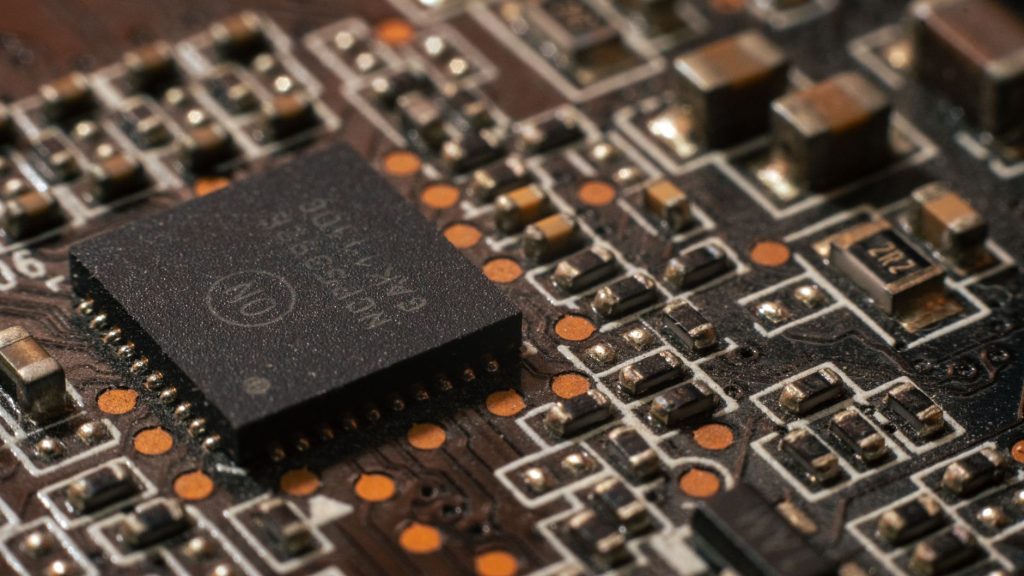
The AI industry’s insatiable appetite for compute continues to fuel an investment frenzy, and nowhere is this more evident than in the specialized hardware sector. SambaNova Systems, a Palo Alto-based AI chip maker, has just closed a staggering $1 billion Series F funding round, pushing its valuation to an eye-watering $11 billion. This capital infusion, led by General Atlantic, arrives barely five months after the company’s last major funding announcement, underscoring the relentless pace and immense financial stakes in the global competition to build the foundational infrastructure for artificial intelligence.
The Billion-Dollar Bet on Specialized AI Hardware
The $1 billion Series F round represents a significant vote of confidence from investors who are clearly betting on SambaNova’s vision for enterprise-grade AI. Rodrigo Liang, CEO and co-founder of
, confirmed that this initial close with General Atlantic is likely to expand further, with additional investors expected to join in the coming weeks. Such a rapid-fire succession of mega-rounds is not uncommon in the current AI landscape, but the sheer scale of this investment—a full billion dollars—highlights the urgent demand for alternatives to general-purpose GPUs and the perceived value of integrated, full-stack AI solutions.
This latest funding catapults SambaNova into an elite tier of AI infrastructure providers, validating its strategy to develop purpose-built hardware and software for demanding AI workloads. The company’s valuation has soared to $11 billion, a remarkable leap that speaks volumes about the investor community’s belief in its technological differentiation and market potential. This kind of capital allows SambaNova to significantly accelerate its research and development, expand its global footprint, and scale manufacturing to meet the growing demand from enterprises eager to deploy advanced AI models without being constrained by existing hardware limitations.
A Whirlwind of Growth and Strategic Maneuvering
The current Series F round follows closely on the heels of another substantial raise earlier this year. In February, SambaNova Systems unveiled its SN50 chip alongside a $350 million Series E funding round. The SN50, designed as a modular, reconfigurable dataflow architecture, aims to offer superior performance and efficiency for training and inference across a wide range of AI models. The swift transition from a $350 million Series E to a $1 billion Series F in just five months is a testament to the hyper-accelerated investment cycle characteristic of disruptive AI technologies. It also suggests strong market traction and a compelling product roadmap that has resonated deeply with sophisticated investors.
Beyond the impressive fundraising figures, SambaNova has also been at the center of acquisition speculation. Last December, reports circulated regarding Intel’s interest in acquiring the company for approximately $1.6 billion. While Liang remained non-committal on the possibility of an exit, he acknowledged that SambaNova is consistently approached by potential suitors. His stance suggests a strategic flexibility, keeping options open in a market that rewards both rapid growth and opportunistic consolidation. For now, however, the focus remains firmly on independent expansion, fueled by this latest capital injection. The significant increase in valuation since those earlier acquisition rumors also illustrates just how quickly market perceptions and intrinsic values can shift in the fast-moving AI sector. An $11 billion valuation makes a $1.6 billion offer seem almost quaint, highlighting the exponential growth in perceived value within half a year.
The Relentless Pursuit of Specialized AI Compute
SambaNova Systems emerged in 2017 with a bold ambition: to challenge the status quo in AI compute by creating a fully integrated hardware and software platform optimized specifically for artificial intelligence. Unlike companies that merely offer chips, SambaNova provides a comprehensive solution, including its Dataflow-as-a-Service, which aims to simplify the deployment and management of AI workloads for enterprises. Their approach emphasizes reconfigurability and efficiency, promising to deliver performance gains that general-purpose processors struggle to match for highly specialized AI tasks.
The core of SambaNova’s technology lies in its Reconfigurable Dataflow Unit (RDU) architecture. This innovative design allows the chip to dynamically adapt its computation paths and memory access patterns to the specific demands of an AI model, rather than relying on fixed instruction sets. This adaptability is crucial in a field where model architectures and training techniques are constantly evolving. By minimizing data movement and optimizing computational flow, RDUs are designed to deliver significant improvements in throughput and energy efficiency, particularly for large-scale language models and complex deep learning tasks. The SN50 chip, the latest iteration, further refines this approach, targeting the increasing complexity of multimodal AI and massive neural networks.
This strategy positions SambaNova not just as a chip vendor but as a provider of an end-to-end AI compute stack. For enterprises grappling with the intricacies of deploying AI, a unified platform that seamlessly integrates hardware, software, and services can be incredibly appealing. It reduces the burden of system integration, optimizes performance, and potentially lowers the total cost of ownership compared to piecemeal solutions.
Navigating the Competitive AI Chip Landscape
The AI chip market is arguably one of the most fiercely contested battlegrounds in technology today. Nvidia, with its ubiquitous GPUs, remains the undisputed heavyweight champion, holding a dominant share in both AI training and inference. However, its supremacy is increasingly challenged by a diverse array of startups and tech giants, each vying for a slice of the rapidly expanding pie.
Companies like Cerebras Systems, with its massive wafer-scale engine, are pushing the boundaries of single-chip processing power. Groq is making waves with its Language Processing Unit (LPU) designed for ultra-low-latency inference. Tenstorrent, led by chip design legend Jim Keller, is developing RISC-V based AI processors. Meanwhile, hyperscalers like Google continue to invest heavily in their Tensor Processing Units (TPUs), and Amazon Web Services offers its custom Trainium and Inferentia chips for cloud-based AI workloads. Even traditional chipmakers like Intel and AMD are redoubling their efforts, with Intel acquiring Habana Labs and AMD integrating AI accelerators into its CPU and GPU roadmaps.
SambaNova’s substantial funding round serves as further validation that the market believes there is ample room for specialized architectures beyond traditional GPUs. Investors are betting that as AI models become larger and more complex, and as the demand for efficient inference grows exponentially, custom-built hardware will become not just an advantage, but a necessity. The $1 billion injection allows SambaNova to not just compete, but to truly innovate and scale its offerings to meet enterprise demands that Nvidia alone cannot fully satisfy.
The shift in focus from pure training performance to inference optimization is also a critical market dynamic. While training massive foundation models still requires immense compute, the real-world deployment of AI—where models process millions of user queries or analyze petabytes of data in real-time—demands extreme efficiency and low latency for inference. SambaNova’s integrated platform, designed to manage both, positions it strongly in this evolving landscape.
The Broader Implications for AI Infrastructure
SambaNova’s latest funding round is more than just a win for one company; it’s a bellwether for the entire AI infrastructure market. It signals several key trends:
- Unabated Investment in Foundational AI: Despite broader economic uncertainties, venture capital continues to pour into companies building the core infrastructure for AI. This reflects a deep conviction that AI is not a fleeting trend but a transformative technology requiring massive, sustained investment at its base.
- Validation of Specialized Architectures: The success of SambaNova and its peers reinforces the idea that general-purpose hardware, while versatile, may not be optimal for all AI workloads. Specialized chips designed from the ground up for AI can offer superior performance, efficiency, and cost-effectiveness for specific enterprise applications.
- The Rise of Full-Stack Solutions: Companies offering integrated hardware and software platforms are gaining traction. Enterprises want simplicity and optimized performance, and a unified stack can deliver that more effectively than assembling disparate components.
- Intensified Competition: The AI chip arms race is heating up. With billions flowing into startups, the competitive landscape will only become more ferocious, pushing innovation boundaries and potentially leading to more breakthroughs in chip design and AI compute paradigms.
- Strategic Importance of Compute Sovereignty: As AI becomes a critical national and economic asset, control over computing infrastructure becomes paramount. Investments in domestic AI chip companies, whether in the US, Europe, or Asia, reflect a broader strategic imperative to reduce reliance on single vendors or geographies.
The $11 billion valuation for SambaNova, achieved in such a compressed timeframe, is a stark reminder of the extraordinary valuations being commanded by companies at the forefront of the AI revolution. It’s a testament to the perceived market opportunity, which some estimate to be in the hundreds of billions of dollars for AI hardware alone. Investors are not just funding chips; they are funding the very bedrock upon which the next generation of intelligent applications will be built.
Looking Ahead: Scaling, Innovation, and Market Share
With a fresh $1 billion in its coffers, SambaNova Systems is well-positioned to accelerate its growth trajectory. The capital will undoubtedly be deployed to scale its operations, expand its product portfolio, and deepen its market penetration. We can expect to see increased investment in R&D, pushing the boundaries of what its RDU architecture can achieve for even more complex and diverse AI models. This will include advancements in its software stack, making its platform even more accessible and powerful for developers and enterprise customers.
The challenge for SambaNova, and indeed for all AI chip startups, will be to translate this massive investment into sustainable market share against entrenched giants and nimble competitors. The technology is compelling, the funding is significant, but execution will be key. As the AI industry matures, the ability to deliver not just performance, but also reliability, scalability, and robust customer support, will differentiate the long-term winners.
SambaNova’s journey thus far exemplifies the dynamic and high-stakes nature of the AI infrastructure market. Its latest funding round is a clear signal that the race to power the AI future is intensifying, and specialized hardware providers are increasingly seen as critical players in this transformative technological shift. The coming years will reveal whether this substantial investment translates into a lasting impact on how enterprises harness the power of artificial intelligence.