The relentless demand for artificial intelligence compute power has become the defining characteristic of the current technological epoch. From the training of colossal large language models to the complex neural networks underpinning autonomous driving systems, the need for specialized, high-performance infrastructure is skyrocketing. Into this fiercely competitive and capital-intensive arena steps Tesla, a company primarily known for electric vehicles and energy storage, with a surprising new play: the “Megapod,” a modular AI data center hardware system. This move, surfacing through a recent trademark application, signals a significant strategic pivot for Tesla, especially coming less than a year after the quiet discontinuation of its ambitious, custom-built Dojo supercomputer project.
This isn’t merely a new product; it’s a re-evaluation of how a major technology player approaches the foundational infrastructure necessary for its own AI ambitions, and potentially, for the broader market. Tesla’s foray into selling self-contained, modular AI computing systems suggests a recognition of the immense challenges and opportunities in democratizing high-performance AI compute, moving beyond the proprietary, vertically integrated model epitomized by Dojo.
The Genesis of Megapod: A Response to Exploding AI Demand
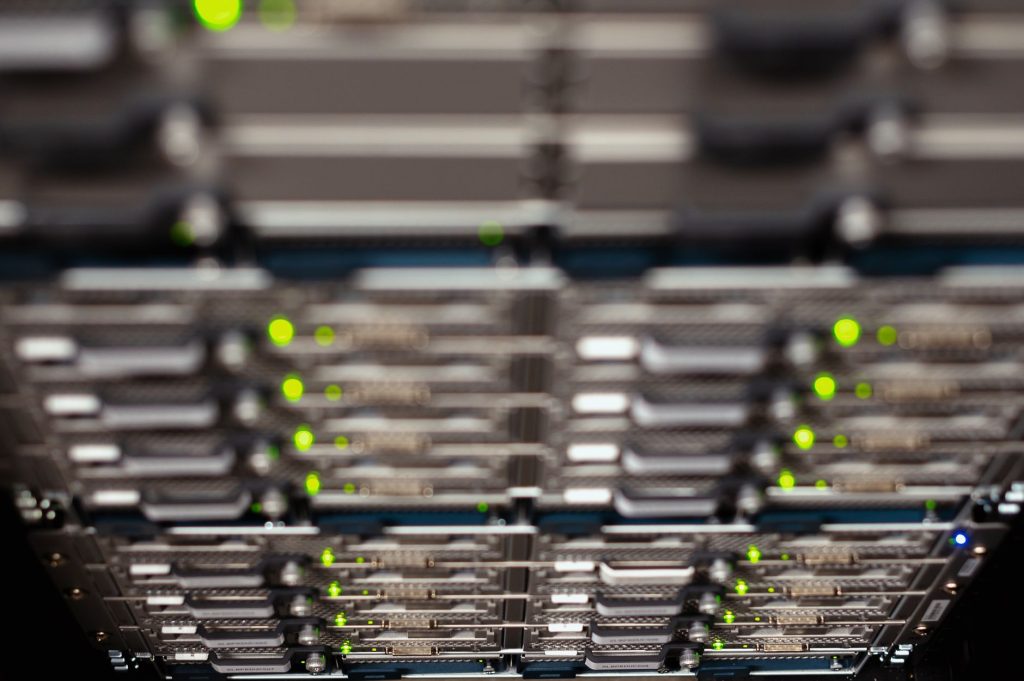
The trademark filing for “Megapod” describes a comprehensive, self-contained computing system engineered specifically for artificial intelligence workloads. The details are precise: “modular data center hardware systems for artificial intelligence computing, comprised of computer servers, computer hardware for artificial intelligence data processing, networking equipment, power distribution units, and cooling systems.” This isn’t just a collection of components; it’s an integrated solution designed for efficiency and rapid deployment, addressing the critical bottlenecks in scaling AI operations.
The term “modular” is particularly instructive. In the world of data centers, modularity translates to pre-fabricated, standardized units that can be quickly assembled and scaled, reducing construction time, cost, and complexity. For AI, where compute requirements can fluctuate dramatically and require specialized environments (like advanced cooling), a modular approach offers unparalleled flexibility. Imagine deploying a new “pod” of AI compute capacity in weeks rather than months, or even years, which is often the timeline for traditional data center build-outs. This agility is precisely what the rapidly evolving AI landscape demands.
This development follows a period of unprecedented investment in AI infrastructure, driven by the generative AI boom and the increasing sophistication of machine learning algorithms across industries. Companies worldwide, from hyperscalers to specialized research labs, are grappling with the sheer scale of compute needed for training and inference. Nvidia, with its dominant position in AI GPUs, has become a trillion-dollar company largely on the back of this demand. Tesla’s entry, while perhaps initially focused on its internal needs, poses an intriguing question: is the company looking to carve out a new market segment, or simply optimize its internal AI operations with a standardized, potentially commercializable solution?
From Dojo’s Ambition to Megapod’s Pragmatism
The context of Megapod’s emergence is inextricably linked to the story of Dojo. Less than a year ago, Tesla reportedly ceased further development of Dojo, its ambitious in-house supercomputer project designed to train the neural networks for its Full Self-Driving (FSD) system. Dojo was not merely a supercomputer; it was a vertical integration play, involving custom silicon (the D1 chip) and a bespoke architecture aimed at optimizing every aspect of AI training for video data. The vision was audacious: to build the world’s most powerful AI training machine, tailored specifically for automotive autonomy.
The challenges, however, were immense. Developing custom silicon is an incredibly capital-intensive and time-consuming endeavor, fraught with design complexities, manufacturing hurdles, and the constant race against rapidly evolving industry standards. While Dojo demonstrated impressive theoretical performance, scaling its production and integration into a robust, fault-tolerant data center environment proved to be a formidable task. Building and maintaining a bleeding-edge, custom-designed supercomputer requires specialized engineering talent and manufacturing capabilities that few companies possess, even those with Tesla’s resources.
The pivot to Megapod suggests a move from a highly specialized, proprietary approach to a more generalized, yet still highly optimized, solution. Instead of trying to reinvent the fundamental building blocks of AI compute (as it did with Dojo’s D1 chip), Tesla appears to be focusing on the integration and operationalization of existing, high-performance components into a modular, deployable system. This shift could be seen as a pragmatic response to the realities of AI infrastructure development: sometimes, optimizing the deployment and management of readily available, powerful hardware is more efficient than building everything from the ground up. It leverages existing supply chains for components like servers, networking gear, and cooling systems, allowing Tesla to focus on the overall system design and its specific AI workload optimization.
Navigating the AI Infrastructure Landscape
Tesla’s entry into the modular AI data center hardware market places it in a fascinating position. The AI infrastructure market is currently dominated by a few key players. Nvidia supplies the overwhelming majority of the AI accelerators (GPUs) that power these systems. Hyperscale cloud providers (Amazon AWS, Microsoft Azure, Google Cloud) offer AI compute as a service, building massive data centers to house these accelerators. Specialized companies focus on high-performance computing (HPC) solutions, custom cooling, and data center management.
Where does Megapod fit? If Tesla intends to sell these systems commercially, it would be entering a market with established players. However, its unique position as a company that
uses
AI infrastructure at an immense scale for its own complex problems (autonomous driving training, robotics) gives it a distinct advantage. Tesla understands firsthand the pain points of scaling AI compute, the specific requirements for power, cooling, and data throughput, and the operational challenges of managing these systems. This user-centric perspective could inform a product that truly addresses enterprise needs.
For companies grappling with their own large-scale AI training, such as other automotive OEMs developing autonomous systems, or deep tech startups building foundational models, a pre-integrated, modular solution like Megapod could be highly attractive. It promises faster deployment, predictable performance, and potentially lower total cost of ownership compared to building custom data centers or relying solely on public cloud resources for highly sensitive or geographically constrained workloads.
The potential target market in India, for instance, is substantial. India’s burgeoning AI ecosystem, fueled by government initiatives like the National Strategy for Artificial Intelligence and the India AI Mission, demands robust compute infrastructure. Indian deep tech startups, research institutions, and large enterprises are increasingly investing in AI capabilities. While public cloud adoption is high, sovereign data requirements, specific performance needs, and the desire for greater control over infrastructure could drive demand for modular, on-premise or co-located AI data center solutions. Tesla’s Megapod, with its promise of integrated efficiency, could find a receptive audience in India’s rapidly expanding digital economy, particularly as the nation pushes for greater self-reliance in advanced computing.
Technical Considerations and Operational Advantages
The description of Megapod as “self-contained” is not a trivial detail. It implies that each module would arrive with its own power distribution units (PDUs) and cooling systems, making it a plug-and-play solution to a significant extent. Traditional data center cooling, especially for high-density AI racks, is a complex engineering challenge, often requiring liquid cooling solutions. A self-contained module likely integrates these advanced cooling mechanisms, abstracting away much of the complexity for the end-user. This could significantly reduce the operational overhead and specialized expertise required to deploy and manage high-performance AI compute.
Furthermore, the integration of “networking equipment” within the module suggests an optimized fabric for inter-server communication, critical for distributed AI training. The efficiency of data transfer between accelerators is just as important as the raw compute power of individual chips. By offering a pre-configured network topology, Tesla could guarantee performance metrics that are difficult to achieve with piecemeal component integration.
This approach aligns with a broader industry trend towards integrated systems. As AI workloads become more demanding, the traditional separation of compute, storage, and network is blurring. Systems are increasingly designed holistically to maximize throughput and minimize latency. Megapod, if executed well, could represent a compelling example of this integrated systems thinking, packaged for rapid deployment.
Business Model Implications and Future Outlook
Tesla’s strategic move into selling AI data center hardware could open up entirely new revenue streams, diversifying its business beyond automotive and energy. While the immediate use case might be to optimize its own FSD training infrastructure, the commercial potential is undeniable. This positions Tesla not just as a consumer of advanced technology, but as a supplier of critical infrastructure for the AI economy.
The success of Megapod will hinge on several factors: its performance relative to existing solutions, its pricing strategy, and Tesla’s ability to provide robust support and maintenance for enterprise clients. It will also depend on how well Tesla leverages its brand recognition and engineering prowess in a new market segment. This is not merely selling servers; it’s selling an integrated, high-value solution for mission-critical AI workloads.
Ultimately, Tesla’s Megapod initiative is more than just a new product. It is a pragmatic evolution of its AI strategy, moving from a deeply specialized, proprietary hardware path (Dojo) to a more commercially viable, modular, and integrated systems approach. It acknowledges the overwhelming demand for AI compute and seeks to capitalize on Tesla’s hard-won experience in building and operating some of the world’s most demanding AI systems. For the broader technology landscape, it signals a potential shift towards more standardized, deployable AI infrastructure units, capable of accelerating AI adoption and innovation across industries, from autonomous vehicles to scientific research and beyond. The future of AI compute might just look a lot more like a collection of interconnected “Megapods” than bespoke supercomputers.