The relentless march of artificial intelligence, particularly the resource-intensive large language models, is reshaping not just industries but the very infrastructure of global power grids. While the narrative often focuses on algorithmic breakthroughs and chip innovations, the underlying truth is far more prosaic and profound: AI demands prodigious amounts of energy. This reality has now driven one of the world’s leading technology companies, Microsoft, into an unprecedented 20-year power purchase agreement with energy giant Chevron, signaling a monumental shift in how the AI industry plans to fuel its insatiable hunger for computation.
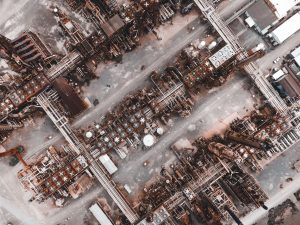
At the heart of this agreement is the development of the Kilby facility in West Texas, a colossal natural gas power plant designed to supply a staggering 2.67 gigawatts (GW) of electricity. To put this into perspective, 2.67 GW is equivalent to the output of several conventional power plants, or enough to power millions of homes. This isn’t just about securing power; it’s about locking in a dedicated energy source for decades to come, specifically for Microsoft’s expanding AI and cloud data centers. The partnership, leveraging technology from GE Vernova and Solar Turbines, underscores a stark acknowledgment: the current pace of AI development cannot be sustained by intermittent renewables alone, at least not yet, and certainly not at the scale required.
The AI Energy Imperative: Why Gigawatts are the New Teraflops
For years, the discourse around AI hardware centered on computational speed, measured in teraflops, and memory bandwidth. Today, that conversation has broadened dramatically to include energy. Training a single, state-of-the-art large language model can consume energy equivalent to the annual consumption of hundreds of homes. As these models become larger, more complex, and more widely deployed for inference across countless applications, the energy demand scales exponentially. Data centers, the physical manifestations of the cloud, are already massive energy consumers. With AI workloads, their energy footprint is set to explode.
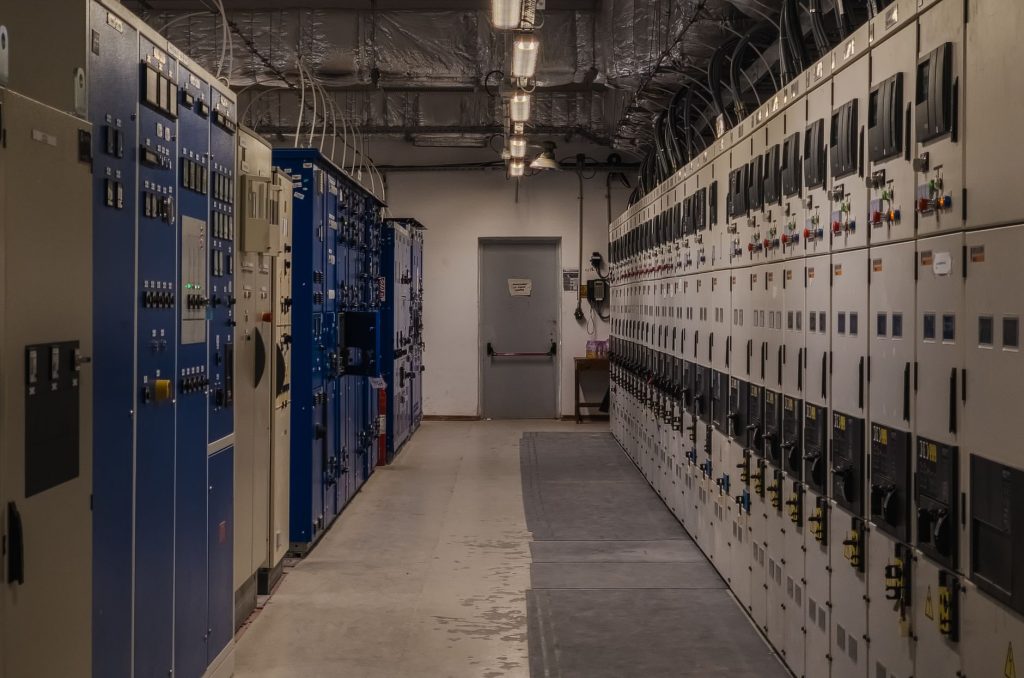
The Kilby facility is a direct response to this looming energy crunch. Microsoft, like its peers, is not merely building data centers; it’s constructing entire ecosystems to support its AI ambitions. This includes not only the server racks teeming with GPUs and custom accelerators but also the sophisticated cooling systems, networking hardware, and the vast power infrastructure needed to keep it all running. The 20-year Power Purchase Agreement (PPA) with Chevron offers Microsoft a degree of cost predictability and energy security that is becoming increasingly critical in a volatile global energy market. It’s a strategic move to de-risk future AI development by guaranteeing a massive, consistent power supply.
Sustainability Crossroads: Balancing AI Ambition with Climate Goals
This partnership, however, places Microsoft at a critical crossroads regarding its widely publicized sustainability commitments. The company has boldly pledged to become carbon-negative by 2030, a goal that appears increasingly challenging in the light of such a substantial, long-term investment in natural gas. While natural gas burns cleaner than coal, it is still a fossil fuel, contributing significantly to greenhouse gas emissions. The Kilby facility, powered by natural gas, will inevitably generate carbon emissions for decades.
The tension here is palpable: the imperative to lead in the AI race versus the imperative to combat climate change. Technology companies, often lauded for their innovation, are now facing intense scrutiny over the environmental footprint of that very innovation. The argument could be made that securing a stable energy supply, even from natural gas, is a necessary evil to ensure AI development continues. Yet, it also highlights the urgent need for scalable, truly clean energy solutions that can meet the unprecedented demands of the AI era. This isn’t just a Microsoft problem; it’s an industry-wide dilemma that will require radical innovation in energy generation, storage, and consumption efficiency.
Even efforts to make data centers more water-efficient, such as Nvidia’s new warm-water cooling systems, while commendable for reducing water use within the facility itself, do not address the larger issue. The vast majority of water consumed by AI infrastructure often occurs upstream, at the power plants that generate the electricity, particularly those relying on fossil fuels for cooling and steam generation. This distinction, between facility-level efficiency and the broader energy supply chain’s environmental impact, is crucial for a holistic understanding of AI’s footprint.
The Infrastructure Race: Global Implications and India’s Position
The Microsoft-Chevron deal is a bellwether for what’s to come globally. As AI adoption accelerates, every nation with digital ambitions will confront similar infrastructure challenges. India, with its burgeoning digital economy, ambitious AI mission, and rapidly expanding data center market, is no exception.
India’s data center capacity is projected to grow exponentially, driven by local data localization mandates, a burgeoning cloud market, and the government’s push for AI integration across sectors, from healthcare to agriculture. This growth will demand enormous amounts of reliable, affordable power. While India has aggressive renewable energy targets, including a significant push for solar and wind, the intermittency of these sources poses a challenge for 24/7 critical infrastructure like AI data centers. The country already grapples with balancing energy demand with supply, and the additional burden of AI workloads will only intensify this.
Indian enterprises and startups alike are increasingly adopting AI, from sophisticated SaaS platforms leveraging machine learning to advanced manufacturing using AI for predictive maintenance. This domestic demand will necessitate a parallel build-out of robust, energy-efficient data center infrastructure. The question for India will be how to meet this demand sustainably. Will we see similar long-term power purchase agreements, perhaps with a greater emphasis on hybrid renewable-gas solutions, or even advanced nuclear power, to ensure energy security for our AI future? The lessons from the US market, particularly the trade-offs being made by global tech giants, offer crucial insights for India’s own strategic energy planning for its digital infrastructure.
Furthermore, the competitive landscape for AI infrastructure is intensifying. European firms, facing limits on access to certain US AI providers due to regulatory concerns and rising token costs, are already diversifying their AI models, utilizing a mix of US, Chinese, and European solutions. This quest for optionality extends beyond just models to the underlying compute and power. Securing dedicated, long-term power sources could become a significant competitive differentiator for cloud providers and AI developers globally, ensuring they are not beholden to fluctuating energy prices or constrained by grid limitations.
The New Geopolitics of Power and AI
This monumental deal between Microsoft and Chevron is more than just a power agreement; it’s a profound statement on the new geopolitics of AI and energy. It underscores that access to vast, reliable power is becoming as critical a strategic asset as advanced semiconductor manufacturing capabilities. The ability to guarantee energy supply for decades provides a competitive edge, allowing companies to plan long-term investments in AI research and deployment without the constant shadow of energy scarcity or cost volatility. This move could very well set a precedent, influencing how other hyperscalers and national AI initiatives secure their own energy futures.
The implications are far-reaching. As AI continues its trajectory, the environmental and infrastructural costs will only mount. The industry faces an urgent mandate to innovate not just in algorithms and chips, but in sustainable energy solutions and radically more efficient compute architectures. The Microsoft-Chevron partnership is a stark reminder that the future of AI will be deeply intertwined with the future of global energy, demanding a level of strategic planning and investment that extends far beyond the traditional confines of the technology sector.