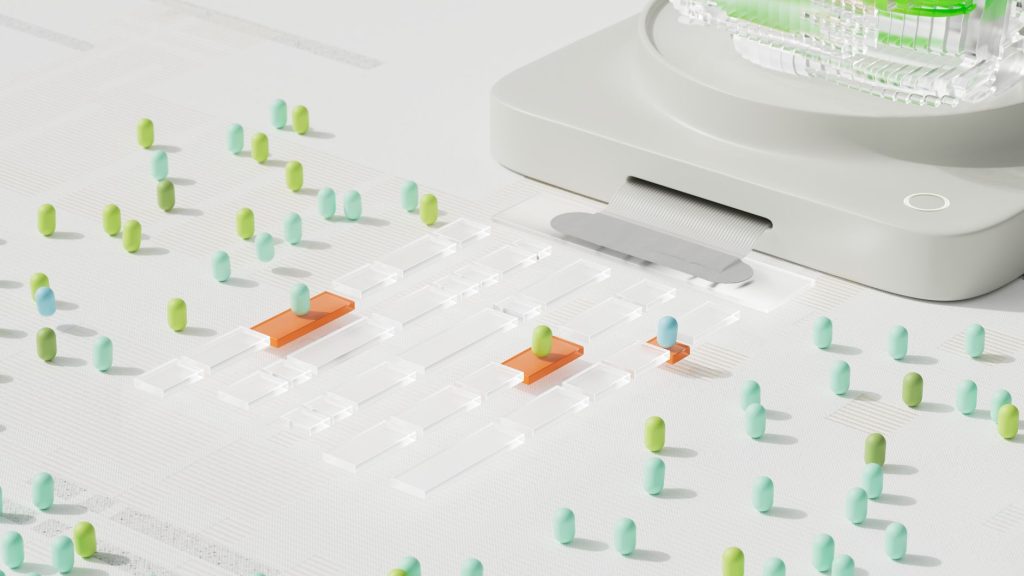
Microsoft today announced improvements to its third-generation Maia 300 in-house AI chip, positioning it as the primary AI inference system for its products and services. This update, detailed by Microsoft, advances the company’s effort to reduce its reliance on NVIDIA’s GPUs, a strategy first noted when the Maia 300 chip was mentioned in August. The chip is designed to improve the cost and efficiency of running AI workloads in the cloud. It handles the latest reasoning models and complex agentic tasks.
The push for hardware independence is a key part of Microsoft’s broader AI strategy, which has seen consistent investment in infrastructure. This includes the launch of its fourth India cloud region in Hyderabad on August 7, followed by the India South Central cloud region on September 21. Such data center expansions provide the physical backbone for the advanced AI capabilities that chips like Maia 300 are meant to power. Microsoft also previously moved to drop non-disclosure agreements when negotiating data center deals with local governments, a transparency move later mirrored by Amazon. This shift could ease community backlash against AI infrastructure development.
Even as Microsoft builds out its AI capabilities, its leadership continues to voice strong concerns about the technology’s risks. CEO Satya Nadella, in a series of posts on X, stated that we should assume all AI models are “compromised” and that they require an “emergency brake.” Nadella argued that the most trustworthy “Super Intelligence” system will be one that allows users to trust the model the least, moving away from treating AI as a “set of nested black boxes.” These comments align with Microsoft President Brad Smith’s call for urgent AI regulation, made on October 12, where he suggested the UK is best positioned to lead these efforts. Smith pointed out that milk and washing machines currently have more oversight than AI companies.
This dual approach of aggressive AI development alongside calls for caution is a consistent theme for Microsoft. The company is not slowing its pace of innovation; on October 9, Microsoft AI released Microsoft-Decision-1, a decision-scoring model designed for routing, classification, verification, and agent control. Post-trained from Alibaba’s Qwen3.5-9B, Microsoft-Decision-1 provides calibrated probabilities for fixed answer options rather than generating text, and is available in Microsoft Foundry and OpenRouter. This specialized model handles the agentic tasks that the improved Maia 300 chip is now better equipped to manage.
The AI Product Gap and Emerging Challenges
Microsoft’s Jacob Andreou recently spoke about rebuilding the new Copilot to address a growing “product gap” in AI. This follows the September 26 launch of the Copilot super app, which integrated chat, coding, and autopilot features, and aligns with the company’s focus on AI agents mentioned in an August 11 article. The challenge, as Andreou implied, is making powerful models genuinely useful and integrated into everyday workflows.
The AI sector also presents new challenges, seen in the rise of AI software clones. Projects like REA and ArtCraft are using AI to reverse-engineer and rebuild commercial tools, including those from Microsoft and Adobe, without access to original source code. This trend, reported on October 13, shows a new front in software development. AI can now replicate existing functionalities. This potentially disrupts traditional software markets and intellectual property norms.
Microsoft invests heavily in its AI infrastructure and specialized models, and addresses the complex ethical and regulatory questions AI raises. The Maia 300 chip’s increased capabilities for reasoning and agentic tasks directly supports the development of tools like Microsoft-Decision-1 and the expanded Copilot, all while its leaders vocally push for a new framework of trust and regulation in the industry.
What is the purpose of Microsoft’s Maia 300 chip?
The Maia 300 chip is designed to be the primary AI inference system for Microsoft’s products and services, improving cost and efficiency for AI workloads in the cloud and handling reasoning models and agentic tasks.
What concerns did Satya Nadella express about AI models?
Microsoft CEO Satya Nadella stated that all AI models should be assumed “compromised,” require an “emergency brake,” and that the most trustworthy AI system will be one that allows users to trust the model the least.
What is Microsoft-Decision-1?
Microsoft-Decision-1 is a decision-scoring model, post-trained from Alibaba‘s Qwen3.5-9B, that returns a calibrated probability for fixed answer options, used for routing, classification, verification, and agent control.
Sources
- The Rise of AI Software Clones: Why REA and ArtCraft Are Going Viral
- Introducing Microsoft’s latest custom chip: Maia 300
- Microsoft’s new AI chip makes it less reliant on Nvidia’s GPUs
- Microsoft president says UK is best placed to drive AI regulation
Related Coverage
- Microsoft’s India AI Strategy: Talent War, Privacy, Security Implications for Startups
- Microsoft’s AI Strategy: Maia 300 Chip, India Cloud, AI Agent Guide
Compiled by Launch91 Desk from the sources linked above. More about Launch91.