The great migration of enterprise computing to the cloud has been the defining technology narrative of the last fifteen years. But for artificial intelligence, the next great migration might just be in the opposite direction. In a move that directly targets the most significant barrier to enterprise AI adoption, OpenAI and Dell Technologies announced a landmark partnership today, May 18, 2026, to bring OpenAI’s powerful Codex model into the secure, on-premise data centers of large corporations.
For years, the C-suites of Fortune 500 companies have been caught in a difficult bind. They see the transformative potential of large language models for everything from software development to business automation. Yet, the very idea of sending their most sensitive intellectual property, proprietary code, and confidential customer data to a third-party cloud API is a non-starter for their security, legal, and compliance teams. This partnership is designed to shatter that impasse. By enabling enterprises to deploy and run Codex on their own hardware, specifically within Dell’s AI-focused infrastructure, the two companies are betting that the future of enterprise AI lies not in the public cloud, but right next to the data it needs to be useful.
This is more than just a hardware deal or a new deployment option. It’s a fundamental acknowledgment of a principle that data engineers have long understood: data has gravity. And for the largest organizations on the planet, that gravity is simply too strong to overcome. This collaboration signals a maturation of the AI market, moving from the era of public API access to one of hybrid, enterprise-controlled deployment.
The Partnership: More Than Just Servers
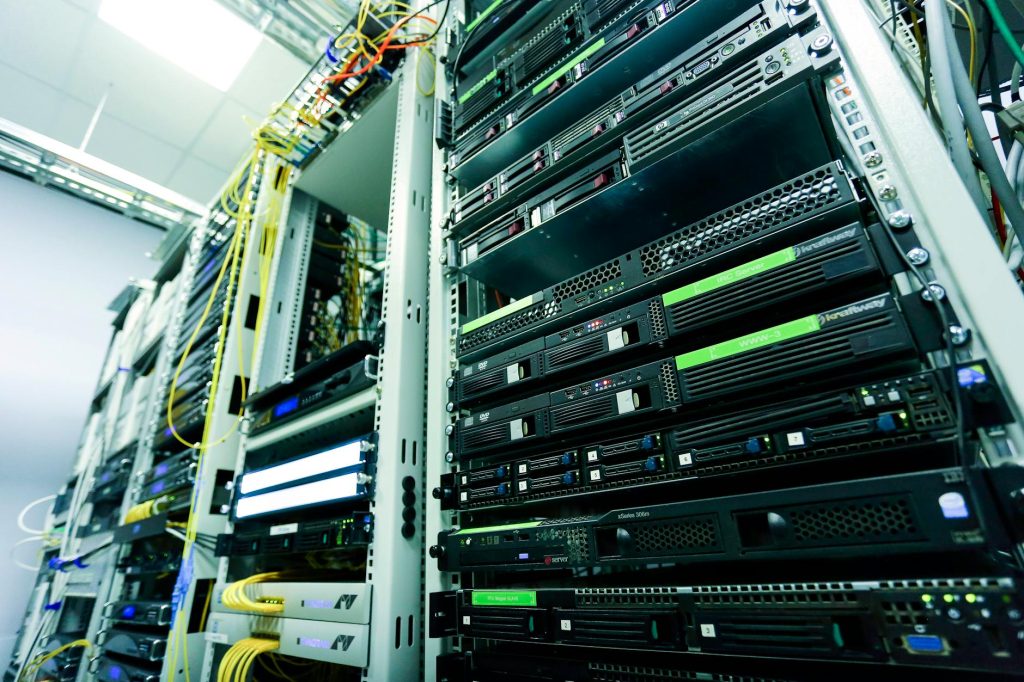
At its core, the agreement allows enterprises to run instances of OpenAI’s Codex model on infrastructure they own and operate, specifically mentioning the Dell AI Data Platform and the Dell AI Factory. This is a crucial distinction from typical cloud-based AI services. Instead of making API calls to servers managed by OpenAI or Microsoft Azure, a company can now run the model within its own firewall, subject to its own security protocols and governance policies.
The choice of Codex as the initial model for this venture is telling. While models like GPT-4 capture public imagination for their conversational abilities, Codex has quietly become one of OpenAI’s most successful enterprise products. Originally positioned as a code generation tool, it now boasts over 4 million weekly developer users. Companies are integrating it across the entire software development lifecycle, using it for tasks like accelerating code creation, improving test coverage, automating code reviews, and even assisting in incident response by reasoning over vast repositories of internal code.
But the ambition for Codex has expanded far beyond the IDE. The real prize, and the focus of this partnership, is the evolution of Codex into a platform for building autonomous agents.
From Code Assistant to Enterprise Agent
The most forward-looking aspect of this announcement is its focus on using Codex-powered agents to automate complex business workflows. This is the leap from a developer productivity tool to a core business process engine. The vision is for these agents, running securely on-premise, to connect to a company’s internal systems, a feat that would be a security nightmare if attempted via a public cloud API.
Imagine an agent that can:
- Gather context from Salesforce, Jira, and Slack to prepare a weekly product development report.
- Automatically route inbound product feedback from customer support tickets to the correct engineering team.
- Qualify new sales leads by cross-referencing them with internal databases and public information, then drafting personalized follow-up emails.
- Coordinate complex work across disparate business systems, orchestrating actions in response to real-time events.
This level of integration and automation is the holy grail for enterprise AI. It requires deep access to the systems where work actually happens. By bringing the AI model inside the corporate network, Dell and OpenAI are providing the foundational infrastructure needed to build these next-generation applications safely. It removes the need to painstakingly build and secure API connections to the outside world for every internal tool the AI needs to touch.
Data Gravity and the Security Imperative
To understand the significance of this deal, one must understand the concept of “data gravity.” Large enterprises, particularly in regulated industries like finance, healthcare, and government, have accumulated petabytes, sometimes exabytes, of data over decades. This data is often housed in on-premise data centers or private clouds. Moving this vast amount of data to a public cloud for processing by an AI model is not only slow and expensive but often impossible due to a web of security policies and regulatory requirements.
Regulations like GDPR in Europe, HIPAA in the United States healthcare sector, and various data sovereignty laws around the world mandate where sensitive data can be stored and processed. For a global bank, the idea of sending its proprietary trading algorithms or customer financial data to an external AI service for analysis is unthinkable. The risk of data leakage, unauthorized access, or regulatory breach is simply too high.
The OpenAI and Dell partnership directly addresses this pain point. It tells enterprises, “You don’t have to move your data to the AI; we will bring the AI to your data.” This approach respects data gravity, allowing the model’s intelligence to be applied where the data already resides. It transforms the security conversation from one of managing external risks to one of extending existing, trusted internal security protocols to a new class of workload.
The Shifting Competitive Landscape
This move does not happen in a vacuum. It represents a new front in the intense competition among AI providers for the lucrative enterprise market.
For OpenAI, it marks a significant strategic expansion beyond its deep ties with Microsoft Azure. While Azure will undoubtedly remain its primary channel for cloud-based enterprise offerings, this partnership with Dell opens up a massive segment of the market that is either hesitant to go all-in on a single public cloud or is firmly committed to a hybrid or on-premise strategy. It provides OpenAI with a direct channel to Dell’s enormous and loyal base of enterprise customers, diversifying its market access.
The competitive implications for other players are profound:
- Google: Google has been aggressively pursuing a hybrid and multi-cloud strategy with its Vertex AI platform and Google Distributed Cloud. The OpenAI and Dell alliance creates a powerful, best-of-breed competitor that combines a leading AI model with a leading enterprise hardware provider. Google will need to emphasize the deep integration of its models with its broader data and analytics ecosystem, like BigQuery, to counter this move.
- Microsoft: This is a fascinating development for the Microsoft-OpenAI relationship. On one hand, anything that expands OpenAI’s enterprise footprint is indirectly good for Microsoft. On the other, it creates a powerful, non-Azure path for enterprises to adopt OpenAI models. It suggests that OpenAI is operating with increasing independence to capture every segment of the market, even those that Dell, a traditional Microsoft partner and competitor, serves best.
- Anthropic: Anthropic has focused on security and constitutional AI as key differentiators. It serves enterprise customers primarily through deployments within Virtual Private Clouds (VPCs) on AWS and Google Cloud. While a VPC provides a high degree of isolation, the Dell partnership takes this a step further by moving to customer-owned hardware, offering an even greater level of control that may appeal to the most security-conscious organizations.
- Open Source: The primary alternative for on-premise AI has been to use open-source models like Meta’s Llama series or models from Mistral AI. This requires significant in-house MLOps expertise to deploy, manage, and optimize these models. The OpenAI and Dell offering presents a compelling alternative: a fully supported, enterprise-grade solution that promises the power of a state-of-the-art proprietary model without the heavy operational lift of a DIY open-source stack.
This partnership effectively creates a new category: “Managed On-Premise Foundation Models.” It combines the performance and polish of a leading proprietary model with the security and control of an on-premise deployment, targeting the gap between public cloud APIs and self-managed open-source solutions.
A Glimpse of the Future
The collaboration between OpenAI and Dell is more than an incremental product update. It is a strategic response to the market’s loudest demand: powerful AI that respects enterprise realities. For years, the conversation has been dominated by model capabilities and benchmark scores. This announcement shifts the focus to deployment, security, and integration, the less glamorous but far more critical components of real-world adoption.
This move will likely trigger a wave of similar partnerships across the industry. Other model providers will seek alliances with hardware and infrastructure vendors, and the competition to provide the most seamless and secure on-premise AI stack will intensify. We are witnessing the industrialization of AI, where the raw, untamed power of these models is being packaged, secured, and delivered in a form that the world’s largest and most complex organizations can finally consume.
The first wave of AI adoption was driven by developers and early adopters playing with public APIs. This partnership signals the beginning of the second wave, where AI becomes a core, trusted component of internal enterprise infrastructure, driving the next generation of automation and productivity right where the data lives.