The global AI arms race continues its relentless pace, but amid the flurry of announcements from Silicon Valley and European labs, a distinct narrative is unfolding in India. For years, the challenge of building AI systems truly fluent in India’s twenty-two official languages, let alone its hundreds of dialects, has remained a formidable barrier. Today, that barrier just got significantly lower. Vishwa AI, a prominent Indian AI research startup, has officially launched Sankalp-MM, an ambitious new multimodal foundation model engineered from the ground up to understand and generate content across India’s rich linguistic tapestry and diverse cultural contexts. This isn’t merely another large language model with added translation capabilities; Sankalp-MM represents a concerted effort to imbue AI with a deeply contextual understanding of the subcontinent.
The unveiling of Sankalp-MM marks a pivotal moment, shifting the conversation from merely adapting global models to building indigenous AI that resonates with local nuances. It signals a maturing Indian AI ecosystem, one capable of producing foundational models that are not only technically robust but also culturally and linguistically aware. This could profoundly impact everything from enterprise customer support to educational content delivery and public services across a nation of 1.4 billion people, many of whom primarily interact in their native tongues.
The Architecture of Understanding: Multimodality and Multilinguality at Scale
Vishwa AI’s Sankalp-MM is a formidable entrant into the increasingly crowded field of foundation models. Its core strength lies in its multimodal and multilingual capabilities. Unlike many initial LLMs that focused predominantly on text, Sankalp-MM processes and generates information across text, image, and audio modalities. This means it can understand a user’s query spoken in Tamil, analyze an accompanying image of a local agricultural issue, and then provide a detailed textual response in Hindi, along with relevant visual aids. The implications for practical applications are immense, particularly in sectors like agriculture, healthcare, and education, where information often transcends single modalities and languages.
Underpinning Sankalp-MM is a custom-designed transformer architecture, optimized for efficient inference and training on diverse data types. Vishwa AI’s research team has innovated on sparse attention mechanisms and dynamic routing techniques to handle the computational complexity of multimodal inputs without sacrificing speed or accuracy. The model boasts a context window of an impressive 256,000 tokens, allowing it to maintain coherence over extremely long conversations or complex document analyses, a crucial feature for enterprise applications dealing with vast datasets or intricate legal texts.
The multilingual aspect is where Sankalp-MM truly differentiates itself. Vishwa AI claims the model achieves near-human fluency in all 22 official Indian languages, including Hindi, Bengali, Marathi, Telugu, Tamil, Gujarati, Kannada, Malayalam, Odia, Punjabi, Assamese, and Urdu, among others. This goes beyond simple machine translation; Sankalp-MM has been trained on a colossal, meticulously curated dataset of Indian text, speech, and images, ensuring it grasps idioms, cultural references, and socio-linguistic variations that often elude global models trained primarily on Western data. The company revealed that its training corpus included over 3 trillion tokens of text and millions of hours of audio and video, with a significant portion dedicated to low-resource Indian languages. This deep immersion is precisely what enables the model to handle tasks like nuanced sentiment analysis in regional dialects or generating culturally appropriate marketing copy.
Benchmark Performance and Real-World Applications
Vishwa AI has been transparent, to a commendable degree, about Sankalp-MM’s performance. On standard global benchmarks like MMLU (Massive Multitask Language Understanding) and HELM (Holistic Evaluation of Language Models), Sankalp-MM performs competitively with leading global models, often ranking in the top quartile. However, its true prowess shines on benchmarks specifically designed for Indian languages and contexts. On the IndicGLUE benchmark, a suite of tasks for evaluating Indic language understanding, Sankalp-MM achieved state-of-the-art results across various tasks, significantly outperforming previous models, both open-source and proprietary. In multimodal evaluations, the model demonstrated robust understanding of visual information paired with Indic language queries, achieving high accuracy on tasks such as image captioning in Marathi and visual question answering in Bengali.
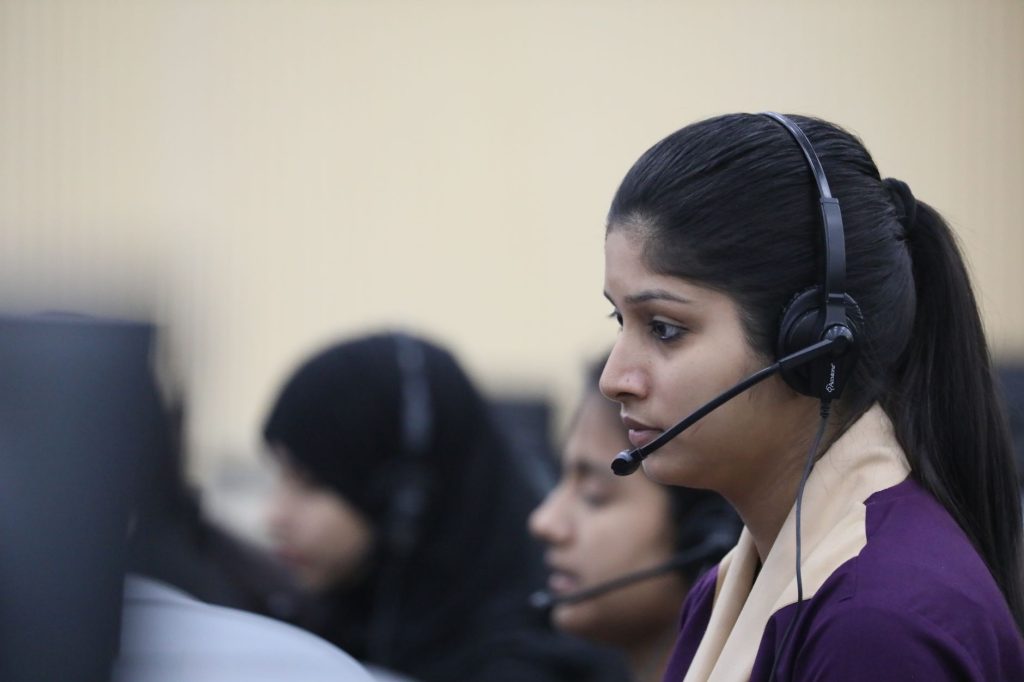
The enterprise sector is already eyeing Sankalp-MM with considerable interest. Early pilot programs highlight its potential. In customer service, a major telecom provider reported a 30% reduction in resolution times for queries in non-English languages, with the AI handling complex requests that previously required human intervention. An educational technology firm is leveraging Sankalp-MM to create personalized learning materials, translating and adapting content into multiple regional languages while preserving pedagogical intent and cultural relevance. Healthcare providers are exploring its utility for transcribing patient consultations in local dialects and summarizing medical reports, alleviating the linguistic burden on doctors.
One of the most compelling use cases emerging from initial deployments is in content localization and generation. Indian media companies, e-commerce platforms, and marketing agencies are keen to utilize Sankalp-MM to generate hyper-local content, from product descriptions in Gujarati to news summaries in Kannada, tailored specifically for regional audiences. This ability to produce high-quality, contextually relevant content at scale is a game-changer for businesses aiming to penetrate deeper into India’s diverse consumer markets.
Navigating the Competitive Landscape and Data Sovereignty
The launch of Sankalp-MM positions Vishwa AI squarely in a rapidly intensifying competitive landscape. Globally, OpenAI’s GPT-4o, Google DeepMind’s Gemini 1.5 Pro, Anthropic’s Claude 3 Opus, and Meta AI’s Llama 3 continue to set high bars for general intelligence and multimodal capabilities. In India, several startups are also making strides, though often with more specialized models or focusing on specific language subsets. Vishwa AI’s strategic differentiator is its commitment to comprehensive multilinguality and multimodality tailored for the Indian subcontinent, coupled with a robust focus on data sovereignty and ethical AI development.
The issue of data sovereignty is particularly pertinent in India, where concerns about data privacy and the control of sensitive information are growing. Vishwa AI emphasizes that Sankalp-MM was trained predominantly on ethically sourced and regionally relevant datasets, ensuring compliance with evolving Indian data protection regulations. The company offers on-premise deployment options for large enterprises, allowing them to keep their data within their own infrastructure, addressing a critical concern for financial institutions and government bodies. This focus on localized control and compliance could provide a significant advantage over global competitors who might struggle to meet specific regional data residency requirements.
Furthermore, Vishwa AI has invested heavily in AI safety and alignment research. The model incorporates advanced techniques for bias detection and mitigation, particularly crucial when dealing with diverse socio-economic and linguistic groups. The training process included extensive red-teaming exercises to identify and reduce harmful outputs, ensuring the model’s responses are respectful and non-discriminatory across various cultural contexts. This proactive approach to responsible AI development is not just good practice; it’s becoming a market imperative.
The Road Ahead: India’s AI Ambitions Take Shape
Vishwa AI’s journey with Sankalp-MM is far from over. The company plans to release more specialized versions of the model, fine-tuned for specific industry verticals like legal tech, financial services, and scientific research. Enhancements to its video understanding capabilities and the integration of more complex reasoning skills are also on the roadmap. The company is actively fostering an ecosystem around Sankalp-MM, offering API access to developers and startups, encouraging them to build innovative applications that leverage its unique capabilities.
The launch of Sankalp-MM is more than just a product announcement; it’s a statement about India’s growing ambition and capability in the global AI arena. It demonstrates that indigenous innovation can not only keep pace with international advancements but also carve out unique niches by addressing specific regional challenges with tailored solutions. As India continues its rapid digital transformation, foundational models like Sankalp-MM will play an instrumental role in ensuring that the benefits of AI are accessible and relevant to every citizen, regardless of their language or location. The future of AI in India is looking increasingly bright, and models like Sankalp-MM are precisely what will illuminate that path.